The Unknowable

My life on Wall Street was short lived.  I had the good fortune of starting a money management career at a major firm in 2006. My particular species wouldn’t survive the extinction event that was the 2008 financial crisis though. Luckily, I think, I was recalled back to active duty in the navy six months before it all happened so to some degree, I was spared the pain of the death spiral that my colleagues suffered through. I had the simpler fate of getting sent to Iraq one more time instead.

I don’t remember many positive things about my brief time in the financial management world. There was one particular conversation, a one sided statement actually, that I’ve never really been able to shake. It was the beginning of an incomplete thought that has grown over the last decade. And it’s helped form the foundation for how I look at the world; most recently the 2016 presidential election.

A few days after I started at the firm, the site director who hired me was introducing me to the rest of the team. He walked me down to one of the corner offices in the high-rise that looked out over the city. We poked our heads in to see two of the oldest and most successful money managers at the firm. They were old school. No mutual funds, no synthetically structured investments-just straight buying and selling stocks.

Sitting at two desks facing each other, separated by three monitors strung together with a massive display of market prices, were two guys who looked like they should be sitting in the balcony at the Muppet Show. One of them broke his gaze on the screen just long enough to turn to me and say something.

“Sell insurance kid. You’ll live longer. A stock is good ’til it’s bad…”

We quickly ducked out of the office and I never spoke to either of them again. A year later, the firm, in business as a global financial powerhouse for over a century, was bankrupt.  A stock is good, ’til it’s bad right?

A few years later, stuck on an overnight layover when our plain broke down in Dubai, I found myself wandering the massive airport. After a few pints at an Irish Pub, (with real Irish people) I wandered into a bookstore and saw a book on the shelf that would complete that thought that old trader put in my head. It was called The Black Swan and it was written by a man named Nassim Talib. The first paragraph of prologue read:

“Before the discovery of Australia, people in the Old World were convinced that all swans were white, an unassailable belief as it seemed completely confirmed by empirical evidence. The sighting of the first black swan might have been an interesting surprise for a few ornithologists (and others extremely concerned with the coloring of birds) but that is not where the significance of the story lies. It illustrates a severe limitation to our learning from observations or experience and the fragility of our knowledge.  One single observation can invalidate a general statement derived from millennia of confirmatory sightings of millions of white swans.”

Translation: We don’t know anything about the future.  At least not anything that matters.

Nassim Talib built financial models for a living prior to writing the book.  And like the poor souls sitting in the corner office trading stocks, came to the realization that these models he was building were entirely based on historical information to make future decisions. And that was dangerously flawed. Because everything works fine, until it doesn’t.

Until something unexpected happens like Russia suddenly defaults on their debt,  which happened in 1996, sinking the hedge fund Long-Term Capital Management, triggering a massive government bail out and endless case studies for business school students for the next 20 years.

The best laid plans to manage the future are unprepared for the only things that require the most management, because those plans are entirely devoid of the one thing you need to know to plan-which thing that hasn’t happened before could possibly happen again. It’s broken logic.  The chances that a thing is going to happen are minimal.  The chances that something is going to happen is certain. And that’s the problem.

Talib continued with examples. The world was a safe place until someone flew a couple of 767’s into the World Trade Center on national television.

His home country of Lebanon was a tourist hub and beacon of the eastern Mediterranean until it suddenly descended into a horrible civil war in the 1980’s that is still being fought, in some lesser form today.  The civilization and society that existed was destroyed with little hope of ever returning.  No one was prepared. Because you can’t be prepared for the impossible. Because the possible in the human mind is a collection of those things we’ve observed in our past. But that’s really not the case.

Monte Python said it best. “No one expects the Spanish Inquisition.”

A stock is good, ’til it’s bad. The things that pivot the trajectory of mankind, are the ones we never see coming. That’s the thought…completed.

Let’s take that thought and apply it to the current political landscape in America.  We are sifting through what is happening in the 2016 presidential election as best we can, trying to figure out what is going to happen next, using what we’ve seen before. And it’s going horribly wrong. Donald Trump is a political black swan. And try as we might to find instances in the past that are similar enough to the present to help us chart a course for what lies ahead, we are failing miserably.

Donald Trump isn’t Barry Goldwater in 1964 running on an anti-civil rights legislation platform. He’s not George Wallace in 1968 running as an independent on a segregation platform. He’s not Ross Perot. And he’s not Hitler, or Mussolini. From time to time, he’ll look or sound like one of them, and the forces that move him into prominence in our political discourse may be similar, but it’s not something we’ve seen before. So, predicting the demise of the Republican party or the rise of a fascist state or a white supremacy motivated political movement isn’t really useful. Because as we’ve seen with black swans of the past, they are inherently impossible to prepare for. So I’d like to suggest another approach.

“Those who forget the past are doomed to repeat it.” said the Spanish born philosopher George Santayana. It’s a famous quote. But it’s flawed. Repeating the past isn’t really where the risk is.

Sure we can fail by not learning from our mistakes, but the planet killing asteroids are the ones we can’t remember. Because they haven’t happened. That doesn’t mean that history is useless. Quite the contrary. It’s critically important. But not for predicting things.

When you use the past to predict the future, you end up successfully predicting the past. And sometimes you get it right. But not on purpose. The real purpose of history is to provide context to understand the present. And it’s the understanding that starts to inform our opinions of what to do next. Which is really where we should start to spend a little more time.

I don’t know what’s going to happen next. If Donald Trump’s head split open and an alien popped out of it, I’d be a slightly more surprised than if he were elected president. Some may be hoping for the former. But that’s not the point.

So what’s the point?

It’s this-be wary of people telling you what’s going to happen. And be wary of arguments against ideas that may solve things that include warnings of catastrophic outcomes. Because when you get right down to it, we know very little about the future that actually matters. So try this instead. When it comes to selecting the next leader of the free world, go ahead and evaluate them on the things you actually can evaluate-their character, their past performance and the principles for how they approach problems.  Look at their capacity to serve others and compromise. How do they meet the three layered test of principle, compassion and pragmatism? These are much better questions to ask yourself then “what’s going to happen?”

So stay away from the unhelpful thought processes of predicting nebulous change.  Because a stock is good, ’til it’s bad. And all you’ve got left to lean on when it goes south, is the people you’ve selected to lead you through it. So choose wisely.

At All Costs

A little over a year ago, we launched this website to give people a safe place to gain some background and context for things that were happening in the world around them-a place free from political spin where we didn’t tell people what to think.  Instead we told them the why behind things and challenged them to come to their own conclusions.  The last two publications on chartwellwest.com have been intentional departures from that practice.  They were opinion pieces motivated by a political end-to encourage opposition to the candidacy of Donald Trump.  Though focused on Trump, he was not actually the greater end to our intent.  Instead, the focus was defeating something larger-authoritarianism.  For such an important message, I’m fine with the purposeful hypocrisy we’ve indulged.  There’s more at risk here than most people appear to be grasping.  But we’re going to get back to talking about the why anyway.  Because when you shine a light on what is behind the political rise of Donald Trump, opposition grows a strong and graspable handle.  Whether or not you grab it, is up to you.

This past weekend, Amanda Taub wrote a thorough and appropriately candid review of several research projects conducted by PhD candidate Mathew MacWilliams at University of Massachusetts Amherst, Professor Jonathan Weiler at Vanderbilt and Professor Marc Hethrington at the University of North Carolina.  Taub’s article is magnificently detailed and long.  But it can be effectively summed up by three insights and a conclusion that will help paint the why behind my vitriol opposition to Mr. Trump.

These insights are based on the assumption that there are people who, as a function of their personality, are predisposed to gravitate towards authoritarian ideology.  This assumption is backed up by data and research in the field.  Authoritarian ideology being formally defined as favoring or enforcing strict obedience to authority, especially that of the government, at the expense of personal freedom.

Here’s the big story of their findings highlighted in Taub’s article, in her words.

  1. “In the 1960s, the Republican Party had reinvented itself as the party of law, order, and traditional values — a position that naturally appealed to order- and tradition-focused authoritarians.”
  2. “many authoritarians might be latent — that they might not necessarily support authoritarian leaders or policies until their authoritarianism had been activated. This activation could come from feeling threatened by social changes such as evolving social norms or increasing diversity, or any other change that they believe will profoundly alter the social order they want to protect.”
  3. “when non-authoritarians feel sufficiently scared, they also start to behave, politically, like authoritarians.”

It’s fair to point out that not all Republicans are authoritarian.  But it is also fair to imply that if you were of authoritarian disposition,  and you were inclined to choose a political party over the last 50 years, it would be Republican. Which leads to the compelling conclusion that explains the phenomenon that has culminated in the symptom of our national political sickness-Donald Trump:

“… if social change and physical threats coincided at the same time, it could awaken a potentially enormous population of American authoritarians, who would demand a strongman leader and the extreme policies necessary, in their view, to meet the rising threats.”

Pretty straight forward.  Now consider this timeline:

  • 1964-The Civil Rights Act
  • 1973-Roe V. Wade
  • 1984-The First Woman Vice Presidential Candidate
  • 2008-The First African American President
  • 2015-Same Sex Marriage Equality
  • 2016-The First Female Presidential Candidate

These represent a half dozen landmark social progress milestones that, at the time, the Republican party opposed in some way. Which tells us that we’ve been marching forward with social progress for 50 years and the Republican Party, as is it’s function as our conservative voice, opposed it. I’m not bashing them.  It’s their job. But we haven’t had Donald Trump until now.  Why did it change?

There’s another critically important event that’s missing.  On September 11, 2001, foreign born, Muslim terrorists hijacked and flew four planes into two skyscrapers, the Pentagon and a field in Pennsylvania, killing over three thousand Americans, live on national television.  There was no state to defeat in order to declare an end to this threat.   The broadly amorphous entity that did execute it and other attacks since, still exists.   The slow warming pot of fear and social progress had been brought to a roaring boil over the last 15 years.  Social progress and physical threats are happening at the same time.  And now, we’re facing the fallout.

But why is it that some of us, more than others, are so concerned with the rise of an authoritarian sounding candidate?  Why don’t we just take it in stride and surrender to the “he’s gonna tell it like it is and show those guys who’s boss”  mentality?  Why do we refuse to say the words “at all costs” when it comes to protecting our sovereignty and our traditional culture?  I can’t speak for everyone, but I know for me, the reason is clear.  I’ve actually seen it and experienced it first hand.  And most of the people I know who have at the level I have, are shouting right along side me.

I’ll start with a not too unique experience of mine.  The first time I actually felt it was when I was on a trip to the National Holocaust Museum in Washington, DC.  I was a freshmen at the Naval Academy, there on a trip for one of my classes.  If you’ve ever been there, you probably know where this is going.   I walked into the “shoe” room.  The room where thousands of shoes from the people murdered by the Nazi’s were piled four feet deep in a display.  They were all shapes and sizes and styles-womens shoes, kids shoes, baby shoes- representing the horrible, indiscriminate massacre of Europe’s Jews.  For the first time in my life, I was in the room with the human toll of authoritarian rule.  It was one of a handful of times where I have been overcome with grief and was unable to contain my emotion.  It would not be the last time I would see it though.

A few years later as a lieutenant in the Navy, I was a part of a humanitarian mission to East Timor, a small Pacific Island nation north of Australia. After decades of occupation, the Indonesian military had pulled out two years earlier. I was on my way to an orphanage to supervise a construction project.  Our driver suddenly veered off course and into a back alley.  Just about the time that I was about to hit the panic button, we emerged from the alley and onto a loading dock next to a seawall in the harbor.  The driver got out and stood on the sea wall and started to shout.  Our guide translated.  He was telling us that the children we were going to see lost their parents on that sea wall. They were lined up and shot there about 18 months before we arrived, by the authoritarian forces leaving the island. The driver’s brother was one of them. As he stood there, screaming at us, that feeling, the one you get when you are in the presence of true, avoidable human tragedy, grabbed me and wouldn’t let go. You know it when you feel it.  If you haven’t you won’t understand.

Later in Sub-Saharan Africa I witnessed a land forgotten by time and progress as resources funneled from the people to the government to sustain their own power.  Later in Iraq, I saw the dysfunction of a society that had lived for so long under authoritarian rule that it had lost its ability to self regulate decency and good will towards their fellow man.  Like an abused child, you could not undo overnight what took decades of abuse to cause.  The problems in all three of those areas rage on.  Some are getting better-too slowly.  Others are falling back into darkness.

When I hear Americans, most who by virtue of living in this great land have been entirely sheltered from the true destruction of authoritarian rule, calling for a leader who embodies it to rescue them from their deepest darkest fears, I feel compelled to shout back as loudly as I can, because they know not the evils of the cure they seek.  So I’m going to keep shouting.  And I’m not going to stop.

In the spirit of fairness, this isn’t really Donald Trump’s fault.  He is a symptom of our disease, one fifty years in the making.  And maybe it’s not as dire as I think.  About a third of Americans are registered Republicans.  And less than half of them are actually supporting Donald Trump.  They are those vocal few who subscribe, perhaps even subconsciously to the “at all costs” authoritarian mentality.   That means that about 80% of Americans do not.  So maybe this goes quietly away after the general election.

But maybe it doesn’t.  I’ve seen what the end of the path looks like-in the eyes of those whose lives have been destroyed by it.  And I know how few off-ramps that path offers.  So I’ll shout as long and as loud as I have to in order to keep us from taking it.  Because there is no fear great enough, no tradition strong enough worth abandoning our true founding principle to be a more perfect union built by our people, for our people-all of our people.   No one ever promised us safe. No one ever promised us traditional.  They promised us freedom and liberty-two inherently unstable, unpredictable and delicate things.  Be wary of who you entrust with their preservation.


The Cult of Personality

It finally happened. While I sat in my car during one of my soul crushing Southern California commutes, jammed into the I-15 freeway, paying my morning penance for living in the suburbs, it happened.  On the radio, pundits were worked into a lather, clambering about the latest runaway victory of candidate Trump. Their tone was acceptance.  Gone was the harsh warnings of the danger of nominee Trump or President Trump, dare we say. Gone was the disbelief or predictions of failure. Acceptance had seeped into their consciousness. And for the first time, I felt myself starting to normalize a Trump general election candidate-then a President Trump.  I could feel myself preparing for what that might be like. Because that’s what we do.

We humans are capable of normalizing amazing things. We can put up with a lot, if we choose to. Years ago, deployed as a Naval Officer to Africa, my team built a camp in a remote location. Within days, a massive hive of killer bees infested the showers and stung us to death whenever we wanted to get clean. I remember one time in particular after I’d showered and endured a half dozen bee stings to the face,  mumbling to a buddy heading the other direction, “At least I’m clean”.  I was willing to deal with quite a bit of downside-repeated bee stings to the face, because I was so dirty. I felt it was a fair trade off. Get clean, or don’t get stung by bees. I had no third option. Now I was normalizing President Trump, because I felt like I had not other choice.

So there I was, sitting in my car, stuck in traffic, suffering through the bee stings to the face that was candidate Trump’s victory speech in Nevada. I started thinking, “maybe it wouldn’t be too bad to have that ass hole stick it to the Chinese…maybe he might finally strike a deal between Israel and Palestine…maybe he could bully congress into doing something for once” and then I caught myself. I was surrendering. And I’m not the only one. We have entered into dangerous territory.

Here’s some background. I grew up in Atlantic City. Donald Trump has been a part of my life for my entire life. My family has worked in his casinos. I used to watch his helicopter land on the pier on the beach that I worked on as an ocean rescue lifeguard in high school. He ran those businesses into the ground and got out, in the nick of time, Trump style. Atlantic City is for losers is likely what he would say.  I don’t know him. I’ve never been in the same room as him. But I know plenty who have.  And they all say mostly the same thing about their personal encounters with him. He seems like a nice guy. He makes you feel important.  And he’s very gracious with his attention.  That’s about all I really know about him aside from the cartoon character he’s been playing in the media the last few decades. As a guy, he sounds lovely. Of course, that’s also what people said about Saddam Hussein.  About Joseph Stalin…about Hitler.  Which brings us to the problem.

Trump isn’t Hitler. He’s not Stalin. He’s probably not even Putin. But people haven’t really figured out how to articulate why he shouldn’t be president. They scream louder and louder that he can’t or won’t win and like a cosmic sci-fi movie villain, he absorbs the negative energy and grows stronger with each word of malice. I’m done predicting that he won’t win. I’m done predicting anything because I’m sick of being wrong. I won’t tell you why he can’t be president.  Because he certainly can be president. And if we’re not careful, he will. Instead, I’ll try another approach. I’ll tell you why he shouldn’t be president. But I’m going to do it in a way besides pointing to the fact that he’s Donald Trump. That’s clearly not working.

Here’s how we’ve tried so far.

He’s a chauvinist bigot. 

He might be. He might not be. I don’t believe anything he says is sincere so it could all be an act-hold that thought. He’s a 70 year old white guy from New York who was born with a lot of money so he’s probably got a little of the old white guy thing going on that we white folks know many of our dad’s generation struggle with-prejudice and sexism. Sorry folks, that may be a little uncomfortable truth for some of us. The people who like Trump-angry white people-don’t care.

He’s a dishonest demagogue that will say anything to make you support him. 

Congratulations, welcome to politics.

He’s a bully. 

See last item.

He’s a manipulator.

See last two items.

He is a lousy businessman who has filed for bankruptcy four times.

That’s actually a lot of bankruptcies. But it’s a pretty normal practice and it was chapter 11, the type where you do it so the business lives to see another day. It’s not a smoking gun.

He’s a rich kid who got all his money from his father.

Ever hear of the Roosevelts?  JFK?

He’s a draft dodger.

We’ve had one president in the last 50 years serve in combat. Thank you George H.W. Bush for your service.

You get the point.  You can play this game all day long. It doesn’t work. Trump’s most brilliant talent is staying relevant in our ever shifting culture. He started with real estate and then moved into our consciousness as someone synonymous with simply being rich in the 80’s and 90’s. Then he morphed into a reality TV star and invaded social media and now he’s impregnated our political machine with the Trump brand.

When someone becomes that ubiquitous, they become a walking talking, tweeting, insulting, bullying, Rorschac test. People start to see in him what they want. For those feeling left behind by a changing economy, he’s a business man who will solve it. For those feeling marginalized by our changing culture, he’s going to kick out all the foreigners. For those scared of terrorists, he’s going to bomb the hell out of ISIS. For those of us who want to shout down inequality and bigotry, he’s someone to hate.  He is different things to different people. Like scripture, if you stare at candidate Trump for long enough, he will tell you whatever you want. And there’s one thing you can’t argue about with someone. It’s their religion.

But that doesn’t mean we should get baptized by him. Here’s why.

There are three critically important dimensions to useful political thought.  Effective political thinkers need be equally principled, empathetic and pragmatic. Looking back at candidate Trump’s public and private life experiences, he fails this test in an extremely dangerous and troubling way. More so than any person seeking the office of President of the United States in a long time, maybe ever. After 40 years in the public eye, it’s almost impossible to point to areas where he has been a part of something bigger than himself, built on a guiding principle that made other people’s lives-people he didn’t know or wouldn’t be in a position to receive something in return from-better.

He appears to be entirely devoid of anything that mimics empathy. Heads of government need to be able to feel the pain of the people they govern as if it were their own. That doesn’t mean that they have to be selfless or even charitable. It means that they have to have the capacity to care about the outcomes of other people. Candidate Trump fails.

He does have one thing in abundance-pragmatism. Unfortunately, pragmatism without empathy towards those you govern and not grounded in principle other than self promotion is powerfully dangerous. It’s that thing that the truly dark rulers of history seem to have in common- the ability to get things done without the troublesome headwinds of principle and care for others. It’s the recipe for how the governing of man has gone horribly wrong for thousands of years.

This is usually where supporters of one candidate start to throw out the flaws of the other candidates in response. But here is where that doesn’t really work for candidate Trump. Every other candidate, on some level, does better at the standards explained above. Here’s how you can tell. Take a look at how they’ve spent their life and then look at candidate Trump. Candidate Trump was named the president of his father’s $200M real estate firm in 1974, when he was 28, six years after he graduated from Wharton.  What he’s done since, is on display for the public to see. At no point has he even appeared to serve someone else. And that’s hard to find, even for someone not running for president.

If you run the other candidates and recent presidents through that test, the difference is staggering. Hillary Clinton was one of 27 women in her graduating class from Yale Law School. She had a wealth of opportunity and chose the Children’s Defense Fund as her first professional role. Ted Cruz is the son of a Cuban immigrant who graduated from Harvard, was the editor of the Harvard Law Review and then served as a clerk for several federal judges including Supreme Court Justice Rehnquist. He’s horribly unlikable but he appears to actually believe in something other then himself. Bernie Sanders chooses to call himself a democratic socialist, something that has limited him his entire career until recently, because he believes in it. John Kasich has answered to the people of his state as the Governor of Ohio. Some are supporters.  Some are not. But at a minimum, he appears to have governed with benevolent intent. President Obama, same a Cruz, son of an immigrant, Harvard graduate, became a community organizer. Reagan was the president of the Screen Actors Guild and then governor of California. JFK was a decorated war hero as the commander of PT-109. You can go down the list and point to times, whether you agree with them or not, that other candidates have served someone other than themselves.  

But you can’t for Trump.

And this is what that means. If candidate Trump were to be President Trump, the first group of people that he will be responsible for serving, above his own interests, will be the entirety of the American people and by virtue of our standing as a global power, mankind.  And that is as strong a case as anyone can make against anyone doing anything. There’s a lot at stake here. It’s not the time to get comfortable with candidate Trump. And if he is nominated by the Republican Party to run for office in the 2016 Presidential Election, it’s not because he’s right. It’s the death spasm of a scared, angry ideology that has poisoned the conservative mind of our country. And we should think that it’s as ridiculous now as we ever have. Because it is. It’s just a lot more dangerous.


Those Who Work

America’s history of political discourse has had its share of twists and turns.  Though our current debate may feel like it’s been going on forever, it hasn’t.  It was born in the middle of the last century. There were distinctly different debates that preceded it that political scientists refer to as party systems.  In America, we’ve had six.  Some have made more of an impact then others. We’ve chosen sides between the president and congress, slavery and abolition, business and workers.  The current struggle is between the need for government intervention and the preservation of civil liberties.  There are subsets of it.  But the core is summed up simply.  Mostly out of habit, the words that our politicians and prospective presidential candidates are using may make it feel like that debate is continuing.  It’s not. There’s something very different happening.

The 2016 presidential primary elections are not progressing the way most of us who pay attention to these things may have anticipated. The drastically different conservative representation in candidates is signaling something.  It’s a change.  During the last 80 years, two massive events have driven how we define our political affiliations. The first was the social safety net created by FDR’s New Deal. The second was the Civil Rights Act of 1964 and the movement that it represented. Both were instances where the federal government intervened to represent Americans who could not represent themselves. Both represented an infringement of some sort on civil liberties by those least in need of representation. And the resulting top level argument of most of the last century has been a battle between expanding government involvement in people’s lives and defending civil liberties.  What we’re seeing now is a signal.  That debate is dying out.

The Good Government

We’ve had the forces of political inertia colliding for generations now without shrinking government involvement in our lives. Why?  The truth isn’t as nefarious as our stale establishment conservative presidential candidates might want you to believe.   The reality is that the modern world has more problems that government is suited to solve then our founding father’s would likely have imagined-things like racial equality for instance. It took 600,000 American deaths to eliminate slavery. And for another 100 years there was still no significant move towards racial equality until the federal government intervened.

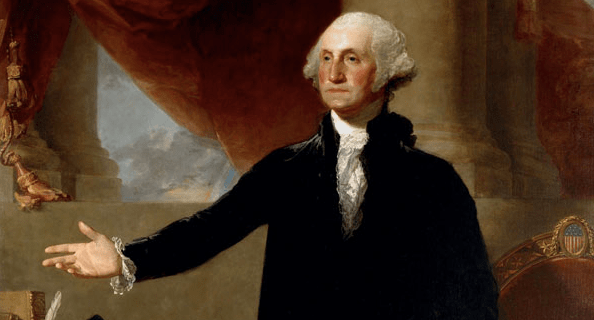
Let’s look at health care. Our first president was bled to death by his doctor because that was the medical treatment used for almost everything a full quarter century after the Declaration of Independence was signed.  Yet I’ve seen more than my share of founding father quotes to disparage the Affordable Care Act. Healthcare cost in America, left to private enterprise and driven by profit has been spiraling out of control since the dawn of modern medicine. And now we’re finally getting around to working our way out of it with a clumsy solution to a real problem.

We can point to retirement. We live 40 years longer than we did when we signed the Declaration of Independence. But unfortunately, our bodies can’t work 40 years longer. So we need some way to fund life after work. So the government helps where most can’t and never have.  The case is pretty easy to make. We need some level of government intervention in our lives. And though some of the sound bites from our conservative candidates still sound like the argument is still alive.  It’s not.

But conservatives shouldn’t be discouraged.  There’s righteous energy in the new debate.  And though the only people who have tapped into it are horribly unsuited for high office, which will almost certainly cost you any chance at a Republican president in 2016, you’ll probably get the message.  Which is progress, because your old argument is a loser.

The Bad Government

In March 2011, a team of sociogists and political scientists at Harvard, Vanessa Williamson, Theda Skocpol, and John Coggin released their findings from extensive research conducted on the Tea Party movement. Skocpol and Williamson later published The Tea Party and the Remaking of Republican Conservatism the following year expanding on their findings.   What they concluded about the core beliefs of what is considered to be a far right subset of the larger party is very different from the limited government views of core conservatives.

“Tea Party activists hold positive views about the government entitlement programs from which they personally benefit—including Social Security and Medicare, and also other entitlement programs they have used. ”

These programs have been in place for several generations now providing critical benefits to our society. They’re not hard to advocate for. And they’re equally difficult to oppose as a whole. Which starts to eliminate some portion of the “big government” debate. So it’s shifted to something else. The thread that’s becoming more and more prevalent within our conservative base is subtle but if you take the time to listen to it, it’s powerful.

“Tea Party activists view themselves in relation to other groups in society. Tea Party activists in Massachusetts, as well as nationally, define themselves as workers, in opposition to categories of non-workers they perceive as undeserving of government assistance. Concerns about freeloading underlie Tea Party opposition to government spending.”

Recently, Alec MacGillis wrote about the phenomenon of blue collar growth within the Republican Party in his New York Times article Who Turned My Red State Blue?

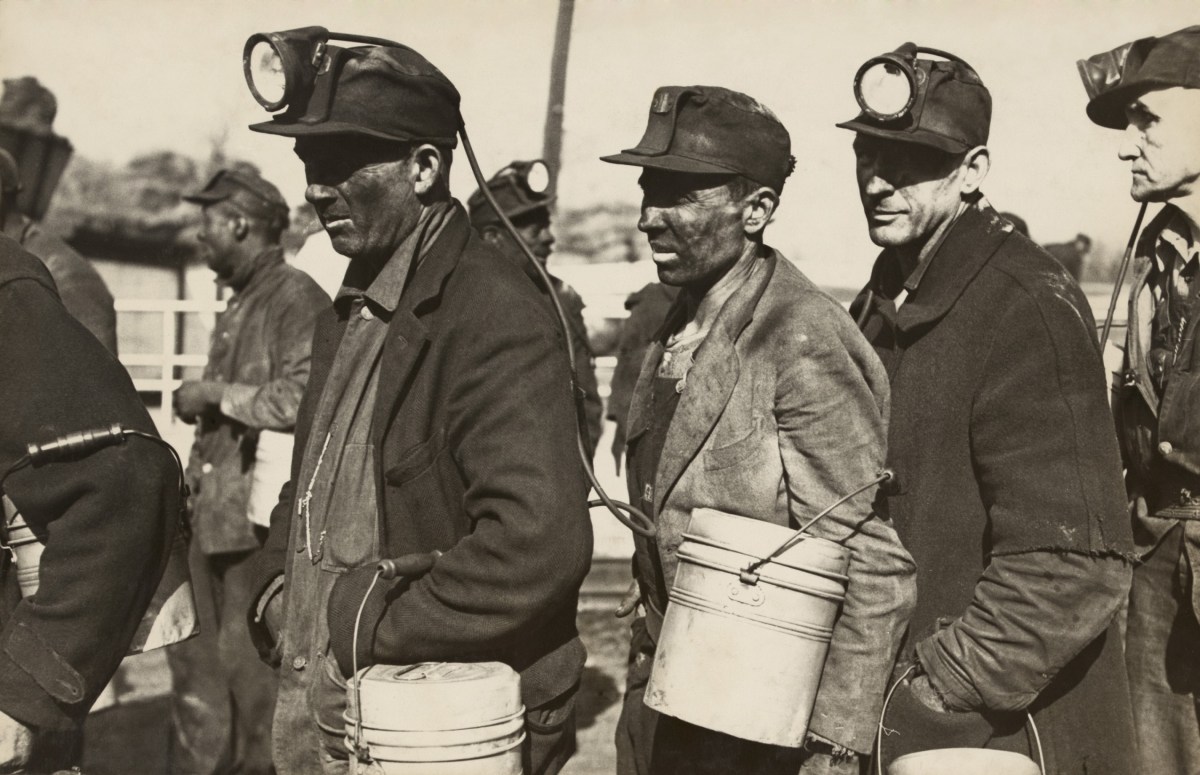
“The people in these communities who are voting Republican in larger proportions are those who are a notch or two up the economic ladder — the sheriff’s deputy, the teacher, the highway worker, the motel clerk, the gas station owner and the coal miner. And their growing allegiance to the Republicans is, in part, a reaction against what they perceive, among those below them on the economic ladder, as a growing dependency on the safety net, the most visible manifestation of downward mobility in their declining towns.”

The conservative movement that is growing is no longer a crusade to stop government infringement against personal liberties.  It’s those who work and contribute to society against those we believe do not. 

Those That Work

But is it a good movement?  Certainly it has attracted a certain zeal for hatred of groups like immigrants or minorities. Which is what most of us more moderate participants tend to find most disagreeable.  But if those of us who disapprove of the notion of an angry white mob driving the Republican primary can suspend our outrage for long enough to actually gather some perspective on the well intention-ed,  we can start to separate some signal from the noise.   Here’s the signal.

The basic fear of the conservative base and many other Americans that we’re talking about is that we’re afraid that we’re becoming a welfare state. It’s a simple, valid fear.  One that most independents and even progressives should have.  We should all be wary that our social safety net could be investing too many resources in areas that are ineffective and creating dependence in those it supports.  And that the resources we are forced to invest on this are becoming unmanageable.    So let’s ask the question.  Is that happening?

What the data says…

From a taxation perspective, we are not a welfare state.  If  you exclude what a nation’s people actually contribute directly to social security programs for the express purpose of receiving it in return during retirement, you can see a clear view of how much a government collects from it’s people for the express purpose of funding government activities and distributing wealth through welfare programs.   Looking at other G20 countries, the 20 largest economies in the world, only Japan, China and India collect less from their people as a percentage of their overall economy.

Screen Shot 2016-01-18 at 6.40.25 AM
-Data Source worldbank.org data tables.

So, at least at the highest level, we’re not in crisis. But just because we’re collecting less, doesn’t mean that we don’t have a welfare expense issue though.  But it does mean that we’re not over-run by tyrannical over bearing capitalist killing taxation.  The data doesn’t support that common sentiment.  But what does it say about welfare spending?  Clearly 10% of the American GDP is a massive amount of money to be taxing our people.  So it’s a fair question.  Here’s what the data tells us is reality.  In the grand scheme of things, welfare is significant but not dominant.  Nor is it spiraling out of control.

Screen Shot 2016-01-18 at 11.14.50 AM
-Data Source usgovernmentspending.com
Screen Shot 2016-01-18 at 11.26.08 AM
-Data source usgovernmentspending.com

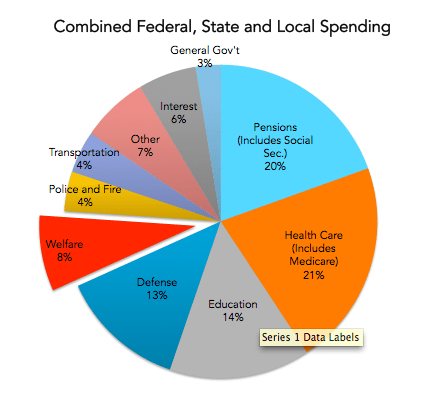
What we see is that behind social security, health care, education and defense, we get around to welfare programs.  And though 8% of the U.S. federal, state and local spending is a lot of money, over $500 billion, it’s not spiraling out of control.  In fact, we see it as a straight line correlating with the health of the economy over the past 15 years.  Spending peaked in 2010 at the height of our measures to recover from the great recession and has dropped dramatically since.  Most of the delta over the last five years has been the variability of the unemployment benefits which peaked in 2010 and have rescinded as the economy has strengthened.  In short, the social safety net was doing exactly what it was supposed to do, for that period of time. That’s tough to put on a bumper sticker.  But it’s true.

So why are people so angry?  Well, part of it is the American culture of self determination.  Which, by the way, is an immensely powerful and positive aspect of who we are and we should protect it. But it doesn’t mean we get to be angry for nothing.  Well, the good news for the outrage and anger engines is that we actually do have something to be pissed at.  There’s something else in play here.  Something that feels more permanent. And it’s this.  There is a sinking feeling of dependency that starts to set in when you look at the massive cultural divide between those on government assistance and those that aren’t.  The data supports it.  And there’s clues in how we break down our welfare spending.

Here’s how we spend our welfare money in America.

Screen Shot 2016-01-18 at 11.45.19 AM
-Data source usgovernmentspending.com

About half is spent on things like unemployment, food programs for children and SSI. Things that most agree are a
fairly easy sell for all but your most ardent libertarian sects of America.  Though I’ve heard some people voice frustration about the easy availability of Special Supplemental Income (SSI), a little over 1% of Americans under 65 receive it.  Most have very real disabilities.  The real issue to focus on is how effective we’re being with the other half of what we spend on welfare.

There’s a lifetime of science and opinion that could go into what I’m going to put into a paragraph here.  Which is fine because the intent of this article is not to solve our welfare problem. The intent is to identify the issue in so much as it is relevant to what is driving our changing political debate.  So here goes. Focus on the areas in red on the pie chart above.  In those areas, we have too many people receiving benefits too long that do not have a sufficient criteria for work or education to qualify them for the means tested benefits.  Let’s be specific here though. The problem is not “people these days”  or “those people” or “that culture“.  The problem is how we administer the programs, most of which are federally funded but administratively delegated to state or local entities.   Those programs simply aren’t good enough at establishing and tracking consistent work requirements to deliver an effective, progressively helpful social safety net.  And the standards they are held to in order to receive funding are too low.

Having that opinion doesn’t mean that I hate the poor or that I am insensitive to the issue of racial segregation we suffer from today that we caused over the first three quarters of our existence as a country.  Having that opinion means that I’m looking at the data.  And I know we can do better.

What’s the point of a social safety net?

What should a social safety net do for a given society.  Well, it should do two things at a minimum.  For starters, it needs to get people out of poverty.  This is actually where we do well.  It’s not coincidence that prior to the existence of government assistance in America, our poverty level was about one in four.  Now it’s a little lesser than one in six.  And if there’s one thing that I’ve learned from the years I’ve spent in undeveloped countries, high levels of poverty are bad for everyone.  Not just for the poor.  It’s bad for national security, bad for the economy and bad all around.  It should be avoided at all costs.    The second thing that a social safety net needs to do is lift people out of poverty by mandating development.  That is what we don’t do well at all.  It’s a problem.  One worth some level of dissatisfaction or even outrage. Unfortunately, the political debate we’re having isn’t really scratching the pragmatic itch for America though.

Why not?

Because it’s not focused on solving anything.   It’s focused on stoking the outrage of a base of people frustrated by the party line that they’re being fed.  Here it is: America has become a welfare state spiraling out of control at the expense of all the hard working Americans.  The data and facts don’t support that.  Which is the great thing about good data and facts.  They’re right whether you believe them or not.   That doesn’t mean that we don’t have a problem though.  And it’s a big one that is using a quarter trillion dollars a year less effectively than it could.  So how do we start to hold our government accountable for the required change?  That change by the way, is not reducing taxes.  So stop it.  We’ve got more problems to solve than ever before and we haven’t been this little taxed for generations.  Don’t believe it?  Look at our historical tax files at the IRS.com.  So how do we start the dialogue?

It starts with an exercise in focus.  Focus starts with ignoring what isn’t important.  So what isn’t important? Here’s a list to start with.

  • The fact that there’s no way to guarantee that some people are not  going to get over on the system.
  • The fact that many of the people on government assistance look different than many not on it.(there’s a reason for that…and it’s called the first 180 years of our 240 years as a country)
  • The fact that some people on government assistance may buy something nice.
  • The fact that you know a guy who’s not really hurt getting disability.
  • The fact that we have 12M undocumented immigrants in our country not contributing to the revenue required to fund the system.  (it’s a problem but if you actually cared about the welfare portion of that issue, you’d just make them legal tomorrow so you could tax them and the problem would be smaller)
  • The fact that you have never been on government assistance because you work hard and have personal accountability.

This list isn’t exhaustive.  But it’s the flavor of rhetoric that is getting in the way of actually fixing the problem.  And though these things aren’t fair and can be frustrating, if you fill your thought space and debate with them, you don’t leave anything left for fixing the problem.  And that’s really the point.  Unless the point is just to have something to be perpetually dissatisfied about.  The rest of us are on to that by the way.  The 42% of the electorate that identifies as independent- we see it coming a mile away.  So do what we do.  Learn to tune it out and we may actually change something. Or don’t.  And stay angry.


Binary Republic


Everything you see on this screen is a manifestation of billions of 1’s and 0’s.  It is truly one of the great discoveries of mankind.  If you create a large enough pool of binary inputs, and push those inputs down far enough into the most minute detailed elements of an environment, you can create complex computer programs that can do things. They can store massive amounts of information. They can talk. They can control airplanes and operate nuclear power plants.  They can monitor our health.  They can connect us to other humans.  We can make programs so complex, they actually start to mimic human intelligence.  But at their basic forms, they are still, 1’s and o’s.  Entirely at the mercy of our design.  Because we, as humans, have consciousness and the capacity for original thought. Unlike the programs we create, we are not binary by nature.  We are not forced into a variable of 1 or 0 by our designer.  We are unlimited in our capacity to explore and wonder. Our thoughts are limitless.  If you looked at my social media stream right now though, you wouldn’t know it.

More binary..

Within minutes of the San Bernardino shootings two weeks ago, threads started to appear on my Twitter feed advocating for stricter gun control laws.  As soon as Syed Farook’s name was released as the shooter, the Muslim-o-phobia thread took over.  Within 48 hours we had a burning debate about what was to blame. Was it guns?  Or was it Muslims?  When you really think about it, it’s kind of an odd point-counterpoint.  It’s like choosing between walking to school or taking your lunch.  It’s not really a choice. But it’s how the dialogue went, and still is going weeks later.  Like we have with so many other complex issues,  we’ve boiled it down to a binary debate.   Pick a side: Minorities or cops.  Health  care or liberty. Regulation or economic growth. Abortion or privacy….you get the point. It’s a thing that we do.   But why do we do it, when clearly we are capable of so much more?

Why so binary?

There’s a lot that goes into why we do this.  It’s actually not because most of us really feel this way.  There are forces at work here.  Let’s start with what it’s actually not though; our politicians.  Our politicians aren’t causing the problem.  They’re not helping.  But they’re not why it’s happening.  For the most part, they’re stuck in a somewhat binary loop themselves that they can’t escape from as a function of who they are and what they are charged with doing. They can either be for something, or against it.  They can’t be both.  We may desire to try to squeeze moderation into the mix.  But moderation doesn’t work right now.   Again, it’s not their fault.  There’s massive headwinds to being reasonable in politics.  And it’s not the political machine.  It starts somewhere else.

Our programmers…

Look no further than our $285 Billion media market.  You will hear over and over again that the Citizens United ruling of the Supreme Court in 2010 is ruining our democratic process by opening up campaign fundraising to corporations and other donors that are eliminating the voice of the people.  It’s become a “boogie man” for all things that are wrong with our political process.  Don’t bite that hook.  It’s a red herring.  I’m not saying we don’t need campaign finance reform.  I’m simply saying that campaign finance processes aren’t doing what we tend to say that they are doing.  Campaign finance money tends to exist in the tens to hundreds of millions of dollars.  Which sounds like a lot to you and me.  In a vacuum it is. When it comes to moving the needle of national consciousness though, it’s nothing.

Here’s something to consider.  The National Rifle Association, that massive evil empire and ultimate antagonist to democracy, spent $28.2M on campaign contributions in 2014.  It sounds like a ton of money.  In media land though, it’s nothing.  It’s $1.8M less than the cast of CBS’ The Big Bang Theory made during the same time frame.  It’s a million dollars less than the Washington Nationals paid their bullpen in 2015.  Which means that more money gets spent on relief pitching in Washington then gets spent on the gun lobby.  And the Nationals didn’t even make the playoffs.  If you’re going to get the attention of the media market, you don’t do it by throwing $28M at it.  You do it by doing things that American people can’t stop paying attention to.  You do it by driving clicks and ratings.  Because that’s what makes the media work.  And it’s not new.  But it is bigger than any other force in our political system and producing content at a scale never seen before.  And it’s sucking the oxygen out of every reasonable political thought we may have.  So they die.  And we’re left with what’s left.  Point and counter-point.  A 1 and a 0.  We’re being programmed.

The Human Binary…

We are addicted to outrage and conflict.  That part isn’t new.  Just like computer programs, outrage and conflict work best when you can focus them on the least amount of variables.  Clearly, you can’t have outrage and conflict with one perspective.  You need at least two.  And more than two is really hard to package.  It’s why team sports work so well. It’s why we have “pairings” for pro golf tournaments on the final day.    It’s why the main good guy has to kill the main bad guy in the end.  It doesn’t work if the villain dies in an unfortunate cycling accident en route to the gun fight. There’s no drama in that.   Conflict is delivered and consumed easiest in twos.  One against the other.  Good and evil…right and wrong.  Conservative and liberal…It’s what we’ll watch.  It’s what we’ll click on.

Here’s the problem with that.  These issues we’re debating aren’t sports and entertainment.  The media serves them up like they are, but they’re not. People’s lives are impacted by them.  These things matter but we’re not entirely sure how to differentiate them from entertainment.  We don’t have to settle for it though.  In fact, this stuff is too important to settle for it. We need to demand more of ourselves.

We’ve evolved past our basic nature in many ways.  When our urge for conflict was harder to feed, before the information age, when you had to go find someone who actually knew what the hell they were talking about in order to engage in debate, we did this better. As a result, our political machine was less polarized and more effective.  There’s good news here though.  We did this once. And we can do it again.  Because doing it is actually  pretty easy.  All you have to do is break the binary code. Break the programming.

What we have to be willing to do better to be better at what we need to be better at?

You can do that with the most powerful thing that we have, that computers don’t; good old fashioned human curiosity.  The greatest force the world has ever seen is our ability to wonder about something.  Wondering leads to questions.  Questions are most useful when we ask them to inform what we want to know instead of consume answers to other questions that are fed to us before we ask them.  When it comes to critical societal issues, there’s one great question you can ask to break the binary code.  One basic infinitely powerful question.

What outcome do you seek for this issue?

If you can try to refrain from jumping to what you believe is right and what is wrong, what you identify with and what you can’t, who is agreeing with you and who isn’t and answer that first magical question to identify the outcome you want for an issue, you’re on your way.   If we paused and did this in aftermath of San Bernardino, we would be two weeks into a much more productive debate.  Here’s what it might look like.

What do we want out of a resolution to the issue of radical Islamic terrorism?  I believe that the answer is that we want Americans to be safe.  Not just from Islamic terrorists. We want Americans to be safe…period.  Which means we have to spend a little time on defining safe.  One question leads to the next important one here.  Are we safe?  Relatively?

We would have to lose 15,000 people this year to radical Islamic terrorist attacks or gun violence to match the per-capita murder rate in 1992.  That’s how far violent crime has dropped in the last 25 years.   That’s about five more 9/11 attacks, this year.  Or, three San Bernardino attacks every day, for the whole year.  Just to get to 1992.  I remember 1992.  It wasn’t that horrible.  That’s not to say that this isn’t a problem. Or that we should be satisfied with backsliding to relatively more violent times.   Every single person who has lost someone will grieve forever at the individual tragedy they’ve suffered.  Nothing I can say can help that.  But if what we want is for Americans to be safe, it helps to understand how close we are to that goal.  The truth is, we’re kind of there already.  No matter what the media tells us.  The facts are clear. We’ve never been safer.

Now what?

We’ve broken the code. Our curious minds have taken us outside of the boundaries of the scripted debate.  Once you do it, you may never go back.  Because it becomes painfully clear that most of what we hear is just binary code programmed into our daily focus to drive a behavior that benefits those that provide it to us. It’s not designed for an outcome.  In fact, it’s designed to keep the debate alive.  It’s designed for clicks and ratings. You can choose to be a machine and follow it blindly.  Or be a human being and ask your own questions.  When you get to that point where you can decide what you want from something,  try to remember that there are a lot principles that we Americans hold dear as a part of our culture.  Not every one holds the same importance for every person.  When you are standing on a burning platform of outrage,  it’s important to understand if it’s actually on fire or not.  Otherwise you’re doing things like trampling on religious tolerance or threatening Constitutional rights because someone coded the debate for you ahead of time.  And we can be better than that.


The Good Old Days

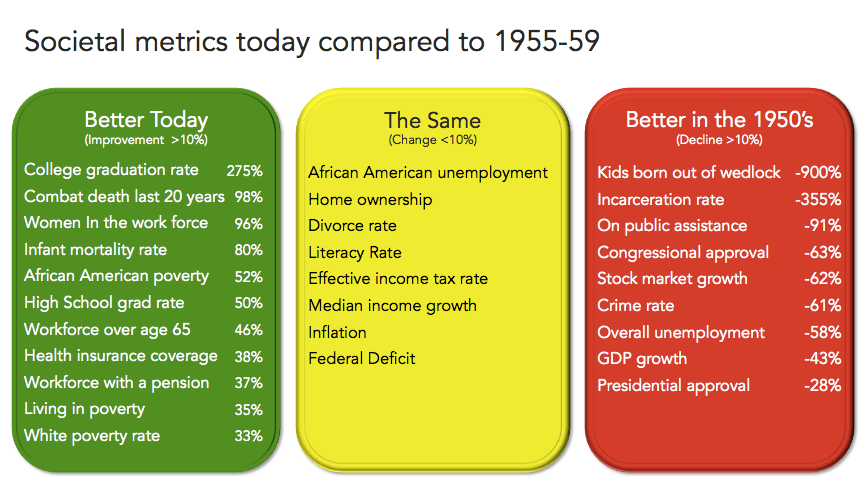
Screen Shot 2015-12-05 at 5.44.36 PMTable-1. Data compiled form the U.S. Department of Justice, Department of Labor, U.S. Census Bureau, The Pewe Research Center, The Brookings Institute and Gallup

You’ve heard it.  At some point someone you know has said it.  It may have been you.  But you’ve heard someone somewhere longing for the better times of the past.  A time in America where “traditional” values were embraced by all and we lived in a harmonious utopia, swimming in the perfectly temperate waters of civility that could only come from a simpler life.  A time when people treated each other better. Where we were safer and less exposed to the horrors that our modern world bestows upon us.  A time before the treacherous “next” generation had infected our stoic wisdom with dangerous thinking, loose morals, and a tragic lack of work ethic.  A time where America was great.  When today, she is something else. You know the tone.  It’s one part nostalgic and one part condescension.  It’s a sentiment that’s been around as long as our collective conscience as a species has spanned more than our own immediate horizon.  It’s what we do.  We long for the past.

For Americans, that time we long for is actually quite specific.  It still lives in the distant memories of our older two generations.  The “golden age” of America, the 1950’s, is that time that represents the zero, zero grid on the Cartesian graph that is America.  It was the post-war origin of our greatness.  The Garden of Eden before the apple.  But was it really that great?   Are we really that worse off today?

Taking a contextual look at the data can help.  So we did.  We took 28 societal metrics that were clearly measurable during the second half of the 1950’s and today and did a comparison.  Our findings, in Chart-1 above, were extremely interesting.  Of the 28 items, 11 were measurably better today than in the 1950’s. Eight were about the same, within 10% better or worse.  Nine were measurably worse.  Of the 28 metrics that can be directly compared, less than 1/3 of them were measurably better in the “golden age”.   The data alone isn’t enough to tell the story though.  But it certainly gives us a few places to start to look.   And it’s important that we do.  Because having an informed perspective about “what’s wrong with America” is a responsibility that requires more than whimsy and nostalgia.  It requires more than a bumper sticker or a snappy hat.  It requires fact in introspection.  Here’s what we found:

Family Life

Contrary to popular belief, marriages aren’t falling apart any faster now than they were 60 years ago.  The divorce rate is slightly lower today than back then.  Which is one of the more surprising metrics.  One thing that is happening is that less people are getting married.  Which has contributed in some part to what is the largest difference in all the data used in the comparison, children born out of wedlock.  In 2014, 42% of all children born in America were born to unmarried parents.  This is nine times the rate that they were in the 1950’s.  One of the more commonly politicized metrics is the present level of African American children born out of wedlock, which was 74% in 2013.  That’s a striking number.  There’s more to it than race though.  The issue is actually not being driven by any ethnic or culturally specific trend.  Since 1965, that rate that African American children are born to unmarried parents has tripled.  During the same time, the rate that children are born to unmarried white parents has increased by a factor of ten.

Peeling back the onion a little more, we see that in previous decades from the 70-90’s, the increase in unmarried births was in teenagers, which correlated to the decrease in the “shotgun marriage” practices.   More recently though, the increase is in women in their 20’s during the last decade and now women in their 30’s in the present decade.  Couple that data point with the fact that less people are getting married, and we see that the traditional American family structure has gone through a radical change over the last sixty years, most specifically because the institution of marriage is in decline.  And there’s a very sound argument that it’s not good.

A massive increase in children born to unwed parents is at a minimum, not great.  Not from a morality perspective, though for some, that is where most of the energy is spent on this topic.  It’s not great because of the outcomes it yields.  I’m not a big fan of statistics pointing out how children of single parents have lower graduation rates, higher crime rates and eventually higher unemployment.  That data is more correlation than causation because single parent rates have a perfect correlation to socioeconomic levels.  There’s an easier way to get to that conclusion though. It’s this.  Married parents are less likely to split than unmarried ones. That results in more single parents and reduces the resources a child has for income, care, involvement  and an almost unending list of parental requirements by 50%.  Which increases the amount of instability in a child’s life.

All this leads you to the hard fact that children born out of wedlock have less consistency and less income during their formative years then those born to two married parents.  And from an outcomes perspective, child development experts uniformly agree that consistency is the single most important aspect of a child’s development.   Which means that we really were in a much better place from a family perspective 60 years ago than we are today.

So what do we do about it?   I don’t really know.  As a person who appreciates liberty and limited government involvement in things like my family and personal choices, I’m not a fan of trying to legislate our way to increasing marriage rates.  There are many “free market” forces in play here, from workplace opportunity for women to daycare availability to cultural norms that are causing headwinds to the institution of marriage.  And one thing that I am certain doesn’t help is limiting who can marry who…in any way.   If we’re interested in growing back a family structure, let’s try not painting the institution of marriage in the irrelevant light of exclusion, bigotry and tradition.  You might find that the next generation of Americans value it more.  And that’s really the goal.  More people living within the structure of a family.  Anything else, really doesn’t help.

The Workplace

This one isn’t really even close.  We have more women and more diversity and more inclusion in the workplace than we did 60 years ago.  After decades of shifting from a manufacturing economy to a services and technology one, we’ve managed to maintain wage growth above inflation and delivered work environments safer than at any time in our history. We went through the great recession and that hurts our last decade worth of numbers.  Though unemployment over the last ten years was higher, comparing the great recession to the economic boom created by the post war reconstruction environment was a tough compare.  We’re back today from an unemployment and wages perspective where we were in a relative sense to where we were in 1959 though.  One of the things that jumps out is that we actually had a higher percentage of people working over 65 in the 1950’s than we do today.  Which is counter to the notion that no one can afford to retire today.   We even have more people receiving a pension today then we did before, though that growth is entirely in the public sector.  We have more people living longer after they’ve left the work force independently than any time in the history of our country.  This is good.  But as we’ll see in the next section, it doesn’t come for free.

Entitlements and Taxation

Almost all of our federal spending increase over the last 60 years has been used to sustain social entitlements.  Whether it be social safety net services, retirement income or medical expenses, government growth has been largely focused in this space.  This is one I’d actually prefer to explain with a needs and outcomes discussion, instead of a rhetorical rant about the evils of government.  Here’s how it goes.

In 1959, there were 177 Million Americans with a median age of 29.7 years old who lived to be 71 years old.  Today there are 320 million American with a median age of 36 years old that are going to live to be 82 years old.  That means that, as a society, we have to account for about 1.6 billion years more of retirement than we used to.  And we have six years less per person, to accumulate funds for it.  I know that’s a lot of numbers and confusing math.  But you can probably agree, 1.6 billion years of retirement is a big number.  So it stands to reason that we’ve got to figure out how to do that.  I’d love to say that the answer is to ask Americans to save more money.  And if you hear people talk today, they point to some time when that happened.  The problem is that history doesn’t support that option.  Americans have never saved to fund the type of retirement we think of in our aspirations.  When you look beyond the rhetoric here, you see that the notion of an independent, decades long retirement is something that never existed in any large scale sense in our country before the advent of social security in the 1930’s.  And even after that, it  existed in pockets of affluence and circumstance.  But not as a whole. So the answer to this problem has to involve some function of entitlement reform or increased investment.  The math is too clear for anything else.    And the problem of caring for our aging population is one side of this problem.  There’s another.

It is true that we now have close to double the amount of people receiving public assistance than we had in the ’50’s.  But we also have almost an exactly equal population living above the poverty line that lived below it 60 years ago.  That’s probably not coincidental.   Which likely means you likely have to be comfortable with one out of four Americans living below the poverty line, if you are comfortable with eliminating public assistance. I am not. There are however, pockets of our society that don’t seem to be moving past the choice of poverty or public assistance.  Our urban poor, which really means minority population, is disproportionately dependent on government assistance.

In 1959, 55% of African Americans lived below the poverty line.  I use that population as a proxy because we had no other reliable minority data that tracked back that far.  So what we’ve done, is move our urban poor out of poverty, which is good, we’d admit, and into dependence.  Bear with me here because this next sentence is going to bother some people.  I’ll take dependence over poverty.  Which I get is a heated debate.  I’m not interested in the risks that come with dumping a quarter of the population below the poverty line. Because large populations of poverty are bad. Really, really bad.  And not just for those in poverty.  They destabilize nations, they ruin economies they do a lot of things that I’ve witnessed first hand to make life and progress hard for  countries around the globe.  Massive populations in poverty are to be avoided at all costs.  What we have today is better than what we had.  But it’s not good enough.  And it’s not sustainable.   So something needs to be done.   But what?

When it comes to the social safety net, we should be prepared to dynamite the whole system in the name of something that works.  I’m not saying cut it out. I’m not saying make it less.  I’m not saying make it more.  I’m saying make it different than what it is.  Because what it is does not solve is our massive segregation gap that we have between our urban, minority poor and everyone else.  This will take some very “non-governmental” thinking though.  But please, let’s get past the two choices that we have now.  More of the same…or cut it all out so they can stand on their own two feet.  We need to disrupt the status quo.  And we can do that.  We’re Americans and we’ve invented or perfected most of the useful things in the world today.  Let’s get out of our own way politically, and aim the same passion that put us on the moon using slide rules and pencils at revolutionizing our social safety net.

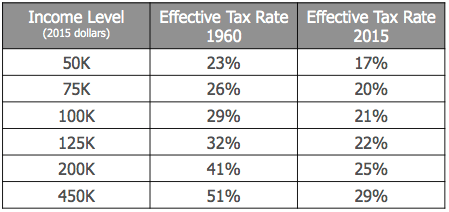
As for the retirement  problem, the math behind this is extremely difficult.  It’s hard to imagine how in the world we solve for this without changing it.  Either our retirement age has to increase or our investment does.  Or some function of both.   I understand that when we say investment, that means taxes.  And Americans have an allergic reaction to taxes.  So much so that we’ve told ourselves, with great certainty that a dollar earned today doesn’t go as far as it used to.  Which means that inflation is out of control.  Or taxes are.  Well, inflation isn’t, compared to wages.  So it must be taxes.  Actually, it turns out it’s neither.   Let’s take a look at the federal income tax rates from 1960 and compare them to now, as a function of income.
Screen Shot 2015-12-04 at 9.36.51 AM

Table-2. Data compiled form the Internal Revenue Service

It’s clearly, unarguably less today. When you take into consideration payroll taxes though, those things that we have to pay to fund social security and medicaid, it actually closes the gap between our 2015 and 1960 tax payments.  But it still doesn’t put us in a situation where the government is taking a bigger chunk out of our paychecks then they used to. Which is why taxation falls into the “same” bucket in our comparison above.  But we are asking them to pay for twice the social safety net programs than we used to and 1.6 billion years of retirement that simply didn’t exist before.  So something has to change.  This is one place where, from a quality of life perspective, things are much better today than they were in the good old days.  But from a sustainability perspective, we’re in a heap of trouble if we stay on our current path.  And trouble that is going to land squarely on my generation when it’s time to retire.

Crime

There’s more crime today as a percentage of our population than there was in the 1950’s.  According to the data from the U.S. Department of Justice,  you are 2.5 times more likely to be the victim of a violent crime today then you were 60 years ago.  The increases in property related crimes was more slight.  But oddly, the murder rate is the same.  Which means we’re assaulting and raping each other a lot more than we used to.  But we’re not killing each other more.   There’s actually an encouraging trend here in the data though.  Our violent crime rate in America hit it’s historic peak in the early 90’s.  Since then we’ve seen a dramatic decrease reducing modern violent crime rates to the levels of the mid 1960’s and trending towards the previous decades.  Despite the amount of high profile gun violence, we’re safer today then we’ve been in about 50 years.  With twice the population living in the same amount of territory.  So we should feel pretty good about it.

The issue that compares least favorably than any other issue besides children born to single parents is our incarceration rate.   We have 3.5 times the percent of our population in prison today than we did in the 1950’s.  And our population has nearly doubled.  To put it in even clearer perspective, we have 4% of the world’s population and 25% of the worlds prison population.  We have more people in prison than China and Russia combined.   And it started when we started putting people in prison for drug offenses.

In 1984, President Reagan signed into law the Sentencing Reform Act as part as the Comprehensive Crime Control act that mandated sentencing minimums and consistency federally.  This was a “tough on crime” bill for which two very clear data patterns followed.  The first was our incarceration rate almost immediately doubled. The second, was an immediate decrease in non-violent crime and an equally steep decrease in violent crime within a decade.  Mind you, one may not have caused the others but it’s important to call out data patterns because it allows us to say at least that the legislation did not make us less safe. And though it may not feel right, it does correlate to a period of decreased crime.   Which tells us that massive populations of incarceration are not a crime or safety problem.  They’re a societal segregation problem.  Because right now, when you go to jail, you clearly aren’t likely to commit a crime against society while you’re in jail.  But you and your family have opted out of most of the American dream going forward. Which is a problem for the last section.  Our social safety net.  I’m not sure the data supports reducing sentencing limits or legalizing drugs from a safety perspective.  But it does tell us we have way too many people in jail, and it’s contributing to the segregation of our country.

Global Stability

We can solve this one pretty quickly.   The first half of the 20th century was the most dangerous time in the history of mankind.  The second half, continuing on into the early 21st century has been the most peaceful.   Though the second half of the 50’s was free from war, we were about a decade removed from WWII and a few years removed from the Korean War.  During those two wars, we lost just under a half a million Americans. The world lost 60 million people.  Including the terrorist attacks of 9/11 and the 14 years of war that about 1% of Americans contributed in, and we’ve lost a little over 10,000 people to combat.  We’re not without conflict.  But no matter how it feels, the world is safer.  And it’s not close.

So What

There’s a lot of metrics that you could track down and a lot more that you could add to try to make a point one way or another.  But the bottom line is this.   Things were different in the “golden age” of American than they are today.  In some ways they were better.  But in more ways they were either worse or simply different.  Right now there is a large part of the American public, our media and our overall consciousness that believes that we’ve wandered off of a path to greatness and that we are far worse off today then we were then.   And that we need to return to “better times.”  I would issue a word of caution for those that hold that sentiment.   Both the data and the historical context are clear.  For a very narrow portion of our society, healthy white men, things were better.  If by better you meant you had no competition for work in an economy that was booming because of the impossible to duplicate post WWII reconstruction.   For everyone else, things weren’t better.  They were far, far worse.  I’ll play this out in a real world experience, mine.

I’m a pushing 40 white man with a graduate degree.  By all rights, I should look back at the 1950’s as a time that would have suited me fine.   But a closer look tells you different.  My wife, half Latina, would have faced some level of segregation in primary and secondary school for her ethnicity. Even if she made it past it and completed the two graduate degrees she has today, she would have no place helping homeless veterans as she does now, other than administrative support in the mental health profession. My mother’s four year battle with ALS that rendered her incapacitated for the last three, would have bankrupted my entire family.  My non-verbal, autistic child would be locked away in an asylum, the doctor’s would be recommending a lobotomy as his best path for treatment.   When I returned from war and struggled with anxiety and depression, I would have turned to the bottle and soldiered on in silence.  This is would have been my reality.  And I’m a healthy white man.  Which means I’m in the best shape out of any one.  If I were black, I would be in poverty and not allowed to eat or attend school with white people in most states.  If I were gay, I would be a pervert.  If I were handicapped, I had no path to independence or contribution in society.  This was the reality.   It was cruel and unforgiving.  And it makes for a bad bumper sticker.

As for the next generation, they’re fine.  They’re more educated and more technical than ever before.  And we’re right.  They wouldn’t last a minute on the assembly line in a plant.  Which is good.  Because we don’t have many of those these days.  Which is fine.  Because we’ve adapted to our role at the top of the global economic food chain as a services and consumption economy.  That’s how it works.  But they wouldn’t last a minute 60 years ago.   Just like their parents wouldn’t have lasted a minute in the coal mines and blast furnace of the generation before.  Just like that generation never would have lasted a minute scratching out a living off the land in an agricultural society.  Just like that generation of farmers wouldn’t have lasted a minute blazing a trail from sea to shining sea.   Just like that generation never would have had the guile to throw off an unjust government.

That’s how this thing works.   One generation judges the next on their ability to exist in the past.  And that generation learns the skills it needs to survive for the next fifty years.  And doesn’t learn the ones it took to survive in the last. But they’re fine. The kids I served with in war and now show up at my door in the big time technology industry can do things I can’t.  What I know, would not have gotten me hired at 22 today.  But instead of being scared of that, I learn what I can from them and help bridge the gap between what I know and have experienced and what they do so that we might walk across it to a collectively brighter future.  It’s called mentoring.  And when you do it, they listen. And when you whine about “kids these days” they don’t.  So give it a rest.  You sound old and scared.

So what does it all mean?  Well, as far as the political discourse it means this.  If you’re a progressive elected official, you can stand back and admire the social progress that you’ve help engineer over these last 60 years that has made life, liberty and the pursuit of happiness more attainable for more groups of people.  But there’s one thing that you can’t say and it’s that the social safety net that we have in place is moving people out of poverty and into financial stability.  It’s not working.   And you need to own that and help drive solutions in an economy where urban middle class jobs do not exist any more.

If you’re a conservative, you can congratulate yourself that we’ve managed to shoulder the massive load of providing government and services for 320 million people without taxing our constituents to death or crippling capitalism.  But what you haven’t done is find a way to do that without deficit spending.  And when you’re realistic about our aging, longer living population, you need to own doing something about our current revenue gap, or when my generation retires, the draw we will have on the broader economy will cripple us.  It’s simple math. And please stop with the “let’s go back to Mayberry” rhetoric.  Because it’s not real.  And for most of us we just hear thinly veiled bigotry and close minded thinking.  It’s not helpful.

For those of us who still suffer from the burden of free will with our votes, let’s keep an ear out for anything that starts to resemble that kind of discussion.  Until then, just keep tuning out the fear-mongering or blind compassion.  It’s not worth the mind space. We’ve got real things to solve.  And getting back to the “good old days” doesn’t solve any of it.


The Executive

The American political debate predates the political parties that have gone on to organize  the centuries of scripted opposition that we have been conditioned to believe are required for successful government.  It wasn’t always that way-almost, but not always.  For part of one brief administration, we stood united as one political party, aligned in the celebration of our new found self governing zeal.  Our days of unity were numbered though.  The forces of division had already begun. The embryo of political opposition had embedded itself within the cabinet of our first president by way of two men whose collective ideas would chart the course for the first 50 years of our nation’s government.  Tempered, they were critical to responsible governing.  Un-tempered, they would have destroyed us.

The first Secretaries of State and the Treasury, Thomas Jefferson and Alexander Hamilton respectively found themselves at irreconcilable odds.  They weren’t at odds because their political parties required them to be or their special interest groups funded them to be.  They were at odds because they believed very different things about government at a time when the pavement of the walk that was our government was still wet.  And the thoughts that would guide the path that would leave their footprints for all time to follow were important.  Jefferson believed fiercely in the democratic republic who’s ideals he so clearly outlined in the Declaration of Independence.  He was the voice of our Revolution and the voice of the enlightened government it gave birth to.  Hamilton, on the other hand,  advocated for a government much more similar to the British form we had just cast off.   We were in uncharted territory at the time.  And many, like Hamilton believed that our new form would not work.  They viewed Jefferson as an ideologue who’s vision and philosophy lacked practical application. We were new Americans at the time. Some believed in Hamilton’s view.  Others, Jefferson. But those on both sides believed something else though.  Something much more tangible than a philosophy of government. They believed in a man. They believed in George Washington.

George Washington was better than everyone at everything he did.  At least it seemed that way.  At 6’2 he was a giant for colonial America.  He was the best horseman anyone who ever rode with him had ever seen, which for the day was the most important thing that a man could do well in the eyes of other men.   He survived smallpox in his youth-forever inoculating him from the disease.  He walked fearlessly among the sick, giving him an air of immortality. There were stories of his invincibility in battle as well, having had four holes shot in his red coat and several horses shot out from under him as a captain fighting as a Brit in the French and Indian War.

His daring conquests against the British Army had made him the most famous man in the new world.  After being beaten out of New York and across New Jersey, losing half of his Army against the same British he once served, he launched one last resolute attack across the icy Delaware River from Philadelphia into Trenton, giving the colonials a daring victory to feed the spirit of our revolution for the winter of 1776 into 1777.   He had every reason to retreat and regroup.  He did not.  He had bested the most powerful army the world had ever seen and won our freedom.  He had rode out as president, the only president to ever do so, with an Army to put down the Whiskey Rebellion.   He was the human embodiment of our executive branch.  And though he allowed his cabinet to explore the left and right limits of progress as a nation, mostly in the form of Hamilton and Jefferson’s bickering, Washington ensured that the footprints in the pavement that dried behind them would, at all times, be traveling forward.  Writing to Jefferson in 1792, Washington rebuked,

“How unfortunate and how much is it to be regretted then, that whilst we are encompassed on all sides with a avowed enemies and insidious friends that internal dissensions should be harrowing and tearing our vitals. I believe it will be difficult if not impracticable to manage the reins of government or to keep the parts of it together for if instead of laying our shoulders to the machine in which measures are decided on.  One pulls this way and the other pulls that, before the utility of the thing is fairly tried it must inevitably be torn asunder and in my opinion the fairest prospect of happiness and prosperity that ever was presented to man will be lost, perhaps forever. “

This was Washington telling Jefferson to quit his partisan bickering and keep his eyes on the prize. It was not given nor received as a request. It was an order.

It was this resolve that the American people assigned their fates to.  And in all things, it was Washington who they trusted.   He begrudgingly signed on for a second term to see the thing through lest all that they work for be “torn asunder”.  But even for him the politics and outcries of our national discourse would grow, and his second term, found him more open to criticism, yet stoic and resolved as ever to lead his people to stability, all be it miserable and exhausted.  Jefferson would resign as Secretary of State the following year and run for president unsuccessfully at the end of Washington’s term and then successfully four years later.  Hamilton would be killed in an 1804 a duel with then Vice President Aaron Burr at the age 49.  Within two decades, the Federalist party he founded, which advocated for a strong executive and a national bank, would be gone.  The debate moved on to other issues.

Throughout our history, America has had great variance in our experience with the heads of our government.   The one’s we remember well, tend to come in two flavors. Some serve, by chance, at a time of great significance and their character, intellect and executive savvy serve as the fulcrum for which the American people lift themselves from crisis or pivot towards social change. This is Lincoln. This is FDR. This is JFK. These are men defined by crisis and change whose will and guidance have preserved our nation when perhaps our future was not so certain. Others we remember are the great leaders, above the political fray, whose astute judgement moved us forward, away from crisis and on to a stronger future. This is Jefferson, Jackson, Eisenhower and of course Washington. Though many of these men lived through crisis prior to taking office, something about their experience enabled them to wield power effortlessly with an unquestioning obedience from the American people and in turn from their government. What they had is what we so desperately crave now-the unwavering trust and allegiance of the American people.

As we assemble to pick our new head of state this next year, we must measure our options wisely, though I fear we’ve already lost this contest to the same forces of dissent present in Washington’s cabinet 230 years ago.   The great leaders of crisis mean hard times, death and war.   Those are the leaders you can’t and hope never to choose.   So in our hearts we long for the transcendent leader who can stay above the fray and unite us in our march forward towards continued peace and prosperity.  The leader who, though forces at work move to pull the very fabric of our discourse apart, stands silently above it, holding watch over our government and our people, as Washington did when Jefferson and Hamilton had their  earthly squabbles.  This is what we long for.  And for those of us not imprisoned by the dangerous vigor of blind ideology, this is what we vote for.

There’s a problem though.  And it’s not going to fix itself over the next 12 months. The fray today is too big.  Our political factions are more polarized than we have been since the Civil War, arguing with great passion, things that simply don’t matter any more.   Our all powerful media knows no other way than to fan the flames of outrage and discontent, providing heat and oxygen to a flame that, if it were up to the people alone, would have long died out.   And those who might rise above it, the great men and women of our day, understandably, aren’t interested.

Things look dim.  We are hungering for someone, anyone, who isn’t poisoned by the sickness of our political discourse.  We want it so badly that we’re clinging to candidates, the “anti-establishment” ones on both sides, that are comically unsuited for the title of leader of the free world just to stave off accepting that we are exactly where we are.  We are stuck.

Though I commend our current administration for driving needed progress in narrow, long overdue areas, I also regret that the division in our nation has grown.  Our executives over the past 30 years have operated within the fray, not above it.  Which leaves us where we are.  For four more years at least, bumping along the seabed of our potential through the irrelevant debate of the last 50 years.  For the last ten elections, there has been a Bush or a Clinton on the general or primary election ticket for President of the United States in nine of them.   We are stuck in not just an ideological loop, but a literal one.  One that, because of its incessant focus on “shrink vs grow government” leaves us paralyzed and incapable of addressing the critical problems of our government insolvency, entitlement reform and urban decay.   We are incapable of addressing the impact our transition from manufacturing to services and technology  has had on our workforce-a change that started 40 years ago.  We’ve been flatfooted for decades. Now the sickness has seeped into our foreign policy, an impassable barrier that once stood to ensure we faced our external problems as a united front of American will.  Head’s of state now address our congress without the consent of the president.  Things are dim.  But fear not.  There’s a light on the horizon of our long, dark political night.  Change is on its way.

The 2012 Presidential election was the first one, by law, that my generation would have been able to participate in, as a running member.  My generation, the one that had internet in college.  The one that was too young to care about the color of people’s skin or their sexual orientation.  The one that spent all of our 20’s and most of our 30’s fighting the longest war our country has ever seen, only to likely have to fight it again in our 40’s.   The generation whose social security checks won’t be there when we retire at the trajectory we’re going.  My generation who will live to watch our children grow up in the global climate impacted by three hundred years of industrial growth. My generation who has participated in a workforce whose wages haven’t increased since we’ve been in it. My generation is coming.  It may be a bit.  But our votes count.  And soon we will be there with more than our votes.   Not those of us who rushed into the political life because we were drawn to it as a vocation.  They’re already there, driving the churn of the irrelevant debate.  But those of us tried by something else.  Tried by the crisis and failure of those that came before us.  Tried by decades of war and economic struggle. We are coming.  And real change will come with us.

The Seventh Party System

Change is frightening.  It’s disruptive and mysterious.  It’s also constant.  Embrace it or shape it and you can survive.  Ignore it or resist it and you won’t.  As it is in business, technology or climate, change in American politics is also constant. And more rapid than you might think.

Though political change can feel like it moves at a glacial pace, it can move fast—sometimes violently. And often. Political historians will tell you that America has experienced six distinct political party periods in our 240-year history, each one ushered in by fairly swift changes, usually within the course of a few years.

We refer to these periods as “party systems.”

What makes them distinct actually varies. The creation of a party—we’ve had presidents from four—the arrival of a new issue, the enfranchisement of a group of people or just a general shift in social or economic consciousness can all contribute to what signals the birth of a new and the death of an old party system. It happens about every 40 years.   And it will happen again, without question.

The current one turned 50 a few years ago.  Straight math tells you, we’re due.

As humans, one of the things that our nature makes us susceptible to is the tendency to overstate the permanency of our current environment. Unless we have a concrete reason to believe something to the contrary, we assume things have always been the way they are, fundamentally.  We also overstate the resiliency of current circumstances and underestimate just how different the future may look. Because we haven’t seen it yet. Projections are exactly that; views of what the past might look like in the future. They’re dangerous that way.

If you ask most people, they’ll have some sense that though the specificity of political issues has changed over the years, our political history has always broken down along conservative or liberal lines and always will be. And in America, the land of the free and the home of the brave, conservative means small government, liberal means more government. Which would imply that we’ve been locked in a 240-year struggle over “as little as possible” vs. “as much as it takes”, when it comes to government that is.

It’s a fine narrative.  One you could probably support with dozens of quotes from our founding fathers about the dangers of government infringement.

It’s also mostly false.

Here’s one of those times where context and history can help us understand the past in a way that will lead us to the conclusion that we really don’t understand the future. At least not the way we think we do. Because tracking a distinct line of demarcation between conservative or liberal views throughout the six American party systems is a pretty frustrating exercise. I tried. You can’t. And for good reason. Because the idea of liberal or conservative is something that we didn’t actually get around to arguing until the 20th century, and not really in the way that we do now until the last 50 years.

Hard to believe…I know.

What about all those quotes from our founding fathers about the evils of government? Jefferson, the man who wrote “life liberty and the pursuit of happiness” also wrote. “The best government is that which governs least.”  Right?

Well, there’s a few things to consider there. The least of which may be the fact that he never actually said that. The first appearance of that quote in print was ten years or so after Jefferson died. But never mind that. There’s something more important. It’s what our founding fathers actually meant when they spoke of tyrannical government overreach. It’s vastly different than what we think of today, and not just because it’s adjusted for technology and culture. Because it was fundamentally a different debate.

So let’s unpack it.

When it comes to revolutions, the American Revolution is a big one. When it comes to impact on Americans however, one could make the argument that it’s actually a runner up to another one that happened 90 years earlier in England, the Glorious Revolution.  That one’s a long complicated story that we won’t get too far into that involves a civil war, religion, the collapse of a monarchy, the rise of parliamentary power and all kinds of things in between that took decades to sort out. But the key takeaway from the blood and battles of 17th century England was that there was an ongoing and growing struggle over the balance of power between the monarchy and parliament. It’s a straight line to our founding fathers.

Ninety years later when the enlightenment movement migrated to the colonies and the “Rights of Man” became the battle cry for our revolution, that other revolution was still front of mind. And for our bristling revolutionaries, parliament had become synonymous with the interest of the people (which people would take another hundred years to sort out) and the monarchy represented the interest of centralized authority.

For context, it’s important to remember that tragically few people in 17th and 18th centuries were granted the ability to elect their representatives. Nearly all of mankind was still governed  in some form, absolutely. So for the most part, when our founding fathers lamented government, they lamented the crown, because it was absolute, ordained and not democratically elected.

Our original “ask” as a colony was for representation in Parliament. Had we gotten it, history may have been different. The expansion of the distrust of all government, even representative government, was still a good century away. And it really only cranked up when that representative government started to tell people that they weren’t allowed to do things that they wanted to…like own other people. Which wasn’t really about government. It was about owning other people and the economic and cultural dependency on the practice in one region relative to another. It was fundamentally different though.

The debate is flexible. And it changes.

The true political debate for the first 75 or so years of our country, the first two of our six party systems, had nothing to do with the size and power of the government as a whole.  It was actually an ongoing debate between the power of the president and the power of congress, our version of the crown versus the parliament. The formerly English white land owners continued the argument from the previous 150 years because they didn’t really know any better. And they were scared to death that we would slide back into monarchy. It had very little to do with the role of federal government as a whole. And everything to do with the relationship of Congress and the President.

The next few systems would show us wander even further away from big government concerns. The third party system was a debate over slavery masked in state’s rights propaganda. Following that, the fourth party system was an interesting transition into trust busting and the elimination of corporate influence in government. By the end of the fourth party system, the Republican party, born at the dawn of the third system had ridden a wave of equal treatment of minorities and big business reform to eighty years of political dominance.

Try to find today’s Republican Party in that message.

It’s fair to ask the question, if conservative values are anchored in tradition, which traditions are we actually talking about here? The answer is entirely dependent on what point in time to choose to discuss.

So what?

Once we dismiss the notion of a permanent debate of big government versus small government, we are now freer to investigate the roots of our current situation. Which can be found in two significant events of the 20th century. The first was the great depression and the dawn of the “New Deal” Democrats of the fifth party system which focused, for the first time really, on the needs of the modern American working man at the expense of corporate shareholders and general taxpayers. The second was the final enfranchisement of African Americans that resulted from the Civil Rights movement of the 1960’s that ushered in the 6th and current political party system. These two events that happened within a generation of each other served to do two critical things.

The first was that for the first time, we created an immediate risk that those who possessed wealth, could be impacted by the need to support those that did not.

The second was to create a need to sustain a cultural, ideological racial divide that once was satisfied by law.

And the overall impact is this. On two impossible to change levels, we’ve created the “we’s” and the “they’s”.  And if there’s one thing we generally struggle to get past in any large scale, it’s the fact that the we’s are always right…and the they’s are always wrong.  Which is why our current political discourse sounds like Red Sox and Yankees fans debating who sucks more. It’s not getting sorted out. And it’s painful to watch.

We are now in the time of identity based politics.

But we don’t have to stay there.

If we decide to look at the problem objectively, a social safety net and the overnight enfranchisement of a minority group that will disproportionately require that safety net, raises a very real concern that we may grow our government programs at a level that will require disproportionate funding from the people who need it least. And it’s a fair concern, logically.

It’s not going back to the old way though. Because there never really was the old way without legal segregation or other unacceptable poverty and social justice issues. And people tend to forget those things when they think of the Mayberry they so desire. So we need to take the next step. The step that no one is interesting in taking just yet. The step that will likely kill the sixth party system and give birth the seventh. That step is to ask ourselves, if it’s not going back to the old way, and the old way is a subjective term relative to how old and what color or what gender we are, is this debate still relevant?

The reality that has been building over the last 30 years is that that it’s not.

We’re not shrinking our government. Both Democratic and Republican regimes over the last thirty years have increased the size and scope of government. We haven’t had a balanced budget in twenty years and when we did it came under the party that is supposed to spend too much. We live to be eighty years old. Technology and communication have shrunk the world to the point that our requirement to defend ourselves is enormously expensive. Most of the medical treatments we use today to provide our quality of life didn’t exist forty years ago. The burden to educate our youth requires them to graduate from 18th grade before they’re competitive for employment because the things we make today are made with science and technology, not sweat and commitment.

The list of current issues could go on and on. None of these things are good or bad. They simply are. We adapt to or shape the change and survive. Or we ignore and resist and you don’t.

Nothing about the reality of 2015 America would have you believe that shrinking the government alone is the most effective strategy to advocate for in order to navigate the next fifty years, unless you were stuck in the irrelevant loop of the sixth party system debate.

On the other hand, growing government with ineffective social programs that don’t work is a lousy plan to.  So we need to stop talking about either of those things and start talking about something else; solving 21st century problems, not complaining that the 20th century ones didn’t go your way.

If you’re a stalwart of political parties, I understand that this is hard. But don’t worry, the parties, as they exist right now, are terminally ill. And history has shown us, they’ll eventually die, if not in name, in form and function.

So be wary of hanging on. History is generally not too kind to those who stay too long.

42% of our voting population identifies as independent. Which means that presently 58% of the voting population, registered Democrats and Republicans have weakened their relevance as members of the electorate. That sounds harsh, but when our elected officials have increased their partisan voting records over the last forty years to levels not seen in modern political times and no one will address the meaningful issues discussed in the previous paragraph in a productive way, that’s where we are.

Don’t mistake one party owning the government for winning. Winning is effective governance. And that’s not happening right now.

People who blindly vote the party line, are soon to lose their relevance. We’ve seen that you can trot anyone out there with they’re party and they’ll vote. And the outcomes are unacceptable. Which means that we independent minded people have all the power. We also have all the obligation to drive change. And history shows, change comes swiftly when it does.

So, in service to making our country as great for the next 100 years as it has been for the last 240, let the seventh party system be the system of outcomes. Where we debate the how of our outcomes, not the if.  No congress and no president can get elected without our consent. We are the king makers. So let’s choose wisely. Let’s choose those who stop debating climate change and start talking about solutions.  Let’s choose those who are willing to throw out the current social safety net in service to creating one that actually works.  Let’s choose those who talk about how our government can fund itself without beating around the same debates of taxes or debt. The change is coming.  The 42% of the electorate identifying as independent voters, by the way, is the highest it’s ever been since pollsters started asking that question. And it’s growing.  The winds of change are blowing.

The Three Dimensions of Useful Political Thought

Five days before General Robert E. Lee’s surrender in April of 1865 and ten days before his own assassination, Abraham Lincoln considered a request by the Virginia State Legislature to assemble for the first time since Union troops had occupied her capital in Richmond three days earlier.   Though his cabinet was in violent opposition to the notion of an occupied enemy legislature assembling, Lincoln believed it was necessary.  He noted “there must be courts, and law, and order or society would be broken up, the disbanded armies would turn into robber bands and guerillas.”   He believed that the best course was to allow, “the prominent and influential men of their respective counties…come together and undo their own work.” After four years of war and over a half a million people killed, America was in need of healing, not punishment. And in order to get there, he needed the leaders of the South to lead their people through it. In April of 1865, the singular political question of consequence in America was how to deal with the reunification and reconstruction of the 11 states that seceded from the Union four years earlier.   Lincoln, as usual was thinking about the problem in three dimensions.

Three Dimensional Thinking

Lincoln was a man of deep principle.  He formed his policies on the belief that a nation founded on the ideals of liberty and equality was equal parts worth preserving and incompatible with the institution of slavery.  His willingness to hold to that principle at great cost is likely his most significant contribution to the preservation of our Union as it exists today.   But what made Lincoln so special was that he didn’t stop with principle. He had the compassion to consider all that the Southern people had been through and the pragmatism include even the chief architects of their secession in the solution to their ills. Like an object needs length, width and depth to be an object, political ideas need principle, compassion and pragmatism to work.  And by work we mean make people’s lives sustainably better.  Our great leaders, the one’s that have built and sustained our society, think in three dimensions when others do not.

Less Than Three Dimensions 

Principles are dangerous things without compassion. Believing that your role as a government is to create the greatest nation on earth is a fine principle. But if you decide to exterminate members of your society that you believe are holding you back from that goal and conquer and subjugate your neighbors to prove it, you’ve got Nazi Germany. It’s an extreme case, I know, but one that effectively shows what happens when principle is devoid of compassion.   Principle tempered by compassion is a truly powerful thing. But it’s still not enough.

For a policy, movement or activity to be effective, it actually has to be possible. Let’s explore an example.  If you have a principle that says that Americans have a God given right to life, liberty and the pursuit of happiness, and temper that principle with the compassion to include those whose basic medical needs cannot be met by their own employment or economic circumstances, you may come to the belief that healthcare reform is required. But if you decide that you want to do that through a single payer system where the government pays for all of it without raising taxes, you don’t really have a policy.  You’ve got something else.  Thankfully, we didn’t decide to do that.  Contrary to popular belief, the Affordable Care Act is not socialized medicine. It is, however, based on  the same principles and compassion that would lead you in that direction.  It diverges from it though with the critical pragmatism of privately provided health insurance.  The Affordable Care Act is actually three dimensional. Much of its criticism is not. Which is why it actually appears to be doing what it’s supposed to do.  Get more people health insurance at a reasonable cost to our society.

The Two Dimensional Era

So what’s happening today? We appear to be stuck in a two dimensional loop.  We either stop once we’ve devised a principle and try to form an opinion based solely on that, or we do something equally ineffective. We cry out in compassionate outrage against the unfair suffering of others independent of principle.  Which has created a binary ongoing discussion that never actually gets completed with the pragmatism that is required to fix anything. But it does get lots of attention and passion. So it continues.

Let’s look at the Black Lives Matter –v- All Lives Matter debate (the silliness of how that actually looks in print is not lost on me). We either have an almost mature formation of a movement if we do it three dimensionally, or an unhelpful toxic unformed argument that will yield nothing but division if we don’t.  In three dimensions we’re leading with the principles that no one is excluded from the protection or enforcement of an effective criminal justice system, including those we depend on to enforce it. That principle is informed by the compassion that we feel towards those who are subjected to the violent reality of life in our urban poor areas, again, including those with the impossible task of policing them. And finally, we start to talk pragmatically about what to do about the root cause of the issue, which is a massive segregated divide between our urban minority neighborhoods and the rest of America. So in three dimensions, we are circling in on a mature, potentially successful discussion on how to address the issue. But we’re not doing that. Like most of our debates today, we’re doing something else.

Right now our society is broadly locked in the death grip of arguing principle versus compassion, which is like engaging in an argument over whether a car is fast or blue. Neither side is wrong. They’re just arguing incomplete thoughts. Which is actually impossible. Just because it’s not possible, doesn’t mean we won’t try to do it every chance we get though. We’ve got a two dimensional, $280 billion dollar media market getting fat on the industry of conflict and outrage and our political discussions have been infected by it. But that doesn’t mean you have to.  And it’s really not that hard to keep yourself three dimensional, even when all around you are flat.  It takes a little introspection though. Turning to memes, tweets and soundbites won’t get you where you need to go.  They’re one dimensional at best. So instead,  next time you’ve gotten yourself worked up about a societal problem, ask yourself a few questions. What principle of yours does this societal problem upset? Second, how does this societal problem impact the people it involves; all the people, not just the ones exactly like you. Lastly, ask yourself what you’d have to do to fix the problem.  If you can’t bring yourself to do this, you may need to ask yourself if you’re really interested in fixing the problem or if you’ve become addicted to the glorious outrage of its existence.  Which is another problem all together.  One for another time.

The American Discourse and the Impact of Citizen’s United

A few weeks ago I read a tweet with a link from author Doris Kearns Goodwin’s appearance on the Daily Show. In it she said, “I think if I were young now, the thing I would do more than anything is to fight for an amendment to undo citizens united.”

Goodwin is a Pulitzer Prize winning historian who has written on FDR, Teddy Roosevelt, Lyndon Johnson, the Kennedys and others. About 13 of the 900 or so pages of her book Team of Rivals was turned into the movie Lincoln by Steven Spielberg. She is unquestionably considered one of the foremost American historians of our time. Which means when she talks about great American causes I tend to listen. But what about the Supreme Court’s Citizens United ruling from 2010 has drawn the attention of Kearns and many others as the great risk to democracy of our time? To answer that, you have to do some digging on how we got here and understand where “here” actually is.

Campaign financing regulation actually predates our country. There’s a funny story of how George Washington won an election in the 1750’s to the house of Burgess because he handed out alcohol and food at the poles. It was actually pretty normal at the time. Virginia passed a law shortly after outlawing the practice. By the middle of the 19th Century, America began to pass laws that prohibited politicians from demanding contributions from civil service workers and then appointing them to positions based on the heartiness of their contribution. Hard to imagine it took 75 years or so to figure that out but you have to remember, we were 1st market movers when it comes to world powers and democracy. We had some things to figure out. Around the turn of the 20th century, President Theodore Roosevelt drove legislation that curbed corporate and private participation in the same type of patronage actions. By the middle of the 20thcentury we got around to getting organized unions out of mobilizing their workers to fund campaigns as a prerequisite for membership. So by the 1970’s we had mostly eliminated the affronts to democracy that lesser developed nations still suffer from. From there, it got a little more complicated.

The Federal Election Campaign Act Amendments of 1974 (FECA) formed the basis for much of the current federal campaign laws. It included limits on contributions to federal candidates and political parties, a system for disclosure and voluntary public financing for presidential candidates. The Act tried to impose campaign spending limits but the Supreme Court threw it out 2 years later. It also created a governing body, the Federal Election Committee. So by the 70’s, there were limits on contributions, transparency on those contributions and a governing body to enforce the rules. There were still no limits on campaign spending either by a candidate or corporation for support of a candidate’s party or cause though.

In 2002, the McCain-Feingold Act was signed into law. This act materially accomplished two things. It eliminated “soft money” from party finance. Soft money is a term used for political party general purposes like party building “activities” that weren’t subject to regulation. The second thing that McCain-Feingold did, and this is actually what Citizens United overturned, was eliminate corporate funding of issue advocacy ads; those ads which name an actual candidate within 30 or 60 days of an election. Corporations could still fund ads that advocated for conservative or progressive causes all they wanted through third party groups like the Koch Bros, American’s for Prosperity. But as a corporation or union, you couldn’t “pick your guy” and bank roll him. And though the spirit wasn’t to advocate for a specific group, you could fund groups that said or even called themselves “Hillary is destroying America”. Which happened, regularly and legally. Which means that prior to 2010, corporations and private organizations could and did already contribute massive amounts of money to finance political actions.

So if it didn’t create corporate participation in politics, what did the Supreme Court actually do in 2010? Well it can get complicated but, materially, it did two specific things. It removed the ban on independently funded adds 30-60 days before an election and opened up direct funding for corporations and unions for express advocacy ads. It had some second order effects on the characteristics of the groups that could organize to raise funds for an election but the important part is that it streamlined the process for corporate and union participation in funding. Which has triggered the outcry. But there’s a lot of noise in the outrage, and as a result, there’s a chance to miss the signal in the noise. Because when you look at the data, something doesn’t match up here.

Screen Shot 2015-08-20 at 12.37.49 PM
Federal Campaign Spending

There has been, without question a massive increase in campaign spending since Citizens United in 2010. But if you look closer at the data behind campaign finance, we see it actually predates 2010, substantially. In 1996, we spent about $21 million on federal elections, through regulated channels. By 2004, that amount rose to $340M. That’s a 1500% increase within the cycle of two presidential elections.  But that actually doesn’t tell the full story. If you count the “soft money” explosion that led to McCain-Feingold, spending in the 96 election rose to almost $300M, several times more than any other year. Though McCain Feingold eliminated that “flavor” of spending, it appears that we couldn’t un-ring that dinner bell. By the following presidential election in 2004, outside spending for federal elections had increased 900 percent. That’s 900 percent in four years, six years before Citizens United.

So when you actually look at the path of historical spending above, and also take into consideration that the “soft money” from the mid 90’s isn’t accounted for in that data, we see something very clearly. And it didn’t happen in 2010. Something very different happened about 20 years ago, and the impact has been an explosion in spending on elections. And as big as the increase has been since Citizens United, it’s actually nowhere near the jump we saw between 1996 and 2004. So what happened in 1996? Quite a bit actually.

The day I enrolled at the United States Naval Academy in the summer of 1995, I was issued a computer. That computer was different than all the computers that the Naval Academy had issued in the previous decades to its thousands of students in one very important way. It connected to the internet. At the same time, the digital cable revolution was crossing America increasing the average channels of cable offering from dozens to hundreds. Fox News and MSNBC launched the next summer. So about the time when our campaign spending began to explode, something else was exploding too; the amount and methods for which we began to consume information.

Here’s some data. In 1996, the average American spent about 500 hours watching cable TV a year. By 2010, that number had more than doubled to about 1100 hours a year. We also watched network TV, where “mature” information lives, about 300 hours less. You can also add in 200 hours a year on the internet that didn’t exist at all prior to 1996. And here’s the kicker, according to a study by the mobile measurements and platform company Flurry, you can add another 800 hours a year on smartphones. Which means that we spend more than twice the time consuming information today then we did 20 years ago. Which means one thing. There’s a lot more money to be made off of the American attention span than there used to be. And there’s a lot more competition to get it.

Taking a breath, a calm step backward and an objective look at the data, and we start to see what’s at work here: economics. In order for a market to exist, there has to be demand. Prior to 1996, the demand for information, political or otherwise was relatively small. We had newspapers, magazines and a handful of television channels. Over the past 30 years though, technology has changed that opportunity. And as a result, investment in the media world has also changed. Prior to 1985, corporate investment in media kept pace with the general economy. After 1985, that changed. By 1995, communications industry spending grew at 150% of the pace of the economy. By 2014, growth in media spending had nearly doubled our economic growth rate. And we were off to the races.

If you look at the type of spending that has blown up, it’s what is referred to as independent expenditures. In lay terms, it’s money that comes from somewhere other than the candidates or parties directly like wealthy individuals, corporations or Political Action Committees (PACs). Independent expenditures actually account for over 90% of the increase in spending. And again, it started almost a decade before Citizens United with a 1000% increase from 2000 to 2004. If you pair that finding with the advent of the information consumption age it leads you to one very strong conclusion. Massive amounts of money have flowed into the federal campaign system over the last twenty years for one very good reason. There’s actually something to spend it on that works.

Ask yourself, what in the world would you have been able to spend $1 billion of advertising money on in 1980? How many network TV ads or mailers could you send? How many people could you compel to go knock on doors? Not that many. Which brings us to as close to a smoking gun as you’re going to get for the cause of our massive increase in campaign spending. Which leads us back to the question of Citizens United and what to do about it.

The exercise with McCain Feingold has taught us a fairly valuable lesson. Now that there’s a mature market for profiting off of political expression, efforts to close it down through finance reform serve mostly to change the flavor of money flowing in. We can squeeze the balloon, but unless you pop it, it’s still going to hang around. Which leads us to the next logical question. How do we pop the balloon? Well, we actually can’t. If there is demand, and it is legal, there will be money to invest. Even further, the billion dollars we spent on the election directly in 2012, is merely a fraction of the total media market that is, in some part being fueled by the content of political discourse. Which means that even if we found a way to completely abolish political spending altogether, it wouldn’t put out the fire. The 24-hour news cycle, social media markets and talk radio are a hell of a lot bigger than the $1 billion industry. The six biggest media companies in the country, GE, Viacom, Disney, Newscorp, CBS and Time Warner had just under $280 billion in revenue in 2010. The money being raised for campaign financing isn’t driving our media and how they choose to market and display content. Because it’s not the campaign money that they’re after. It’s our attention.  And as long as we humans are susceptible to focusing on things that affirm our beliefs or outrage us, then the current dialogue isn’t going anywhere and neither is the media market it fuels.

So if it’s not the money, what is the great evil that we’re trying to shout down right now? What is the Doris Kearns Goodwin advocating for in the form of a Constitutional Amendment? Remember, Constitutional Amendments are big deals. They do things like outlaw slavery, grant citizenship, allow women to vote, ban drinking, allow drinking, let us speak freely, have due process, carry assault rifles. When we amend the Constitution, it needs to yield an outcome. Which is why it’s not easy to do. As for the issue of campaign finance, I think we can all agree that there’s something that feels unclean about the combination of large sums of money and the democratic process. But it’s still fairly regulated and we’re not actually accusing anyone of outright fraud of corruption here. So what is the problem? It’s actually a pretty big one and it’s been happening for a few decades.

The problem isn’t that we’re buying our candidates. The problem is that we’re subjugating them, and not with the will of the people as they ought to be.  And the result is the polarization of our two political parties. Over the last 40 years, democrats and republicans have increasingly voted only democratic and only republican more and more. In 1970 if you were in the United States Senate, the majority of a party voted the same way on legislation 27% of the time. Which was good, because when you wanted to get things passed, you had the opportunity to convince reasonable people in both sides of the party to agree. In 2014, the majority of a party voted the same way 70% of the time. Which means, quantitatively we’re 250% more polarized now than we were 40 years ago. Which is a problem. Because it means our politicians used to put a lot more thought and a lot more consideration into their positions

If it’s not campaign financing that they’re afraid of, then what exactly is it that’s driving our politicians to take so few risks? That one’s pretty clear. It’s fear. Fear of a media market that has long since outgrown the need for campaign spending and has since moved on to the more fruitful harvest of outrage, conflict and dissent. If you think that’s an overstatement, consider this. The first Republican Presidential Primary debate in the 2016 election was the highest viewed cable program in the history of cable television. There’s blood in the water now and if you step out of line against the base, someone is going to market the outrage immediately and on an inescapable scale. So you don’t, because you want to keep your job, which unfortunately isn’t the goal of our government. A politician wanting to keep his job isn’t a new phenomenon though. It’s as old as the institution of democracy. What is new, is the scope and scale of the information engine capable of taking it from them.

So do we mobilize and advocate for a Constitutional Amendment as Goodwin said? While it’s likely that eliminating some level of the spending in campaigns won’t hurt, I think it’s also fair to say it won’t solve the problem. There’s a wild fire burning and though the Supreme Court poured gas on it in 2010, it didn’t light the fire. And it’s only a matter of time before that fire doesn’t need the fuel of campaign finance at all and provides us with candidates who draw eyeballs instead of money.

Donald Trump anyone?