The Thin Blue Line

Over the past 12 months or, the national discussion about the conduct of our law enforcement officers in our urban neighborhoods has reached a fever pitch. Amidst the backdrop of instances of excessive force and murder we’ve taken up sides and dug in.  And though we’ve once again found ourselves drunk on outrage and addicted to the argument, I’d like to offer up a moment of clarity-a brief chance to find some signal in the noise by answering two important questions.  They’re simple questions but important ones and I haven’t heard anyone ask them yet.  So here goes.

What is it that we’re really asking of our urban police officers in America today?

And what expectations should we reasonably have for their success?

Law Enforcement in the Age of Deindustrialization

In order to get our arms around the full scope of the task we’ve asked out of our law enforcement professionals, it’s important to understand where we are on the arc of our journey as a society. This isn’t a commentary about the American fall from grace or even a challenge to our idea of American exceptionalism. I’ll leave that to the politicians. This is a factual account of the socioeconomic outcomes of deindustrialization. Which may feel less exciting than moralizing and pontificating about times past, but it’s critically more relevant to this discussion, if the discussion is aimed at solution.

Here’s the cold truth. We are no longer an economy where people labor at making things in America. We still make things. Just differently then we used to. We produce 4% more steel then we did during the Reagan administration. We do it with a quarter of the workforce though. As a result, we are an economy where the labor focuses on doing things and enabling the consumption of things. This is not a function of societal decline or poor leadership. It is a result of the globalization of the industrial workforce and the progress of technology that America has largely driven. Good, bad or indifferent, something happens to the population of a nation that goes through the process of deindustrialization. As a result, something happens to what we ask of those that police it. And for specific areas, like our decaying urban environments, that something is not pretty.

The post-World War II era was a period of massive industrial boom for America.  It started with the mobilization of the war effort, continued with the requirements for export to rebuild Japan and Europe and peaked as that industrial engine fueled the automobile industry, suburban housing and the massive boom of consumer goods consumption in the 50’s and 60’s.  But as the globalization of the manufacturing workforce began in the 70’s, our industrial employment engine began to atrophy.  Not because we were dying as a country, but instead because we began to progress into a services economy. The FIRE industries of Finance, Insurance and Real Estate took hold and have maintained. Within the last 15 years, we’ve added the technology sector into the mix to create a very different work force than we had decades ago. The impact of on our urban environments has been very clear. Most of the higher paying middle class jobs today exist outside of the city in suburban America. What’s left in our cities is two things really- a small number of the true industry leaders and power players that live in the extreme high end neighborhoods and the “second city”, as defined in the landmark study by Karl Alexander and his team from Johns Hopkins University highlighted in the recently published book The Long Shadow.

The Long Shadow refers specifically to Baltimore but it’s a fair proxy for any town urban America.

“It is a wonderful place for a weekend visit and a great place for some to work, but this new economy is focused more on making money than on making things. That leaves a gaping hole in the middle, and most of the well-paid professionals laboring in those office towers head out to the suburbs at day’s end. Then the second city emerges, with the low-wage night crew cleaning and security personnel standing guard.”  

Right now, the residents of Baltimore are, in the best cases, those that make the “second city.”  At worst they are the generationally destitute living off of a social safety net that is ill equipped to provide them with the one thing that has any chance at providing them with a future; relocation. There is no future for them in the city. And no way to leave either.

The Bethlehem Steel Works once employed 30,000 people in Baltimore at a time when 75% of all jobs in the region existed within the borders of the city.  By 2005, the plant employed 1,500 workers.  In 2013, it was closed.  There is no recourse for that level of job destruction.  And I want to be clear, our national economy is as strong now as it likely ever has been.  Our middle class urban one, however, is in ruin.  Which is an important distinction because it highlights that most of America has no idea the level of urban decay we are experiencing.

There’s one group that is painfully aware of it though-urban law enforcement. They’re left with the charge of keeping the peace in the societal crater that’s left behind.

Policing the State of Incarceration

There are over 700,000 police officers of some flavor in our country. Roughly one out of every 220 adult Americans is a law enforcement officer.  This is aligned with the ratio of most industrial countries.  All across America these professionals arrest 39,000 people every day.  That’s not aligned with the rest of the industrialized world.  You’re twice as likely to be arrested as an America in American as you are as if you were a Brit in the U.K for example.  We have a lot of laws that put people in prison these days and a lot of sentencing guidelines that dictate long prison terms. None of them, by the way, were passed by law enforcement officers. The result is that we also have more people in prison than any other country in the world.  These people come disproportionately come from our urban areas. 95% of them will eventually be released, mostly unemployable, back into those same urban areas-those same urban areas that have lost all of their jobs.  The cycle of prison recidivism within an already economically depressed area creates an environment in which the standard for policing looks more like survival than keeping the peace.

 Alone and Afraid

12% of our national police force is black.  Which actually aligns to our national demographic.  But there’s something critically offsetting in our urban police forces, relative to the population they are tasked with serving. The economic shift from urban industrialization has largely left our urban minority communities behind.  I’ll avoid the “why” behind that because it’s a study in and of itself.  Centuries of forced segregation and exclusion from professional organizations takes its toll.  In focusing narrowly on the demographic outcomes of that shift, however, we see that now, our urban neighborhoods are for the first time in our history, less than 50% white.

In contrast, Atlanta is the only major metropolitan area with a majority minority police force. Which tells us that the communities being policed in our urban neighborhoods are rarely policed by officers from that neighborhood.   And though there are some hiring biases for legacy applicants, for the most parts, these neighborhoods also lag in high school graduation rates, college graduation rates and just about every professional career placement statistic.  These neighborhoods presently don’t produce enough professionals to fill our police forces.  Again, the why behind that is a different discussion.  But the outcome is clear.  Our urban police officers are being asked to patrol neighborhoods for which they have little cultural identification. The distrust and suspicion that this breeds on both sides is as much at the core of the problems we’re having today than any other factor.

So what?

We are asking an impossible task of our urban police forces.  It’s getting worse not better.  We’re asking them to keep the peace in areas of profound economic depression, the result of a permanent global economic shift that has destroyed the urban middle class with no hope for return. We’re forcing a concentration of convicted criminals with little hope for financial prosperity and a painfully disturbing rate of recidivism into that mix.  And to cap it off, we’re asking them to do it in neighborhoods of complete cultural and geographic unfamiliarity.

Last year, the Chicago metropolitan area had roughly the same per-capita murder rate as Nigeria.  Cities like Baltimore, Detroit and Philadelphia aren’t far behind. Which means that the implied peace we’re asking our law enforcement officers to keep is not there to start with. So what expectations should we reasonably have for success?  I honestly don’t know.  What I do know is that even if recent evidence has weakened our willingness to give them the benefit of the doubt as to their intent, it should not have weakened our appreciation for the near impossibility of the task for which we have charged our urban law enforcement officers with.  It doesn’t excuse those that do wrong or free us from the obligation of prosecuting them. But it does add some perspective.  So the next time you run into a cop, especially a city cop, remember that. And the next time you consider what is important to you when you exercise your democratic rights, think about the crisis of urban America, and how you could help our finest by addressing it with meaningful civic action.   Because in our cities, the modern American police officer has an impossible task, and we’re not talking seriously about anything that will change

The Case for American Football

Last year the NFL settled a massive $750M class action law suit with over 4,000 of its former players.  The claim against the NFL by the former players was that they had suffered neurological damage as a result of their injuries sustained playing football.  Additionally, the suit claimed that the NFL was aware of the risks associated with playing the sport yet mislead the players about them.  The direct result of the lawsuit was that former players diagnosed with neurological disorders can now receive financial compensation on a scale relative to the severity of their disorders and their age.  The indirect impact of the lawsuit and other high profile tragedies including retired NFL players is that families across America have become deeply concerned about the potential health impacts of letting their children play football.  As the focus on the medical risks of playing sharpens, correctly so, parents will hopefully be armed with the information to help them understand the risks involved in letting their children play.  What we don’t truly understand, is what is the risk if collectively, we all decide not to let them play.   When you take the time to consider what that would mean, you see that it goes far beyond the loss of our favorite source of weekend entertainment.

Why Football Matters

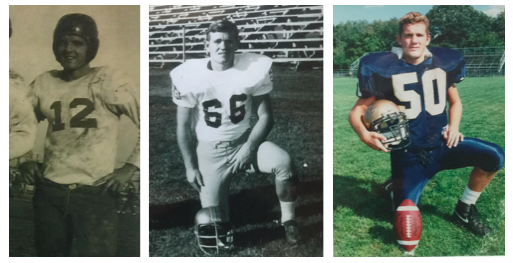
Before I wanted to be a college graduate or a naval officer or a father or a corporate leader, I wanted one thing.   I have never wanted anything more since; maybe as much, but never more.  That was to play linebacker for the Holy Spirit Spartans, my hometown high school football team.  As a kid, I looked up to the players on the state champion teams of the 80’s and 90’s as if they were pros.  I can still remember their numbers and positions.   None of them ever went on to play professionally.  Almost none went on to play big time college ball.  But that didn’t matter to me.  And I wasn’t alone. High school football where I grew up was a big deal.  The Friday night games were packed and the atmosphere was electric.   If you weren’t playing in the games, you were attending them.  My brothers played.  My father played.  His father played.  Screen Shot 2015-09-12 at 8.55.28 PMIt’s just what you did.  It still is and that matters.  It matters because high school football is one of the things that binds many communities together.  It’s one of the things that makes us feel more permanent in a location; less transient.  Now, it is possible, in time, for some other phenomenon to take the place of football and play the same role in our culture, even in the most hardcore regions.  It’s just hard to imagine what it would be or how long it would take.  If football dies, at least for the immediate future, this part of our local communities dies with it.

What Football Does

When it was my turn to play, football provided me with an invaluable experience that was absolutely critical to my development as a man.  Football is a tremendous commitment.  It’s the only sport that I know of where the practice to game ratio is so drastically lopsided.   You practice 5 to 6 times more than you actually play.  And the practices can be fun…but they’re hard.  And you have to do them or you can’t play. Not because of principle, but because it takes that much practice to actually get a team to do the basic functions required to compete.  Football requires commitment like few things a teenager can experience.  And commitment is a hard thing to teach in environments where it’s not required.

Screen Shot 2015-09-12 at 4.32.22 PM Then there’s leadership. I learned more about leadership staring into ten sets of eyes in a huddle and calling a defense then I learned during four years at the Naval Academy. That’s not a knock on Navy.  It’s a credit to the experience of football.   Years later in some distant corner of the planet I would be laying somewhere too tired to take off my gear and body armor after a long, hard mission.   It sounds strange but it’s one of the most satisfying feelings in the world.  And it’s the same one I felt sitting exhausted on a long bus ride home, having left everything on the field in a high school football game.   Clearly football is not the only thing that can prepare you for that experience. But nothing presently does it on the scale that football does for American high school boys.

Why Football Works

1.1 million boys played high school football last year.  That is just shy of double the next most participated sport by high school boys in America, track and field.   Clearly the game’s popularity and tradition are part of that.  There’s something very different about football though that is actually at the root of its dominance in participation.  More kids play football, because they can.   It’s actually the mechanics of the game itself.  The roster limit of an NFL team is 53 players.  Major League Soccer is 30.  Major League Baseball is 25, NHL Hockey is 23 and NBA basketball is 12.   There’s a pretty obvious reason why the rosters are so big. There are 22 starting positions on a football team.  If you add in special teams, you throw in at least another 22 distinct roles that impact the game, more if you actually want to become more specialized.  Those 44 plus roles come in all different shapes, sizes and different athletic ability.

The average size of a college Division III offensive lineman is 6’1″, 266 pounds.  The average receiver is 5’11” 180 lbs.  The average running back 5’10, 190 lbs.  The average quarterback, 6’1, 190 lbs.  Kicker? 5’11”, 175 lbs.  You get the point, they come in almost all sizes.  Probably more importantly, these rolls have differing requirements of athleticism.  Some roles require speed and agility, some strength and power. The others are a sliding scale of both.   The trick to playing football is finding the right roll (remember, there’s 40 so there’s lots to choose from) and executing non-specific acts of athleticism within the framework of a heavily dependent team concept. What do I mean by non-specific acts of athleticism?  I mean things kids  generally know how to do or can be taught quickly, like running and tackling.  The opposite of that type of skill would be learning to hit a baseball. The only way to learn how to hit a baseball is to hit a baseball.  And if you haven’t done it before you get to high school, you won’t be able to play.  The other larger team sports like baseball and hockey are full of specific acts of athleticism.  Which means that football, at least when it comes to boys, is presently irreplaceable.

When you break down the numbers and logic behind who can participate, you might actually change your hypothesis about football’s role.  Football may not have so high a participation level because of it’s popularity within our culture.  It may be popular within our culture because of the high participation level it uniquely allows.  Which leads us to the last, and probably most significant point.  High school boys playing football spend about 15-17 hours a week in organized, supervised athletic engagements.  There are clearly risks associated with playing a contact sport, especially for those that go on to play as long as the pros do.   But when you take the time to look at it through the lens of at-risk, idle high school aged boys and compare it to the massive hole we would have to dig out of to engage with them to replace it, it’s pretty clear.  The answer to the question, what will happen if we don’t let them play is an outcome that we aren’t prepared to deal with on a much deeper level than we might think.

Beyond the utility of how football develops and builds our high school age boys, there’s one last thing.  Football is America.  And though America is more than football, there are fewer things that are woven into our culture as deeply. Screen Shot 2015-09-12 at 8.59.30 PM I was overseas 14 years ago when the terrorist attacks of 9/11 took place.  Months later when I was on my way home, I found a rolled up Sports Illustrated issue on a couch in a hotel.  I opened it, and read about the week that football returned and for the first time in months, I felt like there was something left of the home that I left months earlier.  That’s the type of emotional connection that helps define a people, and it’s not easy to replace.   I hope that they continue to find ways to make the great game safer.  I hope that we continue to research so we can more clearly understand the risks to those who play it.  And I hope 50 years from now, our great game is still being played.  Because football matters.

More Perfect

Just about all that can-or should- be said or written about 9/11 has been said or written about 9/11. It’s starting to dull in our minds, whether we admit it or not. The further we get from it, the less we grieve. The trauma becomes less acute and transitions mercifully into an annual reminder. There’s still plenty of emotion. It’s not as raw, but it’s still there. In time, that will wane too.

The smoke has cleared. The culprits are dead. The buildings have been rebuilt. It’s not history yet, because the end of it hasn’t played out-somehow, 15 years later it hasn’t played out. But it’s not current events either. It’s not still happening-it’s just not over yet if that makes sense. We’re starting to get to that point where we understand that we’ve done a lot of things wrong since- like forget the lesson that when you use armies to fight ideas, you usually just end up punching yourself out. We weren’t quite Foreman on the mat in Zaire-arms sprawled over our heads, but we were close. And it’s not over. We may get there yet, but that’s another commentary for another time. Today, is about memorial.

We all remember where we when it happened. I was 8,000 miles away from home on my first deployment as a naval officer, much closer in proximity to those who planned and celebrated the attacks then my loved ones who experienced them back home. In the brief time I had before I would lose contact with the outside world, I remember sending an email to my mother, letting her know that I was ok. I gave her a half- hearted message of encouragement that this too would pass, and in time, things would be back to normal.

I was wrong. Things never were and never will be normal.

We’ve got a few generations before people who didn’t live through it start to assign meaning to 9/11. They’ll try to contextualize it-if one can contextualize airplanes flying into thousand foot towers, killing thousands of people who went to work that day. I won’t be around to see that. So I’ve gotten to work on assigning my own meaning to it.

9/11 is not about patriotism for me, not in the classical chest-thumping way. It doesn’t fill me with grief as much as it used to either. And I’ve long since unburdened myself from the anger of it all. I’m in that sweet season of reflective distance. And here’s what I’ve grabbed onto.

Our people, America, didn’t start this journey to be a nation free of pain, suffering or danger. We never intended for us to sidestep the troubles of the world and ensure a utopian existence. We didn’t intend to achieve perfection. Instead, we founded a nation on the basic human desire to be “more perfect”.  And since,  like many of the lives of the people that made it, our history has been marked by pain, suffering, injustice and failure. And like so many of us, our country has memories sometimes we cannot easily shake.

Yet we are still here .We are still standing. We are still striving to be more perfect.

I wasn’t raised with a great sense of faith. Instead, the grinding path my life has taken these past 15 years has led me to it. I’m still a bit of an amateur at sharing the Good Word though so I save if for when it’s truly and universally relevant. This is one of those times. There’s a story in the New Testament where the Apostle Paul describes a voyage he was taken on as a prisoner. He was on a ship that was caught in a terrible storm with no end in sight. Sometime during the voyage God spoke to Paul, telling him that he and the rest of the crew would survive, but they would have to abandon the ship or they would be lost.

The promise was that the people would make it, everything else was a throw away-even the thing that they thought was most important-the ship.  9/11 was my storm. The peaceful reality that I thought I lived in was my ship-the normal I promised my mother we would get back to. The ship isn’t the promise. The promise is us.

Looking back at that email that I sent to my mother, I would have worded it differently, knowing what I know now.  I would have told her that this was a disaster and the world we lived in was going to change forever and it may never come back-that we’ll never forget it as long as we live. There will be war and death and hard times ahead. I would tell her the honest truth-all of it. But I would tell her one more thing though. That even though this was never going to be ok, never going to be normal, we would be.

The world is a brutal, unforgiving place. 9/11 will always remind me of that. But it will also remind me of that one profound truth of the human experience. Making a people great doesn’t matter. We were never promised great. Great is an illusion. Stability is an illusion. It’s fragile and short lived. But the promise of a people striving together to be more perfect is enduring.

We are perfectly imperfect with the divine spark to be less so. We always will be. That’s the message of 9/11 that still matters.

The Three Dimensions of Useful Political Thought

Five days before General Robert E. Lee’s surrender in April of 1865 and ten days before his own assassination, Abraham Lincoln considered a request by the Virginia State Legislature to assemble for the first time since Union troops had occupied her capital in Richmond three days earlier.   Though his cabinet was in violent opposition to the notion of an occupied enemy legislature assembling, Lincoln believed it was necessary.  He noted “there must be courts, and law, and order or society would be broken up, the disbanded armies would turn into robber bands and guerillas.”   He believed that the best course was to allow, “the prominent and influential men of their respective counties…come together and undo their own work.” After four years of war and over a half a million people killed, America was in need of healing, not punishment. And in order to get there, he needed the leaders of the South to lead their people through it. In April of 1865, the singular political question of consequence in America was how to deal with the reunification and reconstruction of the 11 states that seceded from the Union four years earlier.   Lincoln, as usual was thinking about the problem in three dimensions.

Three Dimensional Thinking

Lincoln was a man of deep principle.  He formed his policies on the belief that a nation founded on the ideals of liberty and equality was equal parts worth preserving and incompatible with the institution of slavery.  His willingness to hold to that principle at great cost is likely his most significant contribution to the preservation of our Union as it exists today.   But what made Lincoln so special was that he didn’t stop with principle. He had the compassion to consider all that the Southern people had been through and the pragmatism include even the chief architects of their secession in the solution to their ills. Like an object needs length, width and depth to be an object, political ideas need principle, compassion and pragmatism to work.  And by work we mean make people’s lives sustainably better.  Our great leaders, the one’s that have built and sustained our society, think in three dimensions when others do not.

Less Than Three Dimensions 

Principles are dangerous things without compassion. Believing that your role as a government is to create the greatest nation on earth is a fine principle. But if you decide to exterminate members of your society that you believe are holding you back from that goal and conquer and subjugate your neighbors to prove it, you’ve got Nazi Germany. It’s an extreme case, I know, but one that effectively shows what happens when principle is devoid of compassion.   Principle tempered by compassion is a truly powerful thing. But it’s still not enough.

For a policy, movement or activity to be effective, it actually has to be possible. Let’s explore an example.  If you have a principle that says that Americans have a God given right to life, liberty and the pursuit of happiness, and temper that principle with the compassion to include those whose basic medical needs cannot be met by their own employment or economic circumstances, you may come to the belief that healthcare reform is required. But if you decide that you want to do that through a single payer system where the government pays for all of it without raising taxes, you don’t really have a policy.  You’ve got something else.  Thankfully, we didn’t decide to do that.  Contrary to popular belief, the Affordable Care Act is not socialized medicine. It is, however, based on  the same principles and compassion that would lead you in that direction.  It diverges from it though with the critical pragmatism of privately provided health insurance.  The Affordable Care Act is actually three dimensional. Much of its criticism is not. Which is why it actually appears to be doing what it’s supposed to do.  Get more people health insurance at a reasonable cost to our society.

The Two Dimensional Era

So what’s happening today? We appear to be stuck in a two dimensional loop.  We either stop once we’ve devised a principle and try to form an opinion based solely on that, or we do something equally ineffective. We cry out in compassionate outrage against the unfair suffering of others independent of principle.  Which has created a binary ongoing discussion that never actually gets completed with the pragmatism that is required to fix anything. But it does get lots of attention and passion. So it continues.

Let’s look at the Black Lives Matter –v- All Lives Matter debate (the silliness of how that actually looks in print is not lost on me). We either have an almost mature formation of a movement if we do it three dimensionally, or an unhelpful toxic unformed argument that will yield nothing but division if we don’t.  In three dimensions we’re leading with the principles that no one is excluded from the protection or enforcement of an effective criminal justice system, including those we depend on to enforce it. That principle is informed by the compassion that we feel towards those who are subjected to the violent reality of life in our urban poor areas, again, including those with the impossible task of policing them. And finally, we start to talk pragmatically about what to do about the root cause of the issue, which is a massive segregated divide between our urban minority neighborhoods and the rest of America. So in three dimensions, we are circling in on a mature, potentially successful discussion on how to address the issue. But we’re not doing that. Like most of our debates today, we’re doing something else.

Right now our society is broadly locked in the death grip of arguing principle versus compassion, which is like engaging in an argument over whether a car is fast or blue. Neither side is wrong. They’re just arguing incomplete thoughts. Which is actually impossible. Just because it’s not possible, doesn’t mean we won’t try to do it every chance we get though. We’ve got a two dimensional, $280 billion dollar media market getting fat on the industry of conflict and outrage and our political discussions have been infected by it. But that doesn’t mean you have to.  And it’s really not that hard to keep yourself three dimensional, even when all around you are flat.  It takes a little introspection though. Turning to memes, tweets and soundbites won’t get you where you need to go.  They’re one dimensional at best. So instead,  next time you’ve gotten yourself worked up about a societal problem, ask yourself a few questions. What principle of yours does this societal problem upset? Second, how does this societal problem impact the people it involves; all the people, not just the ones exactly like you. Lastly, ask yourself what you’d have to do to fix the problem.  If you can’t bring yourself to do this, you may need to ask yourself if you’re really interested in fixing the problem or if you’ve become addicted to the glorious outrage of its existence.  Which is another problem all together.  One for another time.

The American Discourse and the Impact of Citizen’s United

A few weeks ago I read a tweet with a link from author Doris Kearns Goodwin’s appearance on the Daily Show. In it she said, “I think if I were young now, the thing I would do more than anything is to fight for an amendment to undo citizens united.”

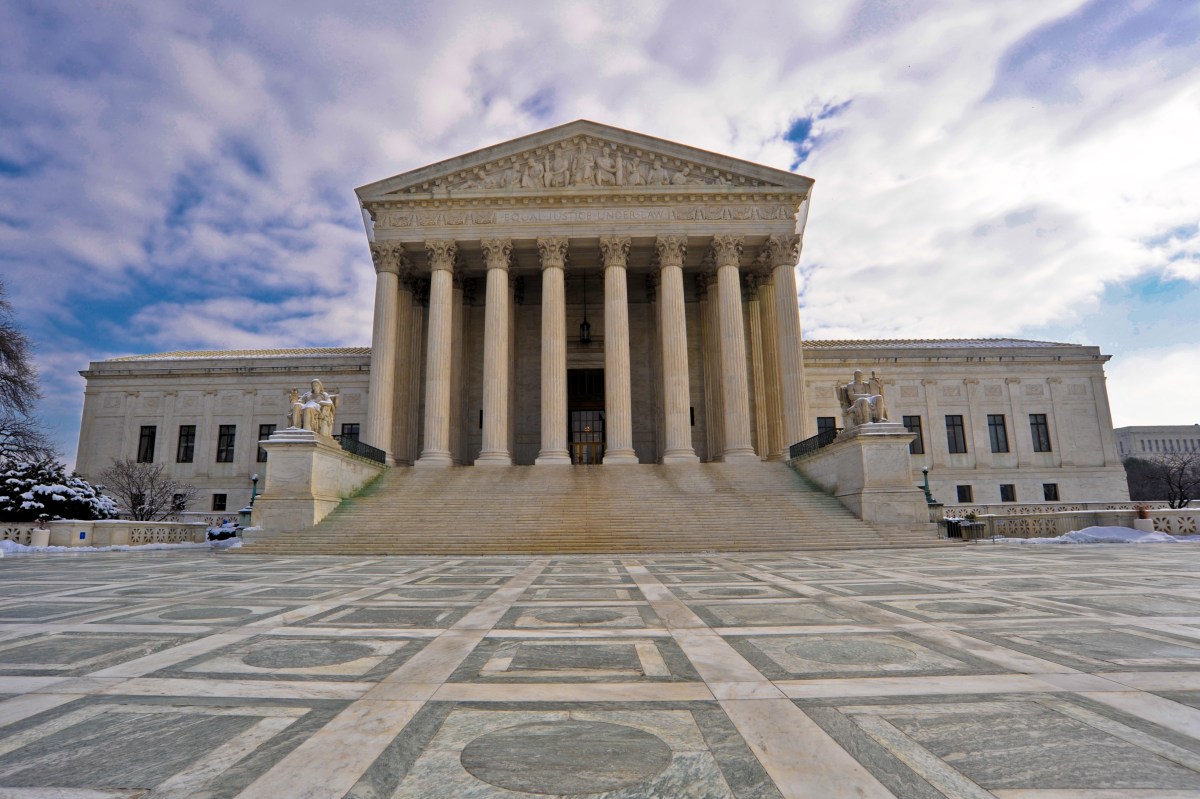
Goodwin is a Pulitzer Prize winning historian who has written on FDR, Teddy Roosevelt, Lyndon Johnson, the Kennedys and others. About 13 of the 900 or so pages of her book Team of Rivals was turned into the movie Lincoln by Steven Spielberg. She is unquestionably considered one of the foremost American historians of our time. Which means when she talks about great American causes I tend to listen. But what about the Supreme Court’s Citizens United ruling from 2010 has drawn the attention of Kearns and many others as the great risk to democracy of our time? To answer that, you have to do some digging on how we got here and understand where “here” actually is.

Campaign financing regulation actually predates our country. There’s a funny story of how George Washington won an election in the 1750’s to the house of Burgess because he handed out alcohol and food at the poles. It was actually pretty normal at the time. Virginia passed a law shortly after outlawing the practice. By the middle of the 19th Century, America began to pass laws that prohibited politicians from demanding contributions from civil service workers and then appointing them to positions based on the heartiness of their contribution. Hard to imagine it took 75 years or so to figure that out but you have to remember, we were 1st market movers when it comes to world powers and democracy. We had some things to figure out. Around the turn of the 20th century, President Theodore Roosevelt drove legislation that curbed corporate and private participation in the same type of patronage actions. By the middle of the 20thcentury we got around to getting organized unions out of mobilizing their workers to fund campaigns as a prerequisite for membership. So by the 1970’s we had mostly eliminated the affronts to democracy that lesser developed nations still suffer from. From there, it got a little more complicated.

The Federal Election Campaign Act Amendments of 1974 (FECA) formed the basis for much of the current federal campaign laws. It included limits on contributions to federal candidates and political parties, a system for disclosure and voluntary public financing for presidential candidates. The Act tried to impose campaign spending limits but the Supreme Court threw it out 2 years later. It also created a governing body, the Federal Election Committee. So by the 70’s, there were limits on contributions, transparency on those contributions and a governing body to enforce the rules. There were still no limits on campaign spending either by a candidate or corporation for support of a candidate’s party or cause though.

In 2002, the McCain-Feingold Act was signed into law. This act materially accomplished two things. It eliminated “soft money” from party finance. Soft money is a term used for political party general purposes like party building “activities” that weren’t subject to regulation. The second thing that McCain-Feingold did, and this is actually what Citizens United overturned, was eliminate corporate funding of issue advocacy ads; those ads which name an actual candidate within 30 or 60 days of an election. Corporations could still fund ads that advocated for conservative or progressive causes all they wanted through third party groups like the Koch Bros, American’s for Prosperity. But as a corporation or union, you couldn’t “pick your guy” and bank roll him. And though the spirit wasn’t to advocate for a specific group, you could fund groups that said or even called themselves “Hillary is destroying America”. Which happened, regularly and legally. Which means that prior to 2010, corporations and private organizations could and did already contribute massive amounts of money to finance political actions.

So if it didn’t create corporate participation in politics, what did the Supreme Court actually do in 2010? Well it can get complicated but, materially, it did two specific things. It removed the ban on independently funded adds 30-60 days before an election and opened up direct funding for corporations and unions for express advocacy ads. It had some second order effects on the characteristics of the groups that could organize to raise funds for an election but the important part is that it streamlined the process for corporate and union participation in funding. Which has triggered the outcry. But there’s a lot of noise in the outrage, and as a result, there’s a chance to miss the signal in the noise. Because when you look at the data, something doesn’t match up here.

Screen Shot 2015-08-20 at 12.37.49 PM
Federal Campaign Spending

There has been, without question a massive increase in campaign spending since Citizens United in 2010. But if you look closer at the data behind campaign finance, we see it actually predates 2010, substantially. In 1996, we spent about $21 million on federal elections, through regulated channels. By 2004, that amount rose to $340M. That’s a 1500% increase within the cycle of two presidential elections.  But that actually doesn’t tell the full story. If you count the “soft money” explosion that led to McCain-Feingold, spending in the 96 election rose to almost $300M, several times more than any other year. Though McCain Feingold eliminated that “flavor” of spending, it appears that we couldn’t un-ring that dinner bell. By the following presidential election in 2004, outside spending for federal elections had increased 900 percent. That’s 900 percent in four years, six years before Citizens United.

So when you actually look at the path of historical spending above, and also take into consideration that the “soft money” from the mid 90’s isn’t accounted for in that data, we see something very clearly. And it didn’t happen in 2010. Something very different happened about 20 years ago, and the impact has been an explosion in spending on elections. And as big as the increase has been since Citizens United, it’s actually nowhere near the jump we saw between 1996 and 2004. So what happened in 1996? Quite a bit actually.

The day I enrolled at the United States Naval Academy in the summer of 1995, I was issued a computer. That computer was different than all the computers that the Naval Academy had issued in the previous decades to its thousands of students in one very important way. It connected to the internet. At the same time, the digital cable revolution was crossing America increasing the average channels of cable offering from dozens to hundreds. Fox News and MSNBC launched the next summer. So about the time when our campaign spending began to explode, something else was exploding too; the amount and methods for which we began to consume information.

Here’s some data. In 1996, the average American spent about 500 hours watching cable TV a year. By 2010, that number had more than doubled to about 1100 hours a year. We also watched network TV, where “mature” information lives, about 300 hours less. You can also add in 200 hours a year on the internet that didn’t exist at all prior to 1996. And here’s the kicker, according to a study by the mobile measurements and platform company Flurry, you can add another 800 hours a year on smartphones. Which means that we spend more than twice the time consuming information today then we did 20 years ago. Which means one thing. There’s a lot more money to be made off of the American attention span than there used to be. And there’s a lot more competition to get it.

Taking a breath, a calm step backward and an objective look at the data, and we start to see what’s at work here: economics. In order for a market to exist, there has to be demand. Prior to 1996, the demand for information, political or otherwise was relatively small. We had newspapers, magazines and a handful of television channels. Over the past 30 years though, technology has changed that opportunity. And as a result, investment in the media world has also changed. Prior to 1985, corporate investment in media kept pace with the general economy. After 1985, that changed. By 1995, communications industry spending grew at 150% of the pace of the economy. By 2014, growth in media spending had nearly doubled our economic growth rate. And we were off to the races.

If you look at the type of spending that has blown up, it’s what is referred to as independent expenditures. In lay terms, it’s money that comes from somewhere other than the candidates or parties directly like wealthy individuals, corporations or Political Action Committees (PACs). Independent expenditures actually account for over 90% of the increase in spending. And again, it started almost a decade before Citizens United with a 1000% increase from 2000 to 2004. If you pair that finding with the advent of the information consumption age it leads you to one very strong conclusion. Massive amounts of money have flowed into the federal campaign system over the last twenty years for one very good reason. There’s actually something to spend it on that works.

Ask yourself, what in the world would you have been able to spend $1 billion of advertising money on in 1980? How many network TV ads or mailers could you send? How many people could you compel to go knock on doors? Not that many. Which brings us to as close to a smoking gun as you’re going to get for the cause of our massive increase in campaign spending. Which leads us back to the question of Citizens United and what to do about it.

The exercise with McCain Feingold has taught us a fairly valuable lesson. Now that there’s a mature market for profiting off of political expression, efforts to close it down through finance reform serve mostly to change the flavor of money flowing in. We can squeeze the balloon, but unless you pop it, it’s still going to hang around. Which leads us to the next logical question. How do we pop the balloon? Well, we actually can’t. If there is demand, and it is legal, there will be money to invest. Even further, the billion dollars we spent on the election directly in 2012, is merely a fraction of the total media market that is, in some part being fueled by the content of political discourse. Which means that even if we found a way to completely abolish political spending altogether, it wouldn’t put out the fire. The 24-hour news cycle, social media markets and talk radio are a hell of a lot bigger than the $1 billion industry. The six biggest media companies in the country, GE, Viacom, Disney, Newscorp, CBS and Time Warner had just under $280 billion in revenue in 2010. The money being raised for campaign financing isn’t driving our media and how they choose to market and display content. Because it’s not the campaign money that they’re after. It’s our attention.  And as long as we humans are susceptible to focusing on things that affirm our beliefs or outrage us, then the current dialogue isn’t going anywhere and neither is the media market it fuels.

So if it’s not the money, what is the great evil that we’re trying to shout down right now? What is the Doris Kearns Goodwin advocating for in the form of a Constitutional Amendment? Remember, Constitutional Amendments are big deals. They do things like outlaw slavery, grant citizenship, allow women to vote, ban drinking, allow drinking, let us speak freely, have due process, carry assault rifles. When we amend the Constitution, it needs to yield an outcome. Which is why it’s not easy to do. As for the issue of campaign finance, I think we can all agree that there’s something that feels unclean about the combination of large sums of money and the democratic process. But it’s still fairly regulated and we’re not actually accusing anyone of outright fraud of corruption here. So what is the problem? It’s actually a pretty big one and it’s been happening for a few decades.

The problem isn’t that we’re buying our candidates. The problem is that we’re subjugating them, and not with the will of the people as they ought to be.  And the result is the polarization of our two political parties. Over the last 40 years, democrats and republicans have increasingly voted only democratic and only republican more and more. In 1970 if you were in the United States Senate, the majority of a party voted the same way on legislation 27% of the time. Which was good, because when you wanted to get things passed, you had the opportunity to convince reasonable people in both sides of the party to agree. In 2014, the majority of a party voted the same way 70% of the time. Which means, quantitatively we’re 250% more polarized now than we were 40 years ago. Which is a problem. Because it means our politicians used to put a lot more thought and a lot more consideration into their positions

If it’s not campaign financing that they’re afraid of, then what exactly is it that’s driving our politicians to take so few risks? That one’s pretty clear. It’s fear. Fear of a media market that has long since outgrown the need for campaign spending and has since moved on to the more fruitful harvest of outrage, conflict and dissent. If you think that’s an overstatement, consider this. The first Republican Presidential Primary debate in the 2016 election was the highest viewed cable program in the history of cable television. There’s blood in the water now and if you step out of line against the base, someone is going to market the outrage immediately and on an inescapable scale. So you don’t, because you want to keep your job, which unfortunately isn’t the goal of our government. A politician wanting to keep his job isn’t a new phenomenon though. It’s as old as the institution of democracy. What is new, is the scope and scale of the information engine capable of taking it from them.

So do we mobilize and advocate for a Constitutional Amendment as Goodwin said? While it’s likely that eliminating some level of the spending in campaigns won’t hurt, I think it’s also fair to say it won’t solve the problem. There’s a wild fire burning and though the Supreme Court poured gas on it in 2010, it didn’t light the fire. And it’s only a matter of time before that fire doesn’t need the fuel of campaign finance at all and provides us with candidates who draw eyeballs instead of money.

Donald Trump anyone?


The Politics of Mutually Assured Destruction

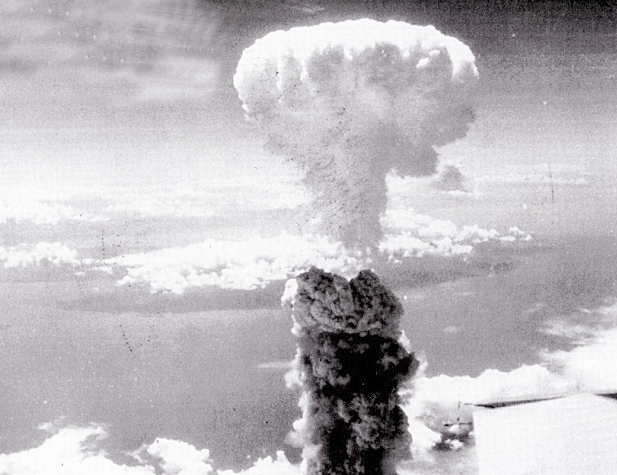
On August 6th, 1945 at  8:15 in morning  the United States dropped a nuclear bomb out of the bottom of a B-29 Super Fortress flying over Hiroshima.  44 seconds later, it detonated 2,000 feet above the city, instantly killing 70,000 of the city’s 350,000 inhabitants. 115 days into his term, President Truman authorized the beginning of the age of nuclear weapons. On his 118th day he confirmed it by authorizing a second nuclear attack on Nagasaki that killed 55,000 of its 240,000 inhabitants. Five days later, the Empire of Japan surrendered, ending the war that started 57 months earlier with the bombing of Pearl Harbor. By August,1945 the United States stood alone in the world with the power to win any war it chose through use of nuclear weapons.

We would not be alone for long.

By 1949, Russia would join America as a nuclear power. The United Kingdom followed in 1952. France joined by 1960.

By 1953 with the development of the Hydrogen bomb, the capability of nuclear weapons began to transition from the capacity to end a war to the capacity to end the world. J. Robert Oppenheimer, the father of nuclear weapons wrote in an article in Foreign Affairs that year about the U.S. and the Soviets being on a path where they would soon be “two scorpions in a bottle each capable of killing the other, only at the risk of his own life.”

In a letter to his Secretary of State, John Foster Dulles from September of 1953, President Eisenhower showed how earnestly he measured our options. “We would be forced to consider whether or not our duty to future generations did not require us to initiate war at the most propitious moment we could designate.” Few realize how close we came to a pre-emptive strike on the Soviet Union. Much to his credit, Eisenhower wrestled the initiative of nuclear weapons from those who would wield them for tactical utility by making their impact a global societal prerogative. Only something the President could do. And we soon settled on a policy of massive response as Dulles would put it, to “retain the mighty land power of the Communist world.”

By the Kennedy administration, the Soviet Union and the United States reached the plateau of mutually assured destruction. We both possessed the quantity and delivery methods of nuclear weapons at a scale to ensure that one could destroy the other even if they managed to shoot second. The optimistic outcome of such a predicament was the reduction of the risk of atomic Screen Shot 2015-08-06 at 6.15.26 AMwar in service to self-preservation.  In 1962 the Cuban missile crisis would test that theory.

The world was on edge while the U.S. and the Soviet Union stood at the brink of nuclear war over the discovery of the tactical placement of nuclear missiles 90 miles from the U.S. in Cuba. As President Kennedy measured his options for response, he contacted Iowa corn seed salesmen Roswell Garst.

Screen Shot 2015-08-06 at 6.12.46 AMThree years earlier Russian Premier Vladimir Khrushchev visited Garst to discuss corn seeds. More specifically, the he was interested in increasing the output of Russia’s crop to better feed his people. Kennedy learned from Garst the only material thing that anyone has to know about nuclear war amongst the backdrop of mutually assured destruction. He knew that the other guy wasn’t interested in the extinction of his people. That was the key to Kennedy opening up a back channel of communication that ultimately ended the crisis without war.

According to the CIA fact book, eight countries, the U.S., Russia, U.K., France, China, India, Pakistan, and North Korea have successfully detonated a nuclear bomb. Israel is rumored to be able to, but has not been confirmed. In 2011 the Atomic Energy Agency released a publication citing “credible” information that Iran may be developing a nuclear weapon. That’s where we are today, 70 years after we started.

This September, Congress will vote to approve or reject a deal that would halt nuclear weapons development in Iran in return for the lifting of long-standing economic sanctions. Critics of the deal state that it will enable Iran to develop weapons earlier than the present policy would enable. Supporters believe it will not. That is a gross over simplification of the details but it’s a fair summation of the principles of the argument. There’s something horribly wrong with the debate though. And it’s politics. When asked about Iran and nuclear weapons, 99 year old Bernard Lewis, the uncontested greatest living authority on 20th century Middle Eastern history and culture, gave dire warning.  When it comes to mutually assured destruction, he stated, “for them (Iran), it’s not a deterrent. It’s an inducement.” Which in corn seed salesmen terms means, the other guy might be ok with extinction. Which means that Iran and Israel are quickly approaching territory with nuclear weapons that we haven’t seen in 60 years.

And we’re addressing this issue the same way we’re debating taxes or healthcare or gun control; right down party lines. And that’s a problem.

With such enormity of consequence, I ask not a specific outcome for the vote. To be clear, it’s a complicated issue. But it’s not one beyond the grasp of the legislative body of the most powerful democracy the world has ever seen. It’s going to take a more evolved approach than politics though; one more suitable to the task. One adopted by former New York Times Jerusalem Bureau Chief Thomas Friedman. You see, Tom Friedman won the Pulitzer Prize in 1983 for his coverage of the war in Lebanon. He won it again in 1988 for his reporting on Israel. He won it again in 2002 for reporting on the impact of international terrorism. It’s safe to say that Tom knows more about Middle Eastern affairs than any ten members of congress. About the time that our elected officials were downloading their opinions from their partisan benefactors, Tom Freidman said this. “Personally, I want more time to study the deal, hear from the nonpartisan experts, listen to what the Iranian leaders tell their own people and hear what credible alternative strategies the critics have to offer.” This one matters too much, to settle for any less.  But right now, less is what we’re getting.  Let history remind us, 70 years to the day since it started, what power is at stake here, and what ends we must gain in order to survive.

The Prospect of Service

Screen Shot 2015-07-29 at 2.34.54 PM

Of the 20 Americans that have officially announced their candidacy for President of the United States for the 2016 election, three have served on active duty in the United States armed forces. One, Lindsey Graham (R) was a JAG (military for lawyer) in the Air Force. One, Rick Perry (R), was a cargo pilot in the post Vietnam era Air Force. One, Jim Webb (D), is a real life honest to goodness bona fide war hero, having been awarded the Navy Cross (one step down from the Medal of Honor) Silver Star, Bronze Star and Purple Heart for his service in Vietnam. Which means that of those who have raised their hand to participate in the pursuit of our country’s highest office of public service, 15% of them have served in our armed forces; 5% in war.   Though that may seem low, and it certainly is relative to previous presidential races, it’s actually more than representative of our overall population base with respect to military service.   According to the Department of Veterans Affairs, presently, about 7% of Americans have ever served on active duty in the military. And so we should be somewhat satisfied by our turnout of candidates. Somehow it doesn’t feel that way though. Perhaps because we hold the office to a higher standard. Perhaps because we value military service differently than other vocations when it comes to presidentiality.   As usual though, if we take a look at the history behind it, we can gain some perspective on how much this really matters.

Does military service matter?  At the highest level, there’s an interesting pattern that makes logical sense when you take some time to think about it.   We’ve had three presidents who have served in the highest ranks during a time of war and have therefore met what we would consider to be the most relevant prior experience to being commander in chief. Washington, Grant and Eisenhower all were, in whatever historically appropriate capacity possible, the highest ranking officer engaged in the highest level of combat during our three most consequential armed conflicts. Of the 24 years those three men served as president, a total of 6 months was spent at war, the sole contribution to our war history being the 186 days it took for Ike to pull the plug on Korea. Now, there’s a case to be made that those men had seen war and therefore had no stomach for more of it. Which we know from their memoir’s is at least a little true. What probably played more of a factor was simple chronology though. Being “General of the Army” is not a young man’s game. So if you were doing it at the time of war, and you went on to become president, you did so in a very short period of time, within the scope of a decade in each case. We tend to steer clear of large scale war within the scope of the same generation if we can help it. And so the requirement for lofty military command to qualify a presidential candidate for the job is not one that history supports.

If we flip the question around and ask what was the prior military experience of our most effective commanders in chief, we get a somewhat surprising answer. For one, we actually didn’t have a president during our first important war, the American Revolution. So when we look at those who played critically tactical roles as President, the list is quite short. It includes two men with exactly zero days of active duty service in the military. Lincoln and FDR were, head and shoulders above the rest, the most important and successful commanders in chief to ever hold the office of President. When you think about the scope and scale of their burden, it’s remarkable all that they were able to accomplish. Lincoln waged war a stone’s throw from the White House personally transmitting orders to generals in the field from the War Department Telegraph room.   FDR engaged daily with a joint allied staff on strategy in Europe and the Pacific until the day he died. The decisions these men both made, regularly, are unequaled in their complexity and their impact on the nation and the world. Neither ever wore a uniform.

History makes a pretty strong case. Military service is a poor predictor of performance as commander in chief.  So does it matter at all? If not as a qualification to lead the military, then what does it tell us? Does it tell us a candidate is dedicated to a life of service? Perhaps, but to be honest, agree with their politics or not, the list of 20 or so names on this candidate list includes hundreds of years of public service not specific to the military. So, it’s not really about service either. But it is about something. To be clear its actually about two things.

First, it’s a validation that at some point in their life, a candidate has done something that took some grit. Of the three war-time deployments that I had, two were with what we’ll call elite units. The third, the one that I’m least likely to tell war stories about at parties, was with what we would call a “conventional” unit.   That deployment, by a country mile, was the one that absolutely beat me down the most. It was brutal relentless and absolutely representative of what most of our men and women in uniform experience when they deploy. So when we see someone who has served, we can say with confidence, that at some point in their lives, they lived through a truly trying experience. Which is something to benchmark them with when so much of everything else that we see out of them feels less genuine and more contrived. Military service is real. And there’s no way to hide from the “suck”. When you look at this field of 20, it definitely feels light on grit.  But maybe that’s just from where I’m sitting.

The other thing that prior military service does, and this is more relevant for war time service, is that it validates resiliency. Which is actually entirely different than being a hero. There’s something to the notion that heroism is less important than recovery. My experience during the 14 years of war that we’ve been engaged in is a fairly common one for those that served. I saw less “action” than those who served in the worst of it, yet more than those that managed to serve in more peripheral roles. Of the 20 or so months I spent in active war zones, I can clearly count two instances where I legitimately thought that I was going to die. Some level of danger and vigilance were constants but those moments where I actually thought that I wasn’t getting out of it were rare. And frankly, the reason I did was because of luck and other people, not heroism or skill. The fall out of those events was not necessarily contributory to a life well lived either. That which does not kill us…sometimes leaves us with nightmares, anxiety and a propensity to self medicate. There’s something important that follows though. We’re beginning to talk about this more these days but we used to ignore it entirely. It’s the recovery that matters.  The richest part of the human experience is the walk back to the path our life was on when something knocks us off of it. And so for men like James Webb, it’s less about the citation from his Navy Cross, which I encourage you to read, and more about what he no doubt went through in the years after he returned from war to live the worthy and full life that he has. It’s not that you can’t get those experiences without serving. War simply tends to provide those that experience it with more acute opportunities to survive.

With all this in mind, what should we be considering when it comes to military service and our presidential candidates? I think it’s the following question. What did a candidate do with the prospect of military service? For some, because of the time in which they lived and the paths that their lives have taken, the opportunity to serve simply never materialized as a serious consideration. And that’s ok. Lincoln and FDR show that. But for others, the prospect of service was a question that couldn’t be avoided, like those of the “Greatest Generation”. Of the eight presidents that held office after WWII, all of them actively served in some capacity in the military during the war. A little closer to home for this election, there’s the question of Vietnam service.  What did a candidate do with prospect of serving in Vietnam? Did they pursue it? Did they leave it to fate? Or did they run from it? I think it’s fair to put the last of those three choices into the “not suitable” bucket. But that’s just my opinion. And it’s an opinion informed by asking that one critical question of what a candidate did with the prospect of service. The snapshot in time that will be the 2016 election is as such that we ought to be slightly fine with the lean yield of the answer to that question. But the future will likely hold a very different outcome. Here’s why.

My generation of service member has been at war a long time. For many of us, we spent our whole professional careers at war. I was deployed when the war started and finished my active duty career months before the end of combat operations in Iraq.   Our chance to participate in a new life of service is coming. And when it does, the question of the prospect of service will become much more important. My generation has been knocked far off of life’s path and for those of us fortunate to make the long journey back to it, there will be a calling to serve again. We’ve seen much, sacrificed more and fear little. And our time is coming. So when 2024 rolls around or maybe even 2020, ask yourself that question with regard to your candidate of choice.  What did they do with the prospect of service?   Because what it tells of my generation is important.  And we’re getting closer to the door every day.

Sharing is Caring: Our Memes and What They Say About Us

Meme mēm/ noun

1. an element of a culture or system of behavior that may be considered to be passed from one individual to another by nongenetic means, especially imitation.

2. a humorous image, video, piece of text, etc. that is copied (often with slight variations) and spread rapidly by Internet users.

Like it or not, what we share, like or retweet in our social media presence actually says something about us.  I know many of us spend little time filtering or applying judgement to such a simple action as hitting a button on our smart phones or web browsers.  My Facebook newsfeed is a clear testament to that. But what we choose to share is after all, a choice.  So I took some time over the last few weeks to capture some of the memes that illustrate some common themes that my “friends” have chosen to share.  Here’s a little slice of what I found and what opinions it may serve to inform about those who chose to share them.

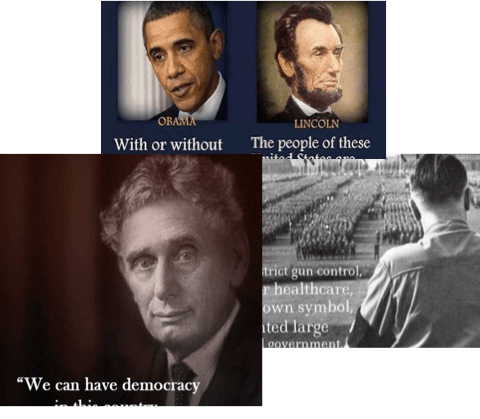
1. The Warning From The Past

Screen Shot 2015-07-07 at 6.39.22 AM

What it sounds like to the rest of us:

“I’m not that big on understanding the history of America, but I’ve got an opinion about what’s historically been good for her”

I’m about as big a fan of Abraham Lincoln as you are going to find.  But finding and using a quote by Abraham Lincoln as a warning against executive overreach is akin to using a Bill Clinton quote to warn about the dangers of infidelity or finding a John Boehner quote highlighting the evils of spray tan. Lincoln’s presidency, beginning to end, is a shining example of the expansion of executive power; thankfully or we might be two countries today.   Most of the legislation he did sign was passed by a congress who lost a little less than half of its members because they quit the government and started their own country in protest.  More over, The Emancipation Proclamation, issued in 1863 declaring all slaves living in states participating in the rebellion free, is considered the Babe Ruth of all executive directives. A meme like this is a softball for anyone who remembers third grade social studies, but I’ve seen it shared by educated people who should know better about a dozen times. Apparently, when we see something that agrees with our gut, context and accuracy play little role in whether or not we want to share it.

2. The Obscure, Unverifiable Reference

Screen Shot 2015-07-07 at 6.54.51 AM

What it sounds like to the rest of us:

“I don’t know who this is or if he said it and neither do you but man does it sound smart.”

Louis Brandeis served with distinction on the United States Supreme Court from 1916 to 1939 during which time he wrote countless dissenting and majority opinions. He also published a book Other People’s Money and How Bank’s Use It. He was without a doubt a supporter for social causes and considered progressive for his time.   There is, however, nothing in any of the volumes of his work that remotely resembles this quote. He may have said it, but no one knows when. I’ve seen it multiple times on my own Facebook feed and if I didn’t have a sworn policy against sharing memes, I probably would have shared it myself. Which is one of the reasons I don’t share these things.  Because frankly, I have absolutely no idea if it’s accurate.  And that matters to me.

3. The Playful Quip About the Good Ole Days

Screen Shot 2015-07-08 at 6.18.52 AM

What it sounds like to the rest of us:

“I’m older…and new things scare me.”

If there’s one consistent theme that lives throughout history it’s the notion that the next generation is completely screwed up, at least compared to the last one….according to the last one.  The simple truth is that each generation is better equipped to handle the next fifty years than it is to handle the last fifty years.  Which is scary for those of us who learned how to live in the last fifty years. I see it in the interns that we pull into my tech firm each summer who do things that I couldn’t imagine were possible at their age. I was a history major for crying out loud.  Most of the things that run our world today didn’t exist 20 years ago when I was in school.  That’s a little frightening for some people so we have to come up with something to help us feel empowered.  And that’s youth bashing. Here’s the thing about kids these days. We’re right. They’re not cut out for the industrial world. Which is actually good for them because we don’t live in the industrial world any more.  And yes, they lack wisdom and social skills and can seem entitled. Because they are. Because they’re young. And just like the world moved forward with every screwed up generation in the past, it will move forward with them. So try to spend a little time understanding what they can do well.  Because its what people will be doing for the next 50 years.

What else it says to us:

“I think it’s a good idea to beat your kids.”

As a licensed foster care provider and someone married to a mental health professional, I can say with some experience and authority exactly one thing about parenting. If you want to ensure that your children have the best chance of being a destructive, non-functioning member of society, go ahead and beat them regularly. It’s the most common thread amongst people with substance abuse, a history of violence or a propensity to abuse their own children. So, thank you FM 95.9 The Hawk (Southern Utah’s Classic Rock) for sharing your support for beating your kids. If anyone actually listened to FM radio any more, this may have actually bothered someone.

4. The Slippery Slope

Screen Shot 2015-07-07 at 6.34.16 AM

What it says To the Rest Of Us:

“I’m Crazy”

I have more than one Facebook friend who shared this.  In doing so they freely proclaimed that they are so warped by their own political views that they’ve confused advocating for healthcare, gun control and immigration reform with murdering 11 million people because of their ethnicity or disabilities and invading 16 countries on three continents en route to starting the deadliest armed conflict in the history of mankind.  Fortunately for us, that slope isn’t that slippery.  And if you think it is, you may be crazy.

So What?

It’s good fun to poke fun at those who are predisposed to share their political views through the venue of social media. After all, this is a blog about political and social issues and those that choose to do so through the turnstile of sharing or liking memes are pretty easy targets. There’s an important message in here somewhere though.  It’s this. A lot of this stuff actually matters. This isn’t Yankees v Red Sox where you get to spout off endless rhetoric about how you loathe Derek Jeter and how he’s over rated despite all evidence to the contrary.  This isn’t reality TV where it’s open season to poke fun at or mock those who voluntarily allow us into their lives to do so.  Those things don’t matter so if you want to invest no time in forming your opinion on them and continue to distribute nonsense, that’s acceptable and encouraged.  It’s all in good fun. When it comes to political and social issues though, remember one thing. You’re participating in generating a collective opinion about things that actually effect people’s lives.  So that should require some thought. Don’t like Obamacare?  That’s your right as an American to disagree with the government. But there are 17 million people who get get healthcare through that bill, many of which couldn’t without it so before you spread rhetoric about it, do a little work to understand it. Think our foreign enemies view our country as weak and we need to go put “boots on the ground” to go teach someone a lesson? That’s your right to believe it. But someone has to go do that and someone’s going to die in service to that opinion.  So do a little work to inform it.  So what am I asking for?  It’s pretty basic really. Before you hit share, ask yourself two questions. 1) Does this issue have a material impact on someone’s life? 2) Do I actually have any substantive knowledge about it?  If it’s “yes” to #1 and “no” to #2, just move on.  If you can’t do that, then at least understand how it sounds to the rest of us who can.

The Case for the Conservative

Jefferson_Memorial_At_Dusk_1

We active independents are a tricky group to define within the context of any political landscape.  Just the very notion of an extreme moderate is a contradiction that’s hard to pin down.   There are, however, a few concrete commonalities amongst us that tend to drive our decision to passionately deny alignment with a uniformly conservative or liberal perspective.   I know I risk painting with too broad a brush here,  but I’m going do it anyway for the sake of making a very important point about why we end up where we do, free to decide based on circumstance or specifics to choose how we feel.  I’ll start with the right. When it comes to conservatives, we struggle with a few things.  The first one is something that should have come through loud and clear if you have read anything produced by this venue over the past six months. Independents struggle to support policies that seek through indifference or actively sought objectives, to exclude people. Over the past 230 plus years, the American experience has been an effort to expand the definition of who is included in “We the People.” The conservative point of view has historically been on the wrong side of that argument, present circumstances included. Which kind of segue’s into a second issue.  Most independents can’t fully embrace a point of view that yields policies that don’t take into consideration the fact that most poor people were born that way.  We see value in giving voice to the idea that when you’re poor, the obstacles that stand between you and “life, liberty and the pursuit of happiness” at this point in our country’s development are often insurmountable. And so we feel we probably need to invest in changing limited aspects of the American experience to help them.  Denying the existence of that gap between being born into poverty and everything else is a non-starter for us.  And so we struggle to adopt platforms that don’t address that issue.  And so you have it. 180 words or so on why many of us independents are not conservatives.  Satisfied?  I wasn’t either.  Because it doesn’t answer the next question. Why then, are we not liberals?  It’s a great question because it gets right to the heart of why we so desperately need strong conservative leaders now more than ever.

If my opinions are informed by those two basic progressive notions of inclusion and social welfare, it’s fair to ask the the next question then.  Why, if you find yourself at odds with conservatives on such major foundational beliefs, do you not go the final mile and call yourself a liberal? It’s a question I’ve put some time into thinking about over the years. Here’s what I figured out after some honest reflection. It’s not because we lack conviction to “pick a side”.  It’s not because we want to reserve our right to choose based on circumstance.  Those things certainly can contribute but the core reason is something else. We openly choose not to call ourselves card carrying liberals because in our hearts, many of us want the very core belief of conservatives to be right. When it’s all said and done, like many conservatives, we hunger for the vision of Jefferson’s “wise and frugal government”.  The reason we’re not liberals is pretty basic. In our heart’s we’re closet conservatives.  These days however,  it’s becoming enormously difficult yet still equally important to maintain a connection with our conservative inclinations.  Here’s why.

Public policy tends to lag public opinion; rightfully so. When it’s the other way around, things can go terribly wrong. At times that lag is so great that it creates a progress “bubble” if you will. Eventually it bursts and as history has shown us, our policy rushes forward to align with our opinion, sometimes violently. The last two weeks have been a whirlwind of progress for the American people. From racial tensions to health care to gay rights, the loudest and most effective voices have been those in favor of progress and so progress has arrived in areas we desperately needed it. But if we’re not careful, we’re going to miss something very important. We’ll miss the value in the conservative point of view and the fact that it cannot and should not be discarded. It’s no less important now than it ever has been. In fact, it may be more important than ever.  Let me explain.

Our country has important problems to solve and we’re gearing up to choose a leader for the free world.   We need to be able to count on a strong conservative forward-looking point of view to be a part, not all mind you, of the American conscience again as we do so.  I confessed earlier.  I secretly and desperately want to live in a world where our country needs as little government as possible to get the outcomes we need. But we’re going to have to demand more of our conservative leadership to get it.  First things first. Stop fighting the last battle.  The healthcare and same sex marriage debates are over. Every Republican presidential candidate should be jumping for joy that the Supreme Court took those items off the table for debate because the present conservative points of view on those issues are losers for anyone outside of the conservative party. Which is most of us. Remember, independents struggle with the notion of exclusion.  Secondly, start figuring out a conservative point of view that matches the modern American constituency and stop focusing on the good old days. Here’s something that the rest of America has figured out already.   The good old days weren’t that good for a lot of people. They weren’t good for blacks. They weren’t good for women. They weren’t good for gays. They weren’t good for anyone who got sick or suffered from mental illness. They weren’t good for women who didn’t want to choose between a career and a family. They weren’t good for families with special needs children. They weren’t good for senior citizens, mainly because they died 15 years earlier than they do now so we didn’t need to consider them in policy.   The good old days weren’t good for what now represents about 75% of our population. So stop building your policies around getting back to them and you’ve got a chance. Here’s what that looks like, from a conservative perspective:

STOP: Advocating for legislation that makes it harder for minorities to vote. We don’t have a voter fraud problem.  We have a voter turn out problem. Everyone outside the conservative party that looks at this problem for 10 seconds sees the motives of fear and exclusion at work here.

START: Minimizing the impact of social programs that don’t work and waste government resources by coming up with more efficient effective ones that do work.

See, its pretty simple when you free yourself from the past.

There’s also a part of the rhetoric that comes from some conservatives around traditional values that we independents can’t really figure out how to separate from racism, misogyny or homophobia. Especially when it comes in a thoughtless meme or a bumper sticker.  I know those are strong words but that’s how it looks to us.  Try not to shoot the messenger with your freely carried firearms on that last one.  I want the conservative point of view to succeed and I’m just trying to help here.

I have to believe that there’s a conservative point of view that benefits modern America. We have 25 million jobs to create over the next decade. We have a federal budget to balance. We need energy independence. These are things in the middle of the conservative strike zone. So swing away.   I’ll leave you with some words from the great patron of American conservatives, Thomas Jefferson himself.  Let his words not be an excuse to exclude or divide but instead guide your path to a platform for the 21st Century American conservative.

‘A wise and frugal government, which shall restrain men from injuring one another, shall leave them otherwise free to regulate their own pursuits of industry and improvement, and shall not take from the mouth of labor the bread it has earned.’

Guns, People and Poverty: A Study in What Kills Who


Guns don’t kill people. People kill people.   It’s a logical statement and one that’s hard to argue against. It usually pops up in some form on your social media stream in the aftermath of a mass shooting. Clearly it’s unfortunate that mass shootings happen with enough regularity to be able to present a pattern. The patterned response exists nonetheless.  Since it does, we probably owe it to ourselves to do a little digging on its validity. So we did. We compiled data from three sources: the CIA Fact Book, The United Nations Office on Drugs and Crime, and the World Bank Group. In doing so we were able to establish a complete data set on 71 countries from all regions of the globe that could provide current data on socioeconomic status, homicide, gun violence and urban/rural population density. What the data shows was very telling. Here’s what we found:

If you are going to murder someone, you’re probably going to do it with a gun

Of all the homicides in the 71 countries that contributed to the analysis, two-thirds of them were committed with a firearm. By itself this data point alone says nothing specifically about whether or not guns actually contribute to the chance that someone is going to get murdered. It only shows that the method of choice in homicides is a gun. It leaves plenty of room for the argument that once a person decides to kill someone, they’re going to do it by any means available. The gun is simply the most available. It’s not an impossible argument, though its hard to imagine how people would figure out how to pick up the slack in the absence of such an efficient tool as the gun.

An interesting pattern appears when you include the overall homicide rate along with the percentage of homicides committed by firearm though. What we saw was that as homicide rates rise, so does the percentage of homicides committed by gun. Take Honduras for example, the murder capital of the world at almost twice the murder rate of the next most murderous country Venezuela. The percent of homicides by firearm in Honduras is 83%.   Venezuela’s is 80%. On the other end of the spectrum we have Denmark. Denmark has the lowest homicide rate of any country in the analysis. Less than a third of their homicides were committed by firearm. What the data tells us is pretty clear. If you want to contend for the title of murder capital of the world, you can’t do it without using guns. After all, if you’re in the volume business, efficiency is key. When it comes to killing, guns are as efficient as it gets.

Guns alone actually don’t kill people.

Does the presence of guns alone lead to gun violence? Chalk one up for the gun advocate lobby here. The amount of civilian owned firearms in any given country alone actually has no correlation to the homicide rate. According to the annual UN survey, there’s a lot more guns out there then you would think. Our love affair with the firearm in America is well publicized. With 88 guns for every 100 people, our reputation is warranted. We’re more than twice the next highest country. Not far behind us in the rankings is a country like France. France has about 31 firearms for every 100 people. Both the U.S. and France are nowhere near the top of the homicide list, despite being at the top of the list of the countries with most civilian owned firearms though. To answer the narrowly focused question, do guns kill people? The data is clear. Guns alone do not kill people. There’s a trend hiding in the data though. You just need to add one more ingredient to see it.

Something very interesting happens when you include poverty in the analysis. What we see is that though having a lot of guns does not make for a dangerous society, adding poor people and guns together does. Take a country like Liberia in West Africa. Liberia is the poorest country in the analysis with 80% of its population living below the poverty line. With that level of poverty, it’s pretty easy to assume that they also have a high homicide rate. That would be a poor assumption.   You’re actually more likely to get murdered walking the streets in America than in Liberia. In fact you’re almost 50% more likely. Why? Again, the data is pretty clear. Liberia has no guns. Liberia has one gun for every 100 Liberians. We have 88.

Liberia isn’t an outlier either. Chad, Niger, Senegal, India, Bangladesh and Cambodia are all countries with huge poverty rates from different regions of the globe that all have the types of low homicide rates that rival first world countries. They also all rank in the lower third of all countries in civilian owned guns. When you add guns to poverty you have places like Honduras, Colombia, Mexico and South Africa. These titans of murder find themselves in the top third in poverty and civilian firearm ownership. The data is clear and unambiguous. The secret sauce that leads to the highest murder rates in the world is one part poverty, one part fire arms. Guns don’t kill people. Poor people with guns kill poor people.

So what about America?

Using the Liberia example again we can actually do a pretty useful comparison. If you live in Liberia, you are five times more likely to live below the poverty line than in America. If you live in America you are 88 times more likely to own a firearm than if you live in Liberia.  If you live in America, you are 50% more likely to be murdered than if you live in Liberia.   There’s really only one theory to take away from that comparison. Either we Americans are just inherently more violent than Liberians, or it has something to do with the guns. When you add other countries into that same comparison and we see the same thing over and over again, we start to approach a pretty sound conclusion. Our propensity to own firearms appears to make us less safe than other first world countries and even some third world ones. But if guns alone don’t make us unsafe, which is what we clearly stated previously, then why are we less safe then other countries?

For one, we have so many more guns than everyone else, it’s almost impossible to think that there would be no consequences to that. Even if you were willing to make that leap though, there’s another interesting dynamic with America that you have to consider. Though we are undoubtedly one of the world’s most prosperous countries, we have a much higher poverty rate than our more socialist or communist counterparts. This is no commentary on the evils of capitalism. I’m a big fan. So let’s quickly get past that. What is important though is the fact that we do have concentrated pockets poverty that also have high civilian gun ownership. The result of this is that though our national homicide rate is low relative to the whole group, the consequences of the pattern of poverty and guns on our urban areas has an acutely destructive impact on them. Let’s use Chicago as an example. Chicago is the murder capital of the United States. Pockets of Chicago’s South and West Side have between 40-60% of their residents living below the poverty level. Now add the high civilian gun ownership rate that is experienced across America, you get a very rough outcome.

Numerically speaking, the Chicago Metropolitan area has a homicide rate that would put it in the top ten countries on the planet wedged between Nigeria and Panama. Chicago is not alone. Baltimore is actually worse percentage wise.  It’s on par with Rwanda. Yes, Rwanda, the place with the movies about genocide.  Even less prolific metropolitan areas like Philadelphia, from a homicide perspective, are on par with places like Angola or the Sudan. When you put it in perspective, it starts to feel like something that requires more than a bumper sticker for a solution.

So What?
The striking conclusion that we can take away from this broad analysis is that guns are just another one of many aspects of the human experience that make it much harder to be poor. Like drugs, disease, and recessions, adding guns into poor environments has a disproportionately negative effect when compared to more affluent areas.  In America, the gun control discussion is one of the most divisive and partisan ones that we encounter.  The debate involves special interest groups, culture, tradition and a standing Constitutional debate about what our founding father’s intended. What it rarely involves is fact, data and perspective.  When the loudest voice in a debate leads with rhetoric you get bumper stickers and memes instead of informed insights and decisions.

The data is clear. Without question, guns kill people. Not by themselves of course. No one ever claimed that a gun by itself killed anyone. We should find that particular challenge to gun control insufficient if not insulting.  When the conviction in a debate is on the side least impacted by the negative outcomes of an issue, it should signal a call for those objective few among us to look harder into reality to demand more of the discussion. The analysis is done. The conclusion is a hard one. Guns kill poor people. Whether or not you care about that is up to you.