So What Did We Learn?

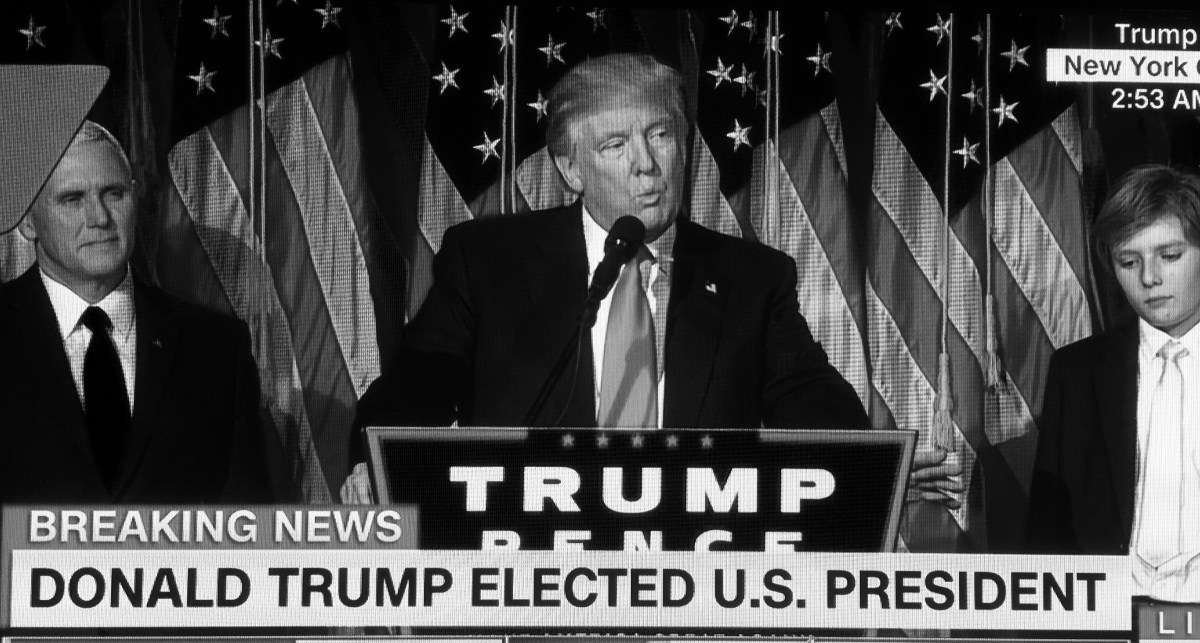
As the exhausted, miserable people on my television reported that Secretary Clinton had conceded the election by phone and our new president elect addressed his constituents for the first time after the political upset of an American generation, I sat up in my bed, quietly trying to digest what just happened. My wife, a woman of Mexican descent, a mother to a special needs child and a military wife who suffered through three wartime deployments nodded off in disgust a few hours earlier. I’ve already started to make my peace with it though.

I’ve been about as vocal a critic of Donald Trump as anyone you’ll find. I can’t and wouldn’t revise anything I’ve said about him. But I make it a point to stay objective about things. And to deliver a level headed clear-eyed assessment of things that matter. And right now, before I make that peace, I’ve got to account for a few things that I know now, that I didn’t know four hours ago.

So here goes…

-Donald J. Trump is the most effective political marketing machine of our time. It’s not close.

-Crowds mean more than polls. In retrospect, that makes sense. But I was stone cold dead wrong on it.

-There’s still enough white working class men out there that if you make an election a referendum on their value as a part of America, you better have them on your side.

-No one gives a rip about third party candidates. No matter how much more qualified they are.

-Many white men-and women-are more comfortable with the idea of a black man being president than a woman.

-Hillary Clinton is un-electable.

-The message of change is the only one that matters.

-The people still choose the president.

-This actually wasn’t close. (Trump won every contested state)

-We know nothing. (I actually knew that one already.)

Tomorrow, in a few hours, the sun will come up in America as it has for centuries. And things will go on uninterrupted. We’ll get the kids off to school. I’ll sit in traffic forever and I’ll think about a few things. I’ll think about what it all means and about what’s going to change about what it tells us about ourselves as a people. I’ll think about what to tell my kids about our president. Big problems. Big thoughts. Big questions.

There’s one other thing worth noting though. For the first time in my life, Donald J. Trump and I are on the same team. And I don’t know what to do with that other than hope like hell that he’s the best God damn president of my lifetime. Because there were dark and frightening powers that helped this come together for our new president elect. But there were also good and decent people who believed that this was their best option to drive change in our political process. And the only way that we get through this in one piece is for those good and decent people to help hold our new leader accountable for delivering on what they saw in his message-a  change for the better from the political status quo.

Democracy…warts and all.

What You Need to Believe

I want to take a very brief moment to make a very important point. Because there are some very serious people in very serious positions that are making a very public declaration that I feel is extremely harmful. I heard as recently as this morning, from someone I respect, the following:

Donald Trump, after at least 50 years of despicable behavior and after being caught on tape bragging about how he can do anything he wants to a woman, up to and including “grab her pussy” because he’s a star, is the most appropriate option available for the highest office of the most powerful nation the world has ever seen.

It’s probably appropriate to point out, that it should be the least surprising thing in the world that a man who behaves worse publicly than anyone I’ve ever seen would also behave worse than anyone I’ve ever seen when he thought only Billy Bush was looking.

But I digress. I said I wanted to make a very quick point. Because it’s important that we get on the same page here. We’ve got a few weeks left. So here it is:  By now, after all we’ve seen from Donald Trump, in order to believe he is the most suitable candidate for president, you would also have to believe the following, with a level of certainty that only can come with seeing it or hearing it yourself personally (perhaps hearing it said to Billy Bush on a leaked tape):

-Hillary Clinton was not simply negligent, but willfully so, in her conduct as Secretary of State during the time and events that lead to the death of Ambassador Stevens in Benghazi. You are certain of this (certain like you heard her saying it on a leaked tape to Billy Bush). And though one of the longest congressional inquiries ever held investigating the incident showed nothing more than instances of poor judgment by multiple levels of government and defense, the Republican led congress either failed to do their due diligence or is in fact secretly supporting Hillary Clinton.

-You also need to believe that former Chairman of the Joint Chief’s of Staff and Republican Secretary of State Colin Powell, who said in a private email that he felt like Clinton got a “bad rap” has no idea what he’s talking about. And that you have a firmer handle on the role, appropriate conduct and reasonable expectations of outcomes for the Secretary of State of the United States. You may also need to believe that Michael Bay makes movies worth watching not named “Transformers”.

-Hillary Clinton has clear, certain knowledge (certain like she heard him caught on tape saying it to Billy Bush) of the 42nd President of the United States sexually assaulting women. Moreover, armed with that knowledge, she has taken no action to prevent future or seek justice for past acts.

-Hillary Clinton’s use of a private server was intentionally done to harm the United States of America or promote personal gain on a criminal level, and though a six month investigation was conducted by the Federal Bureau of Investigations and no criminal charges have been brought against her, you either know better than the FBI or you are certain (certain like the director got caught saying it on tape to Billy Bush) they are either corrupt or complicit.

-You are not just pro-life. But additionally, you view abortion to be murder. And electing Donald Trump will enable an immediate or near term change in the Supreme Court ruling of Roe -V- Wade and therefore voting for someone else is actually not just endorsing, but enabling murder. The ability to actually affect change here matters. Because if he can’t change it himself, then this issue is actually not really in play and ceases to meet the criteria for belief stated above.

-Public defenders that defend criminals as a critical function of our system of justice actually are in favor of those criminal activities. And accepting to defend people who cannot stand trial without representation is an endorsement of their behavior and character.

-You believe that there is proof that Hillary Clinton, while Secretary of State, was criminally trading U.S. interests for donations to the Clinton foundation. And though the author of the book Clinton Cash, Peter Schweizer, has gone on the record saying there is no proof that it happened, you are certain (certain like you heard her say she did it to Billy Bush on a leaked tape) that you know more.

There may be more. I might not have gotten all of them.  And you don’t have to believe all of them. Believing any one of these might be enough to start, but not finish, the following debate:

Someone who we know with 100% certainty is guilty of the behavior highlighted above is more or less suitable to be president than someone we know with 100% certainty brags to people that he barely knows that he is allowed to sexually assault women because he’s a “star”.

If you believe these things, I really can’t argue with you. Because you either have information that the global media community hasn’t gotten their hands on. Or because you don’t really believe it, you just can’t get past the politics. And since the rest of us know that the first one probably isn’t true, then the second one is. You don’t believe it with certainty (certain like you heard it on a leaked tape to Billy Bush). You may just be a die hard conservative. Which I applaud because we need those. We really do. And I want to help you. Because when the rest of us hear you say these things, all we really hear is that grabbing women’s genitals because you’re famous is OK. What we really hear is that sexual assault is not that big a deal.

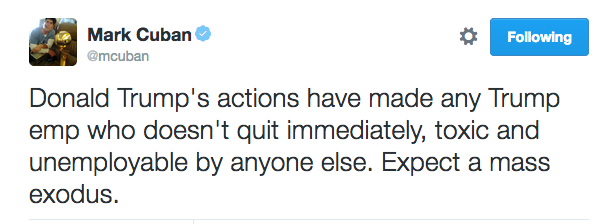
Consider this a public service message. For your own good, just go quietly into the night on this one, without a fight. You might maintain your strength in Congress. Which is good, because conservative ideology is important. But you have to stop. Because it won’t end well. In fact, for many, it already hasn’t. Consider the following from Mark Cuban:

screen-shot-2016-10-08-at-2-35-27-pm

That may be a bit heavy handed. And it’s probably unfair to those just trying to work hard and make a living. But for those with a choice, it’s probably not. And for those with a vote, it’s probably not either. We’ve wandered into a territory we never have before in our political history. Which usually requires you to do something you’ve never done before. It’s this: Put down the political looking glass and see this for what it is. Stop the false equivalency comparisons. This is a rare time when the burden of proof has been met to make this a clear binary decision. It’s not enough to condemn the words. Condemn the man. Condemn his goals. Condemn his participation in the future of our country.

Or condone the actions they represent.

The American System

Mass conflagration.

It’s one of my favorite terms. It’s a kind of training exercise on a naval ship. It simulates a scenario where everything has gone so horribly wrong in combat that the crew is no longer trying to focus on the military objective of defeating the enemy. Instead, they’ve shifted their resources to saving the ship and themselves. It’s not an easy thing to do. It requires lots of coordination and expertise. So you have to practice it. I did it more times than I can remember during the two years when that’s what I did with my life-serve on a ship.

I’m not on a ship any more. I’m not even in the navy any more. But I experience mass conflagration often-for about an hour, every morning,  in my house, when my wife and I are getting our children ready for school. If you have grade school aged kids, you know exactly what I mean. If you pretend you don’t, you’re a bald face liar.

No matter how hard we try, within the first 30 minutes of our day, my wife and I surrender all attempts at making this a “great” morning and instead are forced to focus on two things 1) getting them to the bus alive and 2) staying married. Save the ship…and her crew…Both are in question more times than I’m happy to admit. To be fair, neither are ever her fault.

The risk to #1 is caused by my kids. Every morning they appear to be both equally surprised by the existence of school and unaware of the any activities required to get them there. Again, if you have kids, you know exactly what I mean. The risk to #2, staying married, is more interesting-and also why I’m talking about getting my kids ready for school in the morning in a politics and society blog. Why my wife hates be by the time the bus gets there is really the issue.

I have what I like to call a linear approach to solving the problem of getting through the morning with school aged children. I like to think that waking up earlier, preparing lunches the night before, waking the kids up earlier, or limiting breakfast options are all things that give us more time to get out of the house. Yelling louder makes them move faster…gives us more time to get out of the house. My approach is more rigor, leads to more efficiency, leads to less time required, leads to less hurrying, leads to less stress, leads to a calmer, happier morning-a better outcome.

It seems like a common sense approach.  Many people like common sense, effort in-results out approaches. Because it makes us feel like we’re in control. But here’s why I’m wrong-and she’s right.  And here’s why my approach has the opposite effect of a calm, happy morning for my family. I’m not in control.  Neither is she. No one is. Because morning in the Hughes household is complicated.

My kids, are young. And their needs vary. Some are autistic and can’t really communicate-yelling makes it worse, not better. Some have very real medication needs. Others are simply a pain in the ass-yelling helps them-hurts others.  Sometimes my wife has clients she has to see early. And sometimes she doesn’t. And sometimes my job emails me in the middle of the night and an emergency is waiting for me when I wake up. So even if I wake up early, my attention goes there instead of making pancakes. And then I’m grumpy about work and no pancakes all at once.

Mornings in the Hughes household look a lot more like a living breathing organism then an assembly line. Living breathing organisms are hard to control. Assembly lines are not.  Assembly lines are linear. Input, effort and execution yields outputs. Organisms are systems. Sometimes inputs don’t match outputs the way you would think. Some things work with others better than others work with some.  Improving a single aspect (screaming at one kid) can potentially have a negative effect on another (an autistic panic in the one sitting next to him). Doing some things worse (waking up later) can actually make others better (more rest, less grumpy-but still grumpy-dad).

Mornings in the Hughes household are a system-a set of connected things or parts forming a complex whole. And the goal of that system is to get our children to school fed, clothed and in a state of mind to learn. And when you apply a linear strategy to a system, well, you get yelled at by your wife for being stupid. Because it doesn’t work. Doing things that don’t work over and over again is stupid.

About the only time I don’t apply systems thinking is when I’m being an obtuse rock head dad or husband. I don’t really know why, but I know I’m not alone. Outside the home though, I’m a systems thinker. I’ve taken a systems approach to fighting wars and insurgencies. I’ve used it to build software products. I’ve used it to market this blog. Just about any problem more complex then brushing your teeth takes systems thinking. I live by it. Because its how you solve hard problems. Which are the best kind to solve.

America is a system-a giant system. Problems like poverty, job creation, racial inequality and terrorism take systems thinking-because they’re hard, complex problems with lots of overlapping and inconsistent inputs. Doing something logical and linear may sound like a good idea. (We have too many people from outside our country inside our country. We must build a wall.) Because it’s simple and it makes you feel in control. But it actually doesn’t solve the problem. Because it’s not actually designed to solve a problem. It’s designed to make people angry or happy. Because it’s politics.

The core difference between a political debate and a debate of any other kind is that other debates focus on differing opinions to solving an issue. Political debates focus on differing opinions of what the issue is. There are no solutions to political debates. And nowhere besides government do we focus the energy on the politics of something and not the solution. Good non-government entities usually use the word politics at the beginning of a sentence used to describe an effort or decision that didn’t make any sense. My wife and I never argue over whether or not its good if the kids get to school on time-only how effective me yelling at them is. See the difference? Spending a morning on the former would be stupid.

This is a round about way to get to the following fairly simple point.

Politics are stupid.  

Political cycles are a long standing dialogue that argues whether the problem at hand is making our country great again or keeping it great. Those are two very different problems. And it’s party agnostic. Whatever party owns the government, owns the burden of arguing to keep our country great. Whatever party  is out in the cold owns the burden of arguing that we must return the party to greatness. The problems you identify when your task is keep are very different then the problems you identify when your task is return.

Here’s my point again: Politics are stupid.

Systems thinking is not. Political thinking is linear. You are allowed and expected to make simple arguments that people can digest that have no chance at solving any material problem in politics. Political motivation and systems motivation cannot occupy the same space at the same time. You cannot solve hard problems without systems thinking. You cannot solve problems with politics.

Politics are lunacy. Political opinion is a waste of time.

So the next time you are about to engage in a political debate with someone or spend time listening to two gas bags argue about whether or not something is a problem by proposing simple bite sized ideas that won’t solve anything important, pause and say to yourself, out loud.

“What I am about to do is an absolute and thorough waste of time.”

If you must continue, realize you’re using the same part of your brain that argues whether or not Lebron James is better then Kobe Bryant-or whether or not the best Pebbles are Co-Co or Fruity. Political thinking is capable of solving one problem-maintaining or taking control of government. The less time you spend there-says the guy with the political blog-the freer you are to think about the things that matter.

Like how the hell your son can lose his shoes twice in one morning.


What We Stand For

I love my country. I’ve spent years away from my family and the comforts of home to pursue her interests. And I’ve taken the time to understand her history, her cultures and her flaws. That understanding is at the core of my love for her. Honest love is starved by ignorance.

It’s not fragile.

That’s the disclaimer I have to lead with.  Or the people who need to hear this most  won’t listen.

There’s an interesting phenomenon that we Americans have wandered into when it comes to expressing how much we love and owe our country though. I’m not sure exactly when it happened. But somewhere along the line, we’ve determined that the American people, in their entirety, owe their very existence to the service of arms. The troops.

Any slight or protest against her is an affront to the sacrifices they, the troops, have made. There’s a notion that the only appropriate sentiment towards America is gratitude and all truly grateful Americans should shout down any offenses to the contrary and make it known that we won’t tolerate them; not when those very troops have sacrificed so much in the name of our own freedom.

I’ll let that last word hang for a second. Freedom.

I’ve seen people commit offenses against America. Real offenses. I’ve heard them cheering over the radio when the towers fell on 9/11 as my ship floated helplessly on the other side of the world. I’ve watched them try and succeed in killing my teammates because they were American. I’ve seen them burn more than flags. They’ve burned bodies. American bodies. And yet, we’re still here.

So when a young American athlete, born to a mother who could not care for him and a father who disappeared becomes one of the 10% of foster children adopted through our horribly broken foster care system in America and makes it to the NFL, I marvel at it. So did the foster child that lived in my home. He was his favorite player. And when that American athlete decides not to stand during the national anthem before a football game to express his solidarity with the 90% who didn’t make it out and the many millions more doomed to the dead-end future of our racially disproportionate poor, I don’t lose a lot of sleep over it.

My love of country is not that fragile.

I’m a vet. Colin Kaepernick doesn’t owe me much. He’s a quarterback for the San Francisco 49ers. He’ll be paid $19 million this year-if he makes the team. Both of those things have everything to do with the fact that he has once in a generation athletic ability and nothing to do with my service. He wasn’t dependent on me. If I never served in Iraq or anywhere at all, it’s likely he’d still be playing quarterback. That’s the clear eyed truth-for him and just about every American who does what they do today.

He does owe me something though. He’s not entirely off the hook for my service.  He owes me his voice. Just about the only thing that has ever moved this country towards right is when people with a voice use it in service of those without one. That’s what Colin Kaepernick owes me and every other vet that hung it out there to protect his right to do it. When so many others in his situation are too scared to risk their sneaker deals to shine a light on the parts of our great country that are still wrong, he owes it to me, to let it fly. That’s what I fought for.

That’s why I served.

I didn’t serve so the collective voices of social media who didn’t serve or never opened up their homes to a poor minority foster child can protect me from his disrespect. Go ahead and tell me why he’s wrong. Tell me why you disagree with him and that you’d like to see him do more than just kneel before a football game. I won’t disagree. But don’t use my service as cause. We’ve got broad shoulders. We’ll be just fine without the outrage. I promise.

I stand for the national anthem to honor my country. But mostly because what’s honorable about her are the people who have done hard, unpopular things in the name of what they believed to be right.

The day we all have to stand for it, is the day we don’t stand for anything at all.


Fierce

Leonard Zhukovsky / Shutterstock.com

It’s not close. Our women, American women, are better than yours. At least as far as international athletic competitions go they are. When the 2016 Olympic Summer Games in Rio concluded, American women had won more gold medals than anyone-as in more gold medals than any other country’s men and women combined. Actually, Great Britain’s combined men and women tied them. But you get the point. It was a thorough and complete domination. From the track, to the pool to the basketball court, their 27 gold medals were the best ever performance by any women’s team in history.

If you watched, Brianna Rollins, Nia Ali and Kristi Kaslin stand on all three tiers of the podium-three beautiful American women alone at the top of the world, having just swept the women’s 100 meter hurdles-something never done by any three American women in Olympic track and field history and you weren’t proud, then you don’t get proud. Something struck me when I saw them up there. It was a feeling that grew over the last few weeks as I watched strong American women of all shapes and colors and sizes drubbing their world class competition. It was something more than just the overwhelming emotional sense of pride. It was this: Title IX was one hell of a piece of legislation.

In 1972, Title IX was signed into law by President Nixon. It was a sweeping bill that prohibited gender discrimination in any education system that received public funding-which for the most part is all of them. The reason Title IX is significant to women’s performance in the Olympics is that the law’s most well known provision required equal opportunity for women in athletics.Which means that universities receiving public funding had to invest in women’s sports with things like facilities, equipment and scholarships at parity with their men’s sports. So if you’re the University of Texas, and you want to spend $25 million on your football program so that ticket sales, sponsorship and cable TV deals can make your university $101M (these are the real numbers from 2013 according to Forbes by the way), then you are going to have to find a way to proportionately invest in women’s sports as well.

Of course you won’t make $100M more. But you have to do it. It’s the law. This is one of those times where most agree, without the legislation, the free market isn’t getting us the same outcome. Women’s collegiate and high school sports have been climbing to amazing heights ever since. Like I said, Title IX is one hell of a piece of legislation.

Though the athletics portion gets most of the press, it’s actually just a small part of the law. The rest of it was aimed at eliminating gender discrimination within the entirety of the education system. Before title IX, it was legal to exclude women from the same classes men took. Pregnancy was grounds for expulsion. Most women professors were forced to teach at women’s schools. Title IX also made it the school’s responsibility to fight sexual harassment and discrimination within their classrooms and campuses. There’s more, but you could fill a book with it, or hundreds of pages of legislation. Like I said, it’s a hell of a law. It did more to create the modern educational dynamic of inclusion for women than any one thing over the last fifty years.

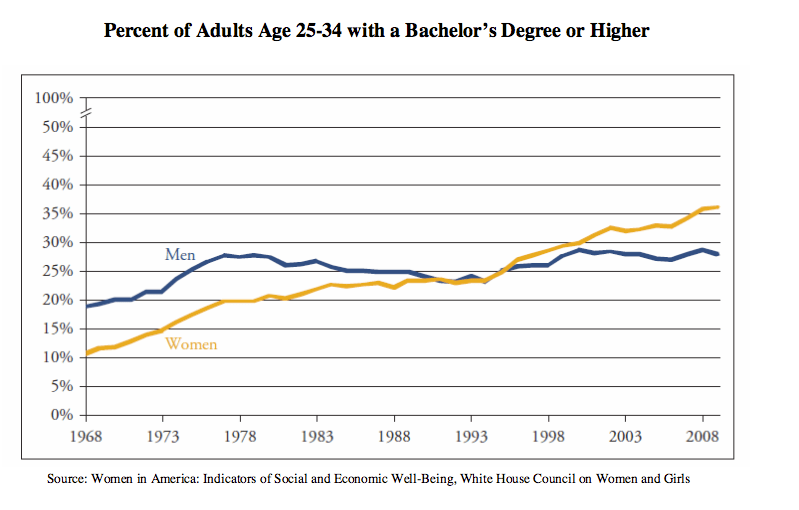
The outcomes fostered by the change have been clear in athletics-1 in 27 women participated in high school sports in 1970. Now it’s 1-2.5 and we’re pummeling the rest of the world in the Olympics on my television every four years. But what about the rest of it? Has it been as helpful?

It’s hard to measure in its entirety but the quick answer is yes. According to the Department of Justice, women now graduate from college at a higher rate than men. And the trend pretty much keeps up at High School and post graduate education levels as well.

Screen Shot 2016-08-21 at 11.25.28 PM
Source: Equal Access to Education: U.S. Department of Justice Forty Years of Access to Title IX. February, 2012

Over the last forty years, education and athletics have drastically changed the horizons of American women. That much is clear. Which brings us to the real pay off issue here-women in the workplace. We’ve moved the needle in the early part of life for women in America-school and athletics-but what’s happened in the workplace?

There’s much to be said these days about gender inequality at work. There’s a commonly accepted notion of income disparity and an ongoing political debate about the status of American maternity leave relative to other industrialized countries.Those are the political debates. The ones where we try to figure out how our government or awareness and media pressure can solve this stuff by forcing change at the highest level-top down to right the wrongs. But if you do a little digging and study some of the research by people that actually approach this scientifically, you’ll see that there’s really more going on here then will be solved by laws or PR campaigns. There’s a real, moral issue here that lives much closer to the ground where moral issues tend to live-at the you and me level.

According to a paper published by Harvard economist and professor Claudia Goldin in 2014 in the American Economic review, women working full time in America earn about 30% less then men do on an annual basis. In 1980, it was 44%. Much of that difference actually has to do with the types of occupations women choose to enter into-and not straight favoritism towards men. If you normalize the wage gap to compare like experience, education levels and occupation type, that number narrows to 18%. And when you look at women who entered into the workforce more recently, within the last 20 years, the number drops even further to 10%. Which means that it’s getting better. Better, however, means women in the work force, are still valued at 90% of what a man is.

Goldin goes on to argue that there are two forces at work here in the gender wage gap. The first she refers to as the explained portion. The explained portion makes up the majority of that original 30% gap and has to do with occupation type, differences in education and job availability for women who entered the work force before today’s generation. That portion is the portion that decreases when we normalize the comparison by like occupations and education levels. It’s also the portion that’s decreased the most over the last 40 years.

The second portion of the gap is less clear. She calls it the residual portion. There’s less firmly understood or proven about that. But with women now more educated then men with decades of equal work experience behind them, it’s fair to say that there’s likely not an acceptable explanation for why a woman is 90% of a man.

The obvious place to look to explain the residual lag in compensation is just plain old sexism. There’s no doubt in my mind, that’s part of it. Not because I ever see it out in the open in the work place in 2016. I know about sexism the way I know about racism. I’m a 40 year old white guy. Which means a lot of other 40 something white guys casually assume I’m part of the racist misogynist club. So when it’s just us, it comes out enough that I know it’s still there. There’s only one reaction you can have if you care about the residual problem in workplace compensation equality, which you should. Stomp it out when you see it. People have enough pain and hardship in their lives to deal with stupid old white guys longing for the days of Mad Men. It’s not cool. It’s not funny. It needs to go away…for good.

The other part is a little more nuanced. There’s a story in the data that Goldin shares in her paper. There’s a pattern in how some employers compensate, especially in corporate America where they focus their highest compensation on management. Companies in corporate America tend to compensate workers willing to work longer hours with promotions and higher salaries. And by longer hours I mean over and above the normal 40 a week. Those of us in the corporate rat race know what I mean. 40 hours is a lie. And the higher you rise, the more it grows. 50, 60 hours is the norm.

There’s another interesting thing thing that we can learn from the data. It’s actually what the data doesn’t show us. Those 60 hour weeks aren’t accounted for on any balance sheet anywhere. It’s the hidden expectations of success. We don’t get overtime. We get promotions and big bonuses when our outcomes warrant it. When they don’t, we don’t. So when you look at it, not actually putting in that extra time, doesn’t show up anywhere. There’s nothing to point to that’s absent. It’s silent evidence. Where we see it materialize though, is what happens to the pay gap between men and women as they progress through their career. It grows. And it bottoms out in the late 30’s and early 40’s, then starts to recover. And if you think about it, a strong hypothesis starts to materialize.

The longer a woman stays in the work force, the more likely she is to be disproportionately effected by the commitment of family.

Screen Shot 2016-08-23 at 9.31.38 AM
Source: American Economic Review, April 2014

Now, why that is or if it’s right is something you can’t explain in a two thousand word essay-or a any essay for that matter. Why having a family impacts a women disproportionately more than men is a facet of our society that has been thousands of years in the making. But I can tell you, it’s very real because I see it every day.

Sometimes, it’s a choice. I have female colleagues who willingly take reduced roles, work part time or even change to contractor status in order to reduce their commitment to their job. And in searching my memory, I can’t think of a single instance where a man did the same. Now, because of the industry I work in and the relative stage I am in my career, these women are unquestionably the primary breadwinners in their home. Yet, they still made that choice to cut back though. And I have to be clear, where I work is about as accommodating an environment as you are going to find in corporate America.

Just because some choose to cut back doesn’t mean there’s not a problem though. For every one of those women who have chosen to sacrifice career progression for family, there are several more who would not or could not make that choice. And that’s where we need help. And by we, I don’t just mean government or corporate leadership. Political pressure on high visibility issues like maternity leave and wage discrimination help. But it’s not all of it. The American working woman is an amazing asset. The bigger role they play in anything, the better we get. Just look at Rio. So if we want to rise, they have to rise with us. And it starts by realizing that one thing that has absolutely nothing to do with gender.

When I was on active duty in the Navy, I didn’t work with many women. I went to Annapolis for college which was a little less than 90% male. I served on one of the last all male ships for my first tour. And then I transferred into other units that were only open to male participants. By the time I got out, I’d spent most of 15 years working only with men. Of my three war-time deployments, only my last one had a woman attached to the unit I served in. It’s safe to say that by 2011, when I left that world, I had about as little exposure to women in the workplace as was possible in 21st century America.

That might seem like a problem when it comes to understanding women’s issues. But it’s not. I’ve been at it for a few years now and they haven’t killed me yet. Because what the military taught me, and what is lacking when we don’t stand by our colleagues when they’re doing the human see-saw act that is balancing being mom and a business leader, is that we’re all in this together. And when we can, we take care of each other. Which is something that has nothing to do with gender and everything to do with giving a crap about the other humans you work with.

My commanding officer sent me home from Iraq for a few weeks when my son was diagnosed with autism. And when I came back to finish the deployment, he made me leave on the first set of planes taking us home-even though I’d taken two weeks away, which no one else got to take and officers usually left last. He knew I was a wreck and so was my wife. And when he saw her at the post deployment banquet, he pulled her a side and told her that I did an amazing job. And that she should be proud of all I did. And that he was personally grateful for the strain she took that allowed me to do it. He knew we both felt guilty about it-irrational as that sounds.

He gave me what I asked for because he knew what I needed to stay a part of the team. And if he didn’t, and I had to choose between my family and the team, my family won. So he didn’t let me choose. He didn’t worry about setting a bad precedence or about how it would look. Or maybe he did, because it looked like he gave a crap about me and my family-which he did.

This whole thing-all of it-works better when we realize we’re all in this together. And we do what we have to, to keep each other in the fight. And remembering that is what we can do, to close the gap for gender equality in the workplace-not governments, not shareholders. Us.

So when one of your employees comes into your office and hesitantly tells you that she’s pregnant and her due date is smack in the middle of your peak business season, the only answer is congratulations. And if she tries to apologize-it happens- don’t you dare let her. And when one of your employees who’s just returned from maternity leave asks to work on a part time schedule, for part time pay, because three kids under four and two full time working parents is just about impossible, you say, of course. Because that’s the only answer-even if your company’s policy doesn’t clearly state you have to. Don’t you dare make her choose between her work and her family, if you can help it.

Being a tough leader doesn’t mean coming down on your people. It means finding ways to make those situations work, while making it look easy, up and down the management chain. You could wait for the law or for your corporate policy to catch up with what’s right. Or you could lead and take the strain yourself. If you can’t, maybe this leadership thing isn’t for you.

And if you’re reading this as a professional woman-or man- without a family by choice or otherwise and this treatment strikes you as unfair, you’re right. It is unfair. Just like getting pulled out of a presentation to your CEO as an executive at a software company because your 12 year old got in a fight at school is unfair. Mom is usually who you call for that-no matter who you are or what you’re doing. And yes, that mom has a choice. Leave and go get him, or walk back into the meeting and go about delivering her presentation while being mom gets de-prioritized. Whatever she chooses, and I’ve seen it go both ways, it won’t feel good-either way. And that’s not fair either.

Yes, having a family is a choice-usually. And it’s not your fault they chose it. Rest easy, you’re still getting the better end of that deal. At least at work that is. Even if it simply means never having to make that crappy choice that I’ve seen dozens of times. Because that choice sucks the way few things in life suck. So cut them some slack. The workplace and the world will be a better place for it.

The American woman is fierce. I have no better term for her. They showed the world their strength and grace and toughness these last two weeks at the Olympics. But they show it in super human ways every day, splitting the unfair load of mother, wife, and pro. It takes a fierce woman to choose to jump into it. Why in the world would we ever do anything to keep that kind of fight on the sidelines when we’ve got so much to gain from inclusion.

There’s a lot of this that’s on you and me. And we can do better.

Best Intentions

The Vision

That’s how it starts. That’s how anything you do on purpose, that matters, starts- with a vision. The vision isn’t the work or the good breaks or the tough luck or the temporary successes and failures that you wander into along the way. The vision is the end. The end is the point. The end, is everything.

The Beginning

December of 2007 was where the vision started for me. I was staring out the window of a sprawling corner office on the top floor of the Merrill Lynch building in downtown San Diego. It wasn’t my office. It was the branch director’s office. I was waiting for him. I had bad news-I thought.

I’d been working in the financial industry for about two years. I was new, but doing pretty well. By the summer of 2007 though, I was worried. We limped through August with a sharp dip in the market that I hadn’t experienced before. It added uncertainty and stress-a notion that there were things in motion that were beyond my control. That was new for me. I was used to war. What you couldn’t control in war was often final. This was open ended, somehow more frightening. The housing market was starting to show cracks. There were concerns about the capital structure of the financial sector as a whole. I wouldn’t go so far as to say that I knew we were in trouble, only that I was suddenly aware of the existence of trouble, when perhaps before, I wasn’t.

To be safe, I affiliated in the Navy reserves that summer to help minimize the risk for my family. That’s what I did before Wall Street. I served. At the height of the surge in Iraq, I figured it was still a smart bet. I had a wife, two kids and a mortgage and there was danger out there that worried me more than war.

That December, I was recalled to active duty. That was the bad news-I thought. I told my director. He thought I was joking. I wasn’t. The really bad news came later for everyone in that building. Within a year Merrill Lynch, in business for over a century, would be bankrupt. Within 18 months, I would be in Iraq. The America that I tried to assimilate into in 2005, after two tours in Operation Enduring Freedom, no longer existed. The free fall was on.

The stock market dropped 50%. Unemployment raised 100%. Real estate property values dropped by a third. Property foreclosures spiked 40%.  We were spending $15 Billion a month on war and losing 75 service members a month to combat. Two of the big three automakers, Ford, Chrysler, GM, the industry that built modern America, went bankrupt. Dozens of financial services firms representing hundreds of years of business and trillions of dollars of assets went under. Of the 11 largest bankruptcies in American history, seven happened within an 18 month period starting in March of 2008. The president, George W. Bush, had an approval rating of 25%, three points higher than the lowest ever recorded, one point higher than Nixon when he resigned. 83% of Americans believed that the country was heading in the wrong direction.

Globally, over $34 trillion of wealth was destroyed in 2008 and 2009. That’s twice the size of the entire economy of the United States. Gone.

Those are the numbers and historical facts. They mean little to most people though. What matters much more was the impact on their lives. For me, it was bad. The company I worked for went bankrupt. The industry I worked in folded. I dropped out of business school and went back to war in Iraq to support my family.  I left a four year old, a two year old and a four month old at home with my wife, in my house that was now worth a little over half of what I paid for it. Things were bad, not just philosophically, or morally. Things were bad materially. Lives were worse-many were ruined.

That’s the hole that America was staring out of in 2008. We weren’t staring up at a mountain to climb, to ascend to a different peak above where generations before us toiled to take us. We were staring out of a deep, dark hole, up at where we once were. We needed a vision. That’s how important things start, remember?  A view of what the end would look like if we all just agreed to start. The vision that gets you out of a hole isn’t necessarily the same one that gets you to the top of the mountains you climbed before. That one looks like strength and achievement. The vision you lean on when you’re in a hole, is hope and change. That’s the vision we got.

The End

So what did the end look like?  2,835 days into his presidency, President Barack Obama’s administration has overseen drastic change. I know what I’m about to say will be argued against heartily. There will be anger and disagreement at the facts and data I’m about to deliver. In advance of that, I’ll add two things. One: This data is accurate and inclusive and not different than the same economic data used to show the dire circumstances we were once in. It’s from original sources-as is. I know some of you still won’t believe it so I’ll offer my other point. The reason you won’t believe it is the point of the rest of this essay.

Here’s where we are. Unemployment has been cut in half. The stock market has more than doubled. American corporations have never been more profitable. 20 million people have healthcare that didn’t before. The auto industry just had its most profitable year in history. We are no longer spending and deploying large occupying forces to active wars in Iraq and Afghanistan. The man who planned and funded the 9/11 attacks is dead. We found him in an allied country. We flew a team in that allied country without permission, raided his home, killed him and dumped his body in the Atlantic Ocean like he was a Decepticon.

Right about now, you may have stopped reading and started qualifying all that data with points of your own about how they don’t tell the whole story. Go ahead if you must. You’re not wrong. It’s not the whole story. But even if it were inflated by 100%, it would still be one of the most drastic economic recoveries in history. So try to push on, because there’s more here than just a cheer-leading exercise for the president.

So, that’s where we are. Much better then we were eight years ago.  My family? Much better too. As are most of the families I know. There are bad things too, like wage stagnation, and ISIS and Donald Trump. But I emphasized the things that people 100 years from now are going to look at and assess to understand the impact of the Obama administration on America. Whether or not he’s the reason for it is a different question. But it’s fairly impossible to argue that we are in a worse place today then we were when I looked out that window on the 32nd floor of the Merrill Lynch building in 2007. The vision we were given then was hope and change. When we think about the end we hoped for, now that we can see it, in a material sense, in the ways that make American lives better, we’ve realized the vision, perhaps even better than we had any right to expect. Things need to continue to get better. We’ve not finished the march. But things are better. It’s not close.

The president’s approval rating is over 50%-not bad for a second term. Somehow, over 70% of the country believes we are moving in the wrong direction though. 2008 perhaps, feels a lot further away and better than the reality. Which actually takes me to my point. It’s not that I believe that President Obama is miraculous, though much of the trajectory of measurable data during his presidency actually is. My point is something else. It’s this: If you have a burning disapproval for our 44th president, 100 years from now, no one is going to understand why. And in absence of understanding, they’re going to assign a reason to it. It’s what we do. And that reason, if I had to predict it based on current trends, will be racism. And that’s not fair. Fair criticism is one of the most important responsibilities of a democratic populous. And we don’t get any right now. So, I’m going to do something to help and provide my own.

First, I’d like to add a disclaimer. I’m a fan and supporter of the President-mostly because I’m a fan of all of our presidents, while they’re in office. They’re on my side, and at one point, I even worked for them. But beyond that, the message of this president resonates with me. And his personal conduct has been exemplary. I believe that most of the social change that he’s ushered in was well over due and I believe that he oversaw one of the more important-all be it imperfect-financial recoveries in our country’s history. That’s the way I see it. As usual though, the way I see it is but a fraction of the story.

I have decent, intelligent, friends that I respect, that can’t say the words Barack Obama without a grimace. It’s not just that they disagree with him politically-though they do. It’s more than that. They can’t stand the idea of him. And they’re not racists. And I fear that we haven’t done the work to understand why. If we do though, we might find that we come across the term generous orthodoxy.

What is generous orthodoxy?

If you’re a fan of Malcolm Gladwell, his books Blink or The Tipping Point or Outliers or anything else he’s written, you may also be a fan of his podcast Revisionist History. Like most things he produces, it’s fantastic. This past week he introduced me to the term generous orthodoxy while I was in the middle of struggling to answer the question of why reasonable, non-racist, intelligent Americans can’t stand our president despite what most would agree is at least a “serviceable” effort in office.

According to Malcolm Gladwell, generous orthodoxy is a term coined by 20th century theologian Hans Frei. It means to seek the useful middle ground of generosity -being open to change-and orthodoxy-being committed to tradition. These are Gladwell’s words, not mine.  But they grabbed hold of me tightly.

He goes on to argue that the only true way to convince an orthodox group, one rooted in tradition, to be generous-open to change, is to show them that you actually care about their way of life, the way it is-not just the way you think it ought to change.  The idea is that even though you are driving for change, you are willing to acknowledge the value of what it is that you are going to change and acknowledge that you owe your very existence and your position to effect change, in some way to what that group represents. As only Malcolm Gladwell can, he uses seemingly disparate examples like a Mennonite pastor cast out of his profession for marrying his gay son to his partner or a black student at Princeton protesting the name of the overtly racist Woodrow Wilson to make his point. I won’t give it all away, you have to listen to it. It’s important stuff. But what I will tell you is that it occurred to me, halfway through his message, that he was actually talking about the greatest failure of the Obama presidency.

Remember now, I’m a fan. But all presidencies have their failures. Some are worse then others. This particular failure is nuanced. Because it’s not a failure of policy or tangible outcomes. Not all of his policies were winners of course. And the tangible outcomes aren’t perfect, but they clearly don’t warrant outrage-to reasonable people that is, at the level that any of us who’ve ever dared to say something positive about him in public forums have witnessed. But there’s definitely a failure here. It’s a failure of generous orthodoxy. The president and his supporters have effectively delivered the message of generosity-change.  But we didn’t spend much time acknowledging the orthodoxy. And that’s a problem. I’ll explain.

There’s a whole population of Americans that don’t give a rip about health care and gun control or marriage equality. It doesn’t make them right. But it also doesn’t mean that their entire culture and way of life is wrong. And I think, somewhere along the way, here in America, those of us sympathetic to progressive causes have forgotten the value of orthodoxy. We’ve gotten so wrapped up in what’s wrong with the groups that don’t share our point of view-the pockets or racism, the religious hypocrisy-that we’ve forgotten what’s right about them.  We’ve forgotten what we owe to our orthodoxy.

The heartland of America is a place where family and faith are still the center of the community. Those are good things, no matter what. It’s a culture where fathers and sons and daughters spend time in the outdoors, learning how to hunt and survive in the rugged territory their father’s father’s fathers settled. Those are good things. They value service to country and patriotism, and personal liberties and hard work. Those are all good things. Because most of them are good people who love their country and fellow man. They’re people who have made America, along with the bold intellectual progressives of the rest of the country. Without both, we would not be America. The push and pull of that debate has been making us strong since Jefferson and Adams quarreled about the roles of government. But somewhere, we’ve forgotten it. And that’s a failure because it makes it hard for us to get things right. And even when we do, it doesn’t seem to feel like we’ve gotten it right because someone, somewhere is being left out-the orthodox or the generous.

It’s the danger of losing that balance. And it’s failure that didn’t start with this administration. But when your vision is change-generosity-you bear the burden of balancing the orthodoxy.

This is what happens when you don’t: One side, focuses only on orthodoxy. And in doing so, does things like claim that President Obama is a foreign born Muslim who founded ISIS. The other, focuses only on generosity and it doing so labels all not in violent agreement with the change, a racist or a bigot. Neither is right. And neither is fair.  And no one a hundred years from now will understand that nuance. They’ll look at the data. And the wars that ended or started. The territory gained or lost. All of that matters. But those things are really just outcomes of a people in motion. It’s the lives and attitudes of those people that matter most.

So how do we find the balance?

I’ll take a lead from our 43rd President, George W. Bush. The fact that I’ve given credit to -W-, Obama and Malcolm Gladwell in the same essay shouldn’t be lost on you, if you strive to find the balance of generous orthodoxy.  A few weeks ago, at the heart wrenching memorial service for the eight slain Dallas police officers he gave us a hint.

Too often we judge other groups by their worst examples while judging ourselves by our best intentions.”

He’s right. And he’s saying in his own words, our failures are not acknowledging the values of others. So ask yourself, what happens when we focus on the others “best intentions”?  The answer is the sweet balance of generous orthodoxy.  We’ll forget that message a thousand times again as we have forgotten it a thousand times in the past.  But as long as we wander back to it from time to time, we’ll be alright.
Left Behind

How did they get this way?

It’s the question you can’t avoid asking when you see it-hundreds of them, all ages, men, women, even children. Every race. It’s hopelessness smeared across the canvas of the human experience. It’s an end to which you can’t see your way to. From where you were to where they are just doesn’t connect. So you have to ask it.

How the hell did they get this way?

For the last year, my wife has been helping them. Our kids are all in school now and it was time to start on a new journey for her. She went back to grad school and now is serving as a counselor at The Veteran’s Village of San Diego-a facility that takes in addicted homeless veterans. The task is to provide them with a chance to start over, get off the streets, get sober. So that’s what she does with her days at work. She listens to the problems of homeless, addicted veterans and tries to help them develop some emotional skills to cope. It’s not light work. And it’s not for the faint of heart.

Today we’re at Stand Down, the annual three day event where volunteers and resource providers gather in one spot and invite the homeless veterans of San Diego to come to them and seek help-anything from medical care, to clothing to haircuts to legal assistance. It’s a massive intervention. And every year, since 1988, about a thousand homeless vets come here to get what they can. After her first day, she told me I needed to come. I needed to see it. As a vet. As a father. As a man. So I did.

FullSizeRender[3]

Now we sit outside the tent where the people she’s completed an”intake” for are finding out whether or not they can get off the streets and participate in the program at Veteran’s Village. At the table a woman checks their name. If they’ve been accepted into the program, she shakes their hand and says, “welcome home”. Tears and hugs follow. It’s the first good news any of them have heard in a long time. Years. Decades. Maybe a lifetime.

FullSizeRender[4]

She takes me to other places.  She wants me to see all of it. The children’s tent, where there’s daycare for the kids while their parents seek services. The tent is full. It tugs at your heartstrings. If you look too closely it rips them clean out of your chest. A woman drops off her listless son, four maybe five.  She walks unevenly away, too quickly, yet too slowly at the same time, coherent but a little off the way someone who’s body no longer understands it’s place any more.

“She’s tweeking” my wife says.  “They all are.”

FullSizeRender[1]

We head over to where they hand out clothes and get haircuts.  A man, gray beard, raggedy clothes, shows her pictures of his reenlistment-20 years ago maybe, clean cut in his dungaree uniform. I’ve seen that photo a hundred times. Hell, I could have been there. He babbles, trying to tell a story but mostly just repeats that he’s been driving cross country.  And that he has daughters.  And that he’s “service connected” as in service connected disabled.  He wanders off to show the pictures to someone else and finds another audience in one of the volunteers. Out comes the photo book. And the story.

Over the PA system, a live testimonial of a former Air Force enlisted woman cuts loudly over the crowded murmur. Today she received two things-her chip for being sober one year. And the good news from the legal tent that they were able to overturn her dishonorable discharge and change it to honorable. She was now two albatrosses lighter-though still hopelessly behind in the race. More applause. More tears. The question comes back in the silence that follows. I have to ask my wife.

How did they get this way?

She says, matter of factly, almost surprised that I couldn’t tell. “Addiction.  Almost all of them.”

We walk a little further out into the center of the field of tents, surrounded by them now. She continues, “And every single one, that I’ve talked to at least, every one, is self-medicating something. Anxiety, depression, ADD, PTSD, maybe a little of all of it.”

FullSizeRender[2]

I think about my boys. And me. And the generations of my family of addicts. I could see them there. After we’re gone maybe. It’s too tough to think about though. So I stop.

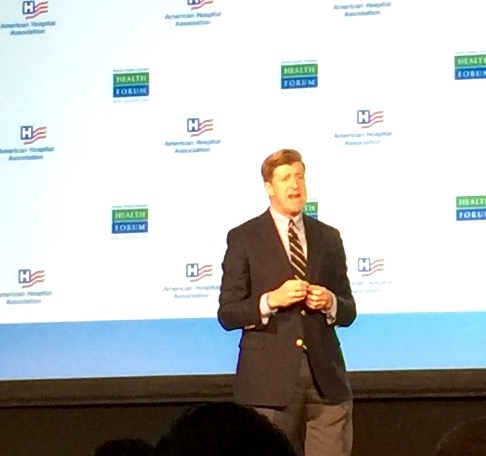
The week before, the two of us attended a talk given by former Congressman Patrick Kennedy-son of Senator Ted Kennedy. Congressman Kennedy, who retired from office in 2011, recently authored a book chronicling his own public journey with addiction titled, A Common Struggle.  In 2008 he sponsored the Mental Health Parity and Addiction Equity Act (MHPAEA), groundbreaking legislation prohibiting less favorable treatment for benefits related to substance abuse disorders than to other disorders. In retirement, Congressmen Kennedy now serves as an advocate for mental health issues. Of particular focus on the day we saw him was the enforcement of requirements laid out by the very law he sponsored-something that has been sadly slow to catch on. The outcomes, in many ways, have directly contributed to the massive addiction epidemic that is arguably the most serious medical crisis facing America today. As I walked from tent to tent, I bathed in that reality.

FullSizeRender 12

There was something that he told us, in the grand ball room at the majestic Manchester Grand Hyatt that overlooked San Diego harbor, that I couldn’t shake. Now, as I stood there watching these poor souls shuffle around, over the dust and dirt of the dying grass, it started to grind slowly into my brain. The Congressmen noticed that other members of Congress who had, behind closed doors, disclosed the impact addiction had on their lives, also voted against the bill he introduced. When he asked them why, they stated that where they came from, the heartland of America, things like addiction were considered a moral issue-not a medical issue. And that supporting a bill that found its motivation grounded in something to the contrary, would open them up to risk- politically.

As I watched these men and women who served us all at one time, in their broken state, those words grew louder in my head.

Moral. Not Medical.

Then I remembered my experience transitioning out of the service. I remember returning from Iraq and having about a year before I was completely out. I remember the stress and the horrible feeling of detachment. I remember that, for the first time since I was 18, I no longer had someone to reach out to that was responsible for my well-being as a function of their job. I remember, that for the first time, I alone was responsible for my family. I remember the crippling anxiety. And I remember, for a brief time, when that inner turmoil transitioned from the “moral” to the physical by way of crippling panic attacks.

Most of the time they came at night. I would wake up shortly after I fell asleep gasping for air-my heart racing. I wasn’t having bad dreams. I wasn’t even feeling stressed. I couldn’t explain it. Then, they started coming in broad daylight. I would feel fine, and then a rush of dread, racing heart, panic, frozen in fear. Twice they happened in job interviews. I hid it well, I thought. I didn’t get those jobs though. And I always got the jobs.  I was an officer from Annapolis with an MBA and a shining war-time service record. And I’m a hell of an interview. But I was falling apart.

I had options though. And time. And the support of a loving wife and family. And the fellowship of a loving church. And I needed every bit of all of it. Eventually the father of my roommate from the Naval Academy made a connection for me. And I made the most of it and turned it into a job. I got counseling and learned some methods to control the attacks. And soon they went away and never came back. That was a long time ago. But not that long.

Looking out from the gated suburban neighborhood I live in, from my over sized track house or from my corporate office at the Silicon Valley tech firm I work at, the distance between where I am now to where these people are, seems immeasurably far. But the reality you’ll realize, once you’re willing to share some of the credit with fate, or luck or others or God, is that it’s not quite as far as it seems. At least it wasn’t at one point. And the difference had absolutely nothing to do with my morals. Or my character. It had to do with the amount of support I had. And luck. I had tons of both. Anything less, and all bets are off.  I’d like to think that I wouldn’t have ended up there, at Stand Down, on the other side of those tables. But that’s a question I’ll never have to answer.

Because of Support. Not morals.

Here’s the deal. There’s a large strong loud American constituency that loves to fly the flag and talk a big game about supporting the troops. They’re gritty people who believe in rugged individualism and freedom and liberty. And they’re every bit a part of what makes America great. If you’re a part of that group, that’s wonderful. I am too. But I’ve got a message for you. There’s a very good chance that you support elected officials that either voted against Congressman Kennedy’s MHPAEA or oppose further action to ensure it’s enforcement. In all, about 200 members of congress did just that. You can check out who.

FullSizeRender

You’ll have to do a little work though. Maybe something more than flying a flag in front of your house. Or sharing tough guy memes on Facebook that support those who fight.  Supporting the troops means supporting them when they can’t fight-when they need it most. Looking around Stand Down in San Diego, I see a whole lot of people left behind. So maybe this year, save the meme forward. Or maybe even forward this instead. And maybe this year, check out where your congressmen stands on the issue. And reach out and let him or her know that you support the troops with your vote. And your voice. Because they need it a whole hell of a lot more then we need representatives who still think that people choose to be addicted. And that the crisis of addiction gripping our country is simply, a crisis of morality.

This is a path no one would ever choose.


American Ruin

I’d never seen anything like that place before. We slipped out of the familiarity of scenic Kelly Drive and took a few quick turns that I couldn’t follow and soon we were in a place that was different. The streets were long and flat and lined with row houses as far as the eye can see in every direction. It was a spring day. A few hundred yards behind us, overlooking the Schuylkill River, you would have called it a beautiful one. But here, it felt less so. The sky was still blue but it felt gray. Everything was dull. Nothing was new. The homes were boarded up.  Some were burnt out.  Some had doors. Others didn’t. The spring breeze blew trash down the empty street.

Screen Shot 2016-07-15 at 1.51.02 PM


Alone, on a corner I saw a striking, tall woman in a short red dress. The dress cut a contrast against the backdrop of faded colors and broken things. Her long lean limbs and dark brown skin cast an even longer shadow in the early morning sun on the dirty sidewalk.  She was the only person on earth here, besides us.

As we drove closer to her, the stains and rips on the dress became clearer.  We came to a stop sign at her corner. We stopped. I looked down. She wore a large plaster cast on her left leg, up to her knee. She’d walked through the bottom of it, her bare foot firmly on the ground, shreds of plaster hanging from it. An unfamiliar feeling of horror snapped through me. She looked off in the distance with a blank, vacant stare. She had no idea we’re there-even though we were the only other people on earth.  At least that’s how it felt.

“Do people actually live in those?” I asked trying not to think of the woman’s foot and pointing to one of the more obviously abandoned row homes.

Screen Shot 2016-07-15 at 1.51.49 PM

“Some of them.” My dad answered as we drove on. “I think”

“Where is everyone?” I asked.

“Inside I guess. People usually stay inside here.” he says.

I didn’t blame them.  I was 13. It was 1990. And my dad was taking me to work with him. Work was the 8th grade classroom at Thomas Fitzsimons Middle School in the Strawberry Mansion neighborhood of North Philadelphia.  The school was named after a man who signed the Constitution. The neighborhood got its name from one of the nearby gilded age mansions that at one point served strawberries and cream to its restaurant patrons. The irony of those names, as I researched their origin, 26 years later, isn’t lost on me.  There was little sign of history or luxury. Screen Shot 2016-07-15 at 1.50.45 PM All that was left was the modern American ruin of one of the most economically depressed, dangerous neighborhoods in the country.

At the school, the kids began to shuffle into the classroom. A few gave me a funny look as I was a random white kid sitting quietly as my dad wrote something on the chalk board. I would say that white kids stuck out in Fitzsimon’s Middle School in 1990, but that would be a lie.  Because there weren’t any.  None.  There weren’t any Latino’s either.  There weren’t any Asians or Arabs or anything.

Every single student in a school of close to a thousand students, in a neighborhood of about 40,000 or so people, was black.  It was, by definition, the least ethnically diverse school in the country-or at least tied for it.  I make it a point to say that.  Because, when you think about it, it’s remarkable.  Screen Shot 2016-07-15 at 1.51.17 PM26 years after the Civil Rights act of 1964, exactly halfway between today and then, there was a neighborhood, less than 2 miles from where the whitest schools practiced the whitest sport in the country-crew-that was more segregated in 1990, then it was when there was legal segregation. I’ve spent a long time thinking about why since that day.   At the time, though, I was in awe of the difference of it all.


A beautiful girl with a tired sad smile sat next to me. I said hi.  She ignored me. Most of the class ignored me the whole day.  My dad introduced me.  One tall kid in the back, the class clown I guess, joked that I’d moved to the wrong neighborhood.  And the day went on.

At lunch, my dad and I walked up the street to a corner store to get a sandwich.  I was scared.  I asked him if he did it every day.  He said yes. He told me that people knew he was a teacher there so they left him alone. I didn’t buy it. I figured he’d just been lucky so far. We walked past vacant lots and half knocked down buildings. There were a few people passing from home to home now but it still looked empty.  In the store, the old man behind the counter told me to stay close to my dad.  I did.

Screen Shot 2016-07-15 at 1.51.25 PM

After school there was a dance in the basement.  My dad took me down there.  I watched the entire school intertwined in one massive group on an old basketball court. A girl grabbed my hand-on a dare no doubt- and pulled me towards it.  I followed for a few steps until a hand on my shoulder stopped me. A teacher, an older black woman with a stern face shook her head.

“That’s not safe son” she said. I got the point and walked quickly back to where my dad was.  Then we went home. And it was over.


That day, 26 years ago now, was one of the most important days of my life. As we shuffle down the winding path of our time here on earth, most of us, if we’re lucky, see some things. And sometimes those things are things that that we cannot un-see. Things we carry around with us for the rest of our lives. They change us. They stretch the boundaries of what we thought was possible-or impossible. They mold the lens through which we see the world around us and inform what we believe and what we don’t-what we are willing to ignore and what we cannot

We all experience them.  If you’re lucky, you’ll experience more than most-at least more of the kind that don’t destroy parts of you. That which does not kill us, after all, sometimes just gives us bad dreams and anxiety.  Having had a few of those too, I wish little of that on anyone.

I do wish the other kind for people though. The kind that expand space in which our thoughts can move and test our understanding.  Because when something or someone shines a light on the cold reality of parts of the human experience previously hidden from us, growth happens.  And when we turn away from that light, or ignore what we see, or try to fold it and distort it to fit the reality we ought have just left, growth ceases.  Growth is the point.

When I was 13 years old, I had one of those experience.  It planted a seed in me.  And what has grown out of that seed over the last 25 years or so, is something I cannot ignore. And America is waking up to the reality that she can’t either.  Not any more.

For context, I’ll point out that I didn’t come from a wealthy upbringing.  I lived about an hour away in a middle class neighborhood just south of Atlantic City, New Jersey.  My parents were both teachers.  They had split when I wasn’t quite school aged.  But we did OK.  I lived near poorer areas in Atlantic City-just not in them.  I knew where the housing projects were and regularly played against kids from that area in youth sports.  I wasn’t from the mean streets.  But I wasn’t sheltered either.  I had a reasonable understanding of how your garden variety urban poor lived. Which is what most Americans today can say with some good faith, if they live anywhere near any size urban area in any state.  What I saw that day, in that neighborhood in North Philadelphia, was something entirely different.  And it rattled me to my bones.

Screen Shot 2016-07-15 at 1.51.42 PM

Because what I didn’t know, and what most of America doesn’t know because they’ve never seen it-you have to see this to believe it-was that there is a rung below what I thought was the bottom of the socioeconomic ladder. Something far more depressed. It’s what’s left behind in our long dead industrial zones in our major metropolitan areas.  It’s something 150 years in the making.  It’s the fall-out from de-industrialization, segregation and a million other things. And it’s not the fault of the people born there-even if their individual actions may be. It’s bad the way nothing else is bad in America. What I saw there was a standard of living that I wouldn’t see again until I served in sub-Saharan Africa and again in Iraq. It is societal ruin. It left me with a sense of boundary, more concrete then what I and others who hadn’t seen it before have. This was a place where the logic and rationality personal accountability and even good fortune, weren’t enough. Not by a long shot. And that sets your world view, if you’re prone to believe that anything is possible, on its side. Some things there, were not possible. Most things there, were not possible.


That was 1990.  So how about today?

The advent of the internet, economic growth and national wealth creation on par with the greatest periods of growth in our history should have helped. Another 26 years of water under the bridge since the Civil Rights act of 1964 should have helped. There’s a lot that’s gone on that could lead you to believe we’ve had some progress.  You would be wrong.

The school closed. It’s still there but it shut down in 2013 after efforts to privatize it were unsuccessful.  The neighborhood is still in the top 25, or bottom really, when it comes to violent crime in the country.  And it’s still economically destitute. A quick search on Zillow will show you that houses go for about $14K. Those pictures of homes are actually homes listed for that price.  Every property on the block next to the school could be bought for a total of less than $200K.

That’s right. A city block in Philadelphia, three miles or so from where Rocky Balboa ran up the stairs of the Philadelphia Art Museum, goes for about half of what a two bedroom condo goes for in Southern California where I live now.  Almost three decades later the same place is still in the same ruin.  Those pictures by the way, not from my trip. They’re from Google Maps, taken within the last year.  No change. Frozen in failure.Screen Shot 2016-07-14 at 4.15.40 PM

Why should we care?  I know compassion and fellowship aren’t really great answers-at least not in 21st Century America. So I’ll try this. Large permanently poor populations are really, really bad.  And usually, in most places in most times, those that aren’t permanently poor that live near them, eventually end up fighting those that are-one way or another. Somehow, throughout our 240 year history as a country, we’ve avoided societal clash between our generational urban poor and the rest of the country in America. But there are troubling signs that it’s starting to change.

What happened in Dallas should have been a wake up call for all of us. And what happened in Baton Rouge, Louisiana, this morning, as I write this is even more troubling.  It’s the next step in what normally happens when you have people living like this, next to people living like me. And instead of arguing about whether or not cops matter or black lives matter or gun control matters or a host of other things that actually matter less, we should be taking notice that we are very close to a tipping point in our racial and economic divide. Because in America, the economic divide is also racial. And that’s never been good for anyone.

Terrorism has the world’s attention right now. People all over the world are getting killed by religious ideologues. And though it is somewhat comforting for some to assign it to a specific people and religion, the truth is that it’s a manifestation of inequality.  Yes, those that perpetrate it are using their religion to unify their message, and to provide the powerful justification for horrific acts, but that’s just the mechanics of it. The cause is a permanently poor part of society. It’s an entire region left behind by it’s autocratic leaders. It’s a class of European citizens that fled that destitution and then weren’t able to integrate into society in the countries they came to.

Why that is and who’s at fault is a different debate. But that’s how it works.  And we have every bit of that recipe, down to an ethnic separation and economic hopelessness, right here at home. And it’s not getting better.  It’s getting worse. And I fear that time may have run out to fix it, before a disruptive and potentially violent end.

The Dallas shooter may have been a disturbed lone wolf. But he was a disturbed lone wolf that attached his actions to a cause. And that cause is the cause that almost always signals the beginning of civil unrest. The downtrodden masses tangle with those charged by the rest of society to keep the peace. Think Crispus Attucks and the Boston Massacre-five colonists dead at the hands of the Red Coats assigned to keep order. That’s how this normally starts.

As easy at it is to blame law enforcement for the degradation of relations between authorities and the people of these neighborhoods, we should pause. These areas are impossible to police. And if we don’t do something to address them, on a large scale, in a way that you only do when you’re safety and society depend upon it, this will end badly for all of us. I fear it already is starting to. But that can’t stop us from trying.

Normally, small painless measures don’t suffice to stop a rash of violence against law enforcement-or anyone really. So I’ll pray for our good law enforcement officers and the innocent members of those communities in question. It’s about to get even more unfair for both.  Anyone perpetrating violence against law enforcement, you’re not in club. That swift justice is something our society depends on.

Longer term though, we need to be honest with ourselves about our social safety net in America. It lifts people out of poverty. That’s good. It appears to have bought us some time or the violence would have come decades earlier. But it does absolutely nothing to create real economic progress in the areas that need it most. We’ve created narrow avenues for people to be able to leave-if they can survive.  And the societal progress we’ve made over the last fifty years enables them to integrate into other parts of our society.  But too many don’t make it out and in turn live in areas in which progress and the promise of life, liberty and the pursuit of happiness simply aren’t realistic.  And that’s bad.

I don’t know exactly what the answer is. But I know what doing nothing or more of the same looks like. That path through history is well charted.  Over the last 18 months or so, we’ve started walking it in earnest. This may not be a full blown terrorist movement. But I know those well. I’ve lived and fought them for most of my adult life. And this is what they look like when they start. I’ll let law enforcement handle the short of it. Good luck and God speed to my brothers and sisters in uniform.  As for the long, we need something better.  Or we’re going to be fighting this for generations.


The Pledge

240 years ago last month, the committee to draft the Declaration of Independence was selected by the First Continental Congress.  The full committee included Thomas Jefferson, John Adams, Benjamin Franklin, Roger Sherman and Robert Livingston.  Sherman was called away and never signed it.  Livingston reviewed and signed the document the three others provided, without edit.  As a result, no one outside of academia has any idea who Sherman and Livingston are. Of Jefferson, Adams and Franklin, only Franklin was the Benjamin Franklin of our history books by then, having seemingly invented most of the things invented in the 18th century.  The others were simply two respected lawyers and landowners from Virginia and Massachusetts.

Jefferson asked Adams to write the first draft.  He refused, stating that he had been far too “obnoxious” in his calls for its creation to be taken seriously.  Self awareness is a powerful accomplishment.

There are a lot of memorable words in that declaration.  One’s we recite regularly and point to as the foundational ideals of our American society.

“We hold these truths to be self-evident, that all men are created equal..” 

That’s an important one.  Though we didn’t really mean it at the time.  The next 240 years or so would be one long fight to fix that.  The enemies of our independence pointed to that statement and rolled their eyes at our hypocrisy, the author himself owning scores of other “equal” men.

“they are endowed by their Creator with certain unalienable Rights, that among these are Life, Liberty and the pursuit of Happiness” 

Also important, taken from John Locke in the previous century though.  It wasn’t a new idea, but the genius was how Jefferson coupled it with equality for all, a powerful sword against the class system and subjugation of the crown. Perhaps no other words, save scripture, have bound a society more strongly than the equality and liberty declared in the first few sentences of that great document. 

But for me, it’s not the most important part.  There’s another one, buried down deep in the last paragraph-after the laundry list grievances against the crown.  We rarely get to it. We remember the first line.  But it’s the last line that gives the document its power.

“And for the support of this Declaration, with a firm reliance on the protection of divine Providence, we mutually pledge to each other our Lives, our Fortunes and our sacred Honor.”

Then they signed it.  56 men, most of them the upper class of colonial society, lawyers, planters, publishers, shipping magnates-gentlemen.  The power of the document was not in its borrowed words.  Men had been thinking and writing and longing for the things Jefferson wrote in the opening paragraph for as long as men have been thinking and writing and longing for things.  It was the commitment to action that changed the world-the risk of lives, fortunes and honor.

The only thing that has moved our world forward, towards life, liberty and the pursuit of happiness is action in the name of others-more importantly action by those not motivated by self-when the “have’s” of society ignore their positions of situational wealth and well being to give voice to a cause on behalf of the “have not’s”.  Nothing happens until the people least effected by something, speak up for those most effected by it.  For millennia, rulers used patronage to appease the classes most capable of insisting on change. It can be an impassable barrier to progress. Self preservation is the greatest friend oppression ever had.  The Declaration, even for just a moment, changed things.

240 years after this great document was signed, we can all take measured satisfaction that we’ve aligned to protect our liberties and insisted, too slowly perhaps, on equality.  But the thing we have to ask ourselves is this. Have we held true to the powerful pledge those 56 men locked arms together and marched forward with, against the best interest of their fortunes and their honor?

If you are wealthy, do you give voice to the needy, even if it may cost you something?  If you are included, do you insist, even at risk to your own standing, on the inclusion of those who aren’t?  Or have you been appeased by your own success.  Are you willingly powerless in service to self.

The world moves forward when those without the dire need give voice to the plight of those with it.  When those not being killed by gun violence demand a dialogue about a solution on behalf of those who are.  When those not subject to disproportionate treatment by the justice system insist on accountability.  When those able to marry and participate in a society of family insist on inclusion for those who can’t. When those who’s financial outcomes may be worse off if they insist on environmental protection, do just that in service to a better world for future generations.

Things get better when we’re prepared to sacrifice for others. When we go beyond the abstract of talk and ideas and into the reality of action. Where our lives, fortunes and honor are at stake.  In those selfless moments, we capture what has made America great. When we choose to do nothing because the status quo suits us, the world stands still.

We’ll celebrate our country today.  We’ll celebrate equality and liberty.  We’ll celebrate the men who wrote and signed that document.  But if you can, take a moment to account for your actions in the face of others in need.  And remember the greatest victory of our founding fathers.  The courage to cast off the burden of self preservation in service to the greater good.  That’s America.  When we’re great, that’s what we do.


Failure’s Art

There’s something disproportionately sad about an abandoned work of industry. A vacant run down factory. Or a boarded up store, or empty hotel. It’s  more than the decay and disrepair. More than the esthetic blight. It’s hard to put your finger on it but seeing it evokes a strong emotional reaction, if you’re prone to those sorts of things. That’s what you feel when you stumble across one. They’re monuments to the mortality of enterprise. Where something was once a buzz of activity but is now silent.  It once represented someone’s work in action-a machine of human industry. Supplying value to shareholders and opportunity to the community in harmony.  A living organism of mankind’s effort to sustain and progress.

Until it died. And the death is what you see. And what you feel. Someone somewhere had hopes beyond this end. Those hopes died too.  Someone had to uphold the obligation of the loser in the game of investment.  That’s how it works. It’s a cycle.

Beyond the lost profits though, there’s a community that shoulders the fallout. There are those who didn’t invest yet still lost. Industry is more than the balance sheet. It’s people.  And towns.

I don’t get back to Atlantic City, where I grew up, very often.  There’s 2,800 miles between there and my life now.  And years.  It’s more the years than the distance that separates me from it now.  But when I do go back, like I did this past weekend, I make it a point to go back to those places where I spent my youth-right in the teeth of the beast, on the beach and the boardwalk.  It’s a unique combination of resort and urban grit that you can only find in Atlantic City.  Especially at the north end.  Where it’s really old.  And really tough.

I grew up with the homeless,  mentally ill and addicted that live under the boardwalk there.  My father, a lifeguard on the Atlantic City Beach Patrol used to keep me around the station to run errands for the other guards.  They called it being a “mascot”.  Far too young to responsibly do it, I’d wander up the boardwalk, lunch orders in hand talking to the familiar burnt out occupants of that unique brand of skid row.  Those were my earliest memories.  And though they don’t sound fond, they are. If for no other reasons than it’s home.  Home is our first memories.  And the human condition craves it.

So when I parked my rental car and set off on foot, cheese steak sub under my arm, I wandered up to my old beach.  The one that I got to work when I was finally old enough to be a guard myself.  I wanted to sit and watch it. The way I used to.  The way that it was.

A lot of it is the same.  And a lot of it isn’t.IMG_0247

I found myself walking through the remains of the towering Trump Plaza Hotel and Casino on my way to the boardwalk. 25 years ago, when I worked the beach on Georgia Avenue, its shadow loomed over the surf.  The deafening music from the deck above the casino blared in our ears all day.  It was menacing.  And active.

The shadow is still there.  But the activity is gone.  FullSizeRender(3)The Plaza is dead. It closed two years ago  destroying itself, thousands of jobs and millions of tax dollars with it. Three other casinos have also closed since.  Thousands more jobs, millions more tax dollars went with them.  The city is bankrupt.  The local economy is shot.  And the people are just trying to get through.

I was walking through failure’s art.

I could feel it in my gut when I walked through the old valet parking entrance, past the once bustling lobby and up onto the boardwalk, empty on the cold day, wind blowing hard from the north end, storm clouds moving quickly over the top of me.  It felt apocalyptic.FullSizeRender(1)


The easy thing to do here would be to draw a straight line from the failure of that building to the man whose name used to grace it.  You can still clearly see the outlines of the letters on the decaying facades.  Trump…
This was all his.  FullSizeRender(4)

I’m not going to do that though.  Blame does little in the face of such crippling destitution. After all, this was business.  And business has a cycle and a purpose.  And though others have taken up the task of chronicling Trump’s path along this journey that ended in the bones of his casino laying bare in wind and the rain, I’ll leave that to them. Instead I’ll deliver a very simple message of contrast.  And ask you to do the rest for yourself.

As I shook off the dark feeling of failure, walking under the walkway from the garage that had no cars to the hotel that had no guests, I walked a few hundred yards south and sat down on a bench to eat.  I soaked it all in.

The view was very different a stones throw away. Now, a titan stood in front of me.  A massive relic from the days when men built things of steel and stone-Boardwalk Hall, the marvel of architecture that served as convention center for the city until the 90’s and has served as a bustling entertainment venue since.

FullSizeRender(5)

Carved into the limestone facade facing the Atlantic Ocean since it’s construction in 1929 was something I never noticed before.  I worked the beach in front of it eight hours a day, six days a week for two years.  And I never noticed it.  Perhaps it was the abandoned lot to the south of it, another one of Trump’s old hotels torn down years ago.  Or the abandoned building to the north of it, the Plaza I just walked through that made the words stand out.  In letters as tall as a man across its 300-foot face there’s an inscription.

“A permanent monument conceived as a tribute to the ideals of Atlantic City, built by its citizens and dedicated to recreation, social progress and industrial achievements.”

IMG_0262On the north tower are the words. “education, science, conventions, art, industry”.

On the south, “festivities, music, pageantry, drama, athletics”IMG_0261

My high school graduation was in that building.  So was my brother’s and thousands of others.  My dad played football there.  The 1964 Democratic National Convention was held there, less than a year after JFK was shot. LBJ was nominated.  The Beatles played there in 1964. The Stones came later.  Mike Tyson knocked out Larry Holmes and Michael Spinks there.  The list is long and storied but I’ll stop there to make my point.

FullSizeRender(6)

That building has made good on the promise of its inscription. And here’s the contrast and the lesson in that three blocks of boardwalk. Business and profits alone are not what a society is built on. They’re a means to an end. An important one. But not the goal. A society is built on sustainment. On education, science, art, industry…festivities and all.  A society is its citizens, its ideals, its industrial achievement. The things carved into that permanent structure, flanked by the failure of quick profit and personal gain. Those words represent the heart and soul of a people. And they endure.

If you’re going to raise your hand and lay claim to the responsibility of serving and leading them, and the distinction between the roles profit and societal progress isn’t clear to you, then I’d ask you to take a stroll down a few hundred yards of boardwalk in my home town. The difference is crisp. And the lesson is clear.

A society doesn’t win.  It lives.  And progresses.  Together.  And it’s leaders serve.  Not profit.