We don’t write books or make movies about the men and women who drive ships any more. But maybe we should. Continue reading
To The Fightin’ Fitz
We don’t write books or make movies about the men and women who drive ships any more. But maybe we should. Continue reading

The world is full of extreme analogues, those things that are like us, but more extreme. If you’re smart, you can figure out how to use them. We use them all the time in the Continue reading

The average age of an American serviceman killed in Vietnam was 23 years old. In Iraq, it was 27. The average American lives to be about 80. The data for other conflicts vary slightly. But it’s pretty much the same story. The cost of a fallen solider is a little over 50 years of a human life. Continue reading
16 million Americans served during World War II from a country only about 40% as populous as we are today. About half of all working aged men went off to war between 1941 and 1945. So if you were sharing a cab or sitting down for a business lunch or riding in an elevator in 1950, chances were, if you weren’t a vet, the other guy was. There’s a common opinion that what made the Greatest Generation so great was that they fought in the war. And though it’s hard to argue against the enormity of that accomplishment, saving the free people of the world from authoritarian imperialist rule, one could argue that the very next thing that American generation did was every bit as important. Maybe even more.
They went to work.
Vets returning home from WWII came home to one of the greatest eras of productivity the globe had ever seen. They found jobs in the new production economy where one out of every three dollars made in America was made by making something. They built the cars and the neighborhoods that created the American suburbs and the goods that created the American lifestyle most of us today recognize. It wasn’t just industry either. An eye popping 50% of WWII vets started their own businesses. The America they made never existed anywhere in the world in the pre-war era. While the rest of the world dug out of the rubble, America, already at the top of the economic heap, was spared by geography from the destruction of the war. So she hurled herself forward with the energy of a developing nation. And the greatest generation lapped the world.
That was then.
Today, there’s a very different generation of veterans in America. After 15 years of armed conflict, in a country now a little over twice as populated as the one that fought WWII with a war that spanned three times as long, the number of military aged men in the workforce that served in Iraq and Afghanistan is far less. About a quarter million women served too. But for the sake of comparison, we can look at the men and say what was once one in two, is now one in thirty.
There’s another common opinion in America today that we owe a great debt of gratitude to the one in thirty vets that served. I’m one. And I agree. But there’s something uneven about being such a rare commodity. There’s something that happens after a decade or so of being the only guy in a crowded room who served in a far off place doing far off things the other people in that room only saw in movies. You start to live with your eyes firmly fixed on the rear view mirror. Your whole life starts to orbit around the interesting and unique identifier of being a vet. And you start to think, a little bit too much, that the world should care more about you and what you have to say or what you have to offer than others. And that’s a problem.
What made the greatest generation so great was that when they came home from the war, they didn’t spend much time staring backwards at what they had just done-save the world. They didn’t come home and pine about a simpler America that made more sense to their “American” sense of self. One of farms and tradesmen and urban mills. One more familiar but with far less opportunity to make the world better. They moved on. They started families. And lives. And businesses. And they built the modern world. It’s hard to spend much time feeling like you’re owed something more when a dozen other guys on the block did the same as you did. It’s hard to link your unique identity to such a ubiquitous thing. So you go out and you make your next one.
Today feels different.
I may be alone here, but I’ve had enough of stern, oft bearded vets in videos with a tag line that sounds something like “this vets got a message for…” being lobbed over the Facebook wall by folks who mean well or seek to wear their political ideology in the form of patriotic military appreciation. Those are fine, I guess. And maybe a bit useful if the message that service takes commitment and sacrifice hasn’t quite sunk in somehow yet. But I feel like it has. And we’re starting to wander into a more dangerous territory of entitlement. And it’s time we vets dealt with a hard reality.
It’s this:
The war is over. It has been at scale in Iraq for seven years. We’ve had more troops in South Korea than we’ve had in Afghanistan for three years. It might start up again. But those of us that left the service of arms aren’t fighting it. The next generation will with a handful of our buddies hanging around in the senior ranks. And America’s focus and appreciation should rightly turn towards them if it goes that way. For the rest of us, it’s time to move on. And it’s time to stop focusing on the question of what the country owes us for our service. And time to start asking more important ones that actually have a chance at making our future, and in turn America, great again. Ask yourself this:
What’s next?
My generation started the war. I’m 40. We’re not kids any more. If our life is about that war, then we’re wrong. And we need to start doing something about it. It’s time.
If you haven’t already, go back to school. Use the greatest college funding program America has ever seen and get a degree in STEM (science, technology, engineering, math). The world needs science more than ever before now. The slow growth economy that has so many of us wandering around in the wilderness telling stories about Ramadi is here because we haven’t figured out how to drive the next world altering innovation. Think locomotion or manned flight or nuclear energy. Think something besides just computers. We haven’t had one of those in 80 years. I still get from point A to point B in the same thing my grandfather did. And burn the same things for fuel. Science is going to save our country one day from being eaten by places like China and India who can make last century’s goods cheaper. So it’s time we started treating scientists and mathematicians with the level of gratitude we treat vets. Maybe we vets can help that along a bit by being both.
If that’s not your thing, go start a business. The mechanics of it are easier than ever. I started two last year. That’s what half of the greatest generation did. Today, less than five percent of vets are starting their own businesses. So, maybe we might want to try a little less pontificating of our stern values and start spending more time thinking of ideas for a start up. I get it. Talking about making America great again is easier and more gratifying in today’s social media world. But it doesn’t actually do anything.
If business ideas aren’t your thing, then ask yourself this question. How do the skills that you have help the machine? I don’t mean the figurative one that is a thriving America. Like the economist Tyler Cowen when he asked the same question first in his book Average is Over, I mean the literal one. The computer. How do the skills that you have help the computer? There’s a divide in America. It’s clear as day. It’s different than the political or racial or socio-economic one. It’s not urban or rural. Or north and south. But it’s there. And it’s widening. The most material divide between Americans today, is how you answer the question, how do I help the machine?
Can you build it? Can you design how it works? Can you analyze what it produces? Can you use it to do things better? Can you explain it and sell it? Can you produce it? Can you teach others with it? Can you entertain people with it?
Can you manage teams that do any of that?
If you answered yes to any of those, you will prosper for the next twenty years. If you answered no, then it’s likely that what you do has been replaced by the machine. And you’re going to have less opportunity than you would have in the past. It’s not fair. But that’s the deal. It’s how the free market that so many nostalgic Americans love, works. So go do that thing that your military training taught you. Adapt and overcome. Or piss moan and complain about the old days and get left behind.
The reality is a bit painful. America has plenty of money. The world has endless unskilled labor. We’ve got plenty of government. And plenty of people who protect and serve. But we don’t have enough people that can answer yes to any of those questions above or can enter into professional fields in science or will start their own businesses. So those that can will matter more to America during the rest of our lives than our past service will.
So remember your days in the past with the pride and honor you deserve. And mourn those we left behind. If you’ve got wounds that won’t heal, go get help. It’s never been more available. But if you want the future in the country you thought you were fighting for, it’s not the one in the rear view mirror. America isn’t going backwards. She never has. It’s time to move on to the next thing and get back to work. And remember that thing the military taught us.
No one owes us anything.

I spent a summer some years back in the waterways near the northern end of San Francisco Bay, where the Napa River marshland meets up with Vallejo. The sloughs, as they’re called, were ideal for getting ready for the waterways of the Euphrates River Delta in Southern Iraq. That’s why we were there. Because that’s where we figured we were going.
That summer I packed up my boats and my team and all our weapons and gear and loaded them onto tractor trailers and hauled them up 500 miles of interstate from San Diego. I was 26. And it was my first time doing it. And as the detachment commander, I was in charge and responsible for all of it.
When you’re in that line of work in Special Operations, the small boat teams, and you’re working with the “boat guys” as they’re called, you do it all yourself. You don’t hire a shipping company or a driver to haul your crap. You start in point A. And you get it all to point B. And when you get there, you set up shop and get to work. Most will tell you that the getting there part is often the hardest part of the mission. So when we train, we train the whole way, from the time you kiss your wife goodbye on the way out the door, to the time she hands you the screaming baby when you walk back in a month later.
The key thing to remember when you’re on that kind of haul is that you stick together and you keep moving. No matter what happens. You just keep going through the brutal L.A. rush hour traffic. Keep going over the grape vine pass through the mountains on the I-5. Don’t stop for long.
Not even when something bad happens. Especially when something bad happens. Because it will.
This time, we burnt out the brakes on one of our trailers and had to coast off an exit and roll into a field to let them cool off. The look on the face of the 19-year old kid in my detachment from Idaho, who was driving, when my chief and I rolled up next to him in the chase van to tell him to slow down was priceless. After getting an earful from Chief through the wind between open windows, without blinking or any sense of panic, he barked back, “You first. I got no breaks.”
We sat for an hour in a dirt field with the stink of burnt brake pads in the air laughing about it. It scared me to death though. The weight of responsibility was new for me. And I didn’t want to fail. Or worse, get anyone killed.
Something happened not too long after that’s stuck with me nearly fifteen years later. Cruising up the highway in one of the long rural stretches of the great agricultural mecca of America that is Central California, we passed three cars that had just been in a gnarly accident. Two of them were smashed up badly. The other less so. There were suitcases and boxes strewn all over the side of the road. People were wandering around in a fog, disoriented, hazy. There was a woman holding a crying child. A man with a bloody nose sat next to one of the wrecks staring out in to space.
No one looked like they were too badly injured. At least not from a half mile away at 70 miles per hour. But the police weren’t there yet. And we were fifty miles from civilization. The first thing that popped into my mind was, man, I’m glad we weren’t in the middle of that.
My leading petty officer in one of the trailers popped into my ear over the radio.”You see that LT?”
“I see it.” Was all I said back. And we kept trucking. I heard him key the mike on the radio again, but he didn’t say anything else.
A hundred miles up the road when we stopped for gas, the door of the one truck swung open. My leading petty officer charged across the parking lot at me tattoos and muscle flying. He jammed his finger into my chest.
“Why the fuck didn’t you stop LT?”
I didn’t know what he was talking about. In the two hours since, I’d forgotten all about it. I’d forgotten about the accident. I’d forgotten that we drove past people who may have been in need with three trucks full of food and medical supplies. At least four of my guys were trained EMTs. One was a hospital corpsman. And we were all field medical trained. I’d forgotten.
But he hadn’t.
The truth was, I didn’t forget. Because it never really occurred to me to stop. We weren’t obligated. I assumed they were fine. They looked fine. But most importantly, I was laser focused on the road ahead of me and the destination I had been assigned to reach and the very real risk that the road and the environment had just shown me when we burned out of the mountains. I’d closed out everything from my mind that wasn’t about keeping my team safe and getting us to our destination.
For me there was never any decision to be made.
It was one of the great teachable failures of my life. And in the 14 or so years since it happened, I’ve thought about it often.
As bad as I feel about that decision, or lack of, and as much as I’ve tried to make up for it with my actions ever since, there was more than just my own character failure at play all those years ago on that highway. I was behaving like a human.
In 1973, psychologists John Darly and Daniel Batson conducted the experiment that would eventually be known even outside psychology academic circles as the Princeton Good Samaritan Study. Darly and Batson took a bunch of students studying theology at the Princeton Theological Seminary School and gave them a questionnaire to establish their level of religiosity. Then they sent them to another building to go do one of a number of different tasks that varied by participant. One of the tasks, ironically, was to give a talk on the story of the good Samaritan from the New Testament. On the way, the team placed someone in their paths who needed help. Before they left though, they gave the students differing levels of urgency. Some were told they were late and had to hurry. Some were told they needed to hurry or they’d be late. And some were told they had plenty of time.
What they found was interesting. And has served as a bit of an anchor for me in understanding some important limits about people.
Darly and Batson found that the only thing that really mattered, relative to whether or not these seminary students wanted to help, was whether or not they were in a hurry. It didn’t matter how religious they were. Or even if they’d just prepared a talk on what the bible says about the virtues of helping others. Students who thought they had plenty of time usually helped. About 2/3 of them stopped what they were doing and helped the stranger. Students that thought they were late, even really religious ones who were about to give a talk on what Jesus said about helping others, didn’t. Nine out of ten times they just walked past. Once they even stepped over the person laying in need. Because we’re humans.
We’re wired to get where where going and get done what we want to get done. We are not wired to stop and help. The road ahead of us is all consuming. We keep our eyes on the ball. We put one foot in front of the other and get going. We’ve got shit to do and places to go. And we’ve got to put America first…
You get the point.
There’s a trap here though. It’s this. I can tell you today that we got to San Francisco on time. And that we completed the training mission. I don’t remember much about the day we got there. I remember nothing about the hour we got there. Chances were, we stretched our legs, bullshitted a little about the drive and then got to work. And, if that hour happened an hour later, it wouldn’t have mattered much. And if it had to happen that way because we helped people in need, no one would have given a rip. And if they did, they would have been wrong.
Here’s the lesson: When it comes to helping people who need help, our default setting needs to be consciously set on yes. Because if it’s not, we’re programmed for no. And if we throw something into our very near consciousness that feels like danger or fear, like losing your breaks in an 18 wheeler while screaming down a 6% incline, or stories on the news about people who look like the people in need harming the people that look like us, then we get even less willing. We close our doors. We turn inward. And we turn our backs. No matter how good a people we think we are. We are human.
And then we do the next very human thing. We regret.
Some of the deepest regrets we have as people, or as a people are when we’ve refused to recognize the needs of others. When we’ve refused to recognize their need as legitimate, their cause as worthy or their type as human. And we either end up regretting them materially because the outcomes are materially bad. Or we regret them because the pain and suffering of others, ignored, over time erodes our humanity.
There’s power in submitting to the painful truth that other people’s problems are worth solving. Not just when they can’t solve them alone. But when we can.

There’s a common narrative about the meaning of what happened in Hawaii 75 years ago this past week. It sounds something like this. The forces of evil, previously growing unchecked in their pursuit to conquer the world, had finally awoken a sleeping giant. And though they dealt her a vicious blow, they sealed their doomed fates that morning. The forces of the free people of the world answered back and with a clear and decisive victory for good in an inarguable statement of the strength of moral and just authority.
It’s not a bad narrative. And it’s not entirely untrue. There has been no more clear example of the greatness of the American expression of liberty, democracy and capitalism than the conduct of our people, our industry and our government during World War II. And for a little while, those that perpetrated the injustice of pitching the globe into a war that would kill 60 million men and women did suffer harsh and near final consequence. But both our greatness and their destruction were perhaps less permanent than any of us like to admit. Germany and Japan, a within the span of two generations are now the third and fourth largest economies in the world. Their people enjoy a stability and quality of life reserved for a handful of societies in human history. And we Americans, the victors, have found ourselves tangled in near constant war and have enjoyed the spoils of victory much differently than perhaps we would have thought.
A few centuries ago, before he became a musical and then a political debate, Alexander Hamilton pointed to the true consequence of Pearl Harbor, a century and a half before it happened. As he urged the American people towards union and the acceptance of the newly created Constitution, Hamilton pointed to the poor state of Europe after centuries of war and division.
“The history of war, in that quarter of the globe, is no longer a history of nations subdued and empires overturned, but of towns taken and retaken; of battles that decide nothing; of retreats more beneficial than victories; of much effort and little acquisition.”
Hamilton dreamed of a union unlike Europe, so vast and sturdy that we would be free from threat of external incursions. And he was right. For 150 years, the only material damage ever dealt to us was by our own hand in the bloody war against ourselves to end slavery. But Hamilton could never have dreamed of a world where huge ships could travel the Pacific in a week’s time and launch things called airplanes to destroy an entire fleet of ships in an hour. And he could never in his wildest dreams imagined atomic energy and the horrors of nuclear warfare that ultimately answered them. Pearl Harbor was the moment in time when the world shrunk. And thereafter, no one was ever too big or too united to be free from threat. Pearl Harbor was the stark realization that forever more, anything worth owning was to be owned by someone with the means to defend it.
The lesson of the last 75 years, if we take the time to complete the narrative of what Pearl Harbor means, is one where we’ve realized Hamilton’s vision in painful ways. Where America has fought battles that decide nothing. Where our retreats have been more beneficial than our victories. Where we have exerted much effort with little acquisition.
The world has changed. And the threats have changed with it. Small groups of men with conviction can inflict great injury on world powers. Foreign entities can encroach through cyberspace to impact sacred instruments of democracy. These threats are real and dangerous. But they are very different. And we appear to be content to respond to them with the weapons of centuries past-generals.
Be careful when you respond to different problems with the same answer. National security in 2016 is perhaps not as dependent on military strength as it once was. I say this as someone who spent most of his adult life in the service of arms. I appreciate the notion of service and the benefits of military strength. But we should have learned over the last 75 years that fighting ideas or economic systems with armies, generally just kills our young men and women and not the ideas. And if you staff the team responsible for the security of our people in 2017 and beyond, with generals who fight kinetic wars, as the incoming administration has, then it begs the question, what, if anything have we learned?
Fighting the last war is always how the next war starts. But winning it tends to come with the realization that you’re doing it again.
Well, we’re doing it again.
I love my country. I’ve spent years away from my family and the comforts of home to pursue her interests. And I’ve taken the time to understand her history, her cultures and her flaws. That understanding is at the core of my love for her. Honest love is starved by ignorance.
It’s not fragile.
That’s the disclaimer I have to lead with. Or the people who need to hear this most won’t listen.
There’s an interesting phenomenon that we Americans have wandered into when it comes to expressing how much we love and owe our country though. I’m not sure exactly when it happened. But somewhere along the line, we’ve determined that the American people, in their entirety, owe their very existence to the service of arms. The troops.
Any slight or protest against her is an affront to the sacrifices they, the troops, have made. There’s a notion that the only appropriate sentiment towards America is gratitude and all truly grateful Americans should shout down any offenses to the contrary and make it known that we won’t tolerate them; not when those very troops have sacrificed so much in the name of our own freedom.
I’ll let that last word hang for a second. Freedom.
I’ve seen people commit offenses against America. Real offenses. I’ve heard them cheering over the radio when the towers fell on 9/11 as my ship floated helplessly on the other side of the world. I’ve watched them try and succeed in killing my teammates because they were American. I’ve seen them burn more than flags. They’ve burned bodies. American bodies. And yet, we’re still here.
So when a young American athlete, born to a mother who could not care for him and a father who disappeared becomes one of the 10% of foster children adopted through our horribly broken foster care system in America and makes it to the NFL, I marvel at it. So did the foster child that lived in my home. He was his favorite player. And when that American athlete decides not to stand during the national anthem before a football game to express his solidarity with the 90% who didn’t make it out and the many millions more doomed to the dead-end future of our racially disproportionate poor, I don’t lose a lot of sleep over it.
My love of country is not that fragile.
I’m a vet. Colin Kaepernick doesn’t owe me much. He’s a quarterback for the San Francisco 49ers. He’ll be paid $19 million this year-if he makes the team. Both of those things have everything to do with the fact that he has once in a generation athletic ability and nothing to do with my service. He wasn’t dependent on me. If I never served in Iraq or anywhere at all, it’s likely he’d still be playing quarterback. That’s the clear eyed truth-for him and just about every American who does what they do today.
He does owe me something though. He’s not entirely off the hook for my service. He owes me his voice. Just about the only thing that has ever moved this country towards right is when people with a voice use it in service of those without one. That’s what Colin Kaepernick owes me and every other vet that hung it out there to protect his right to do it. When so many others in his situation are too scared to risk their sneaker deals to shine a light on the parts of our great country that are still wrong, he owes it to me, to let it fly. That’s what I fought for.
That’s why I served.
I didn’t serve so the collective voices of social media who didn’t serve or never opened up their homes to a poor minority foster child can protect me from his disrespect. Go ahead and tell me why he’s wrong. Tell me why you disagree with him and that you’d like to see him do more than just kneel before a football game. I won’t disagree. But don’t use my service as cause. We’ve got broad shoulders. We’ll be just fine without the outrage. I promise.
I stand for the national anthem to honor my country. But mostly because what’s honorable about her are the people who have done hard, unpopular things in the name of what they believed to be right.
The day we all have to stand for it, is the day we don’t stand for anything at all.

How did they get this way?
It’s the question you can’t avoid asking when you see it-hundreds of them, all ages, men, women, even children. Every race. It’s hopelessness smeared across the canvas of the human experience. It’s an end to which you can’t see your way to. From where you were to where they are just doesn’t connect. So you have to ask it.
How the hell did they get this way?
For the last year, my wife has been helping them. Our kids are all in school now and it was time to start on a new journey for her. She went back to grad school and now is serving as a counselor at The Veteran’s Village of San Diego-a facility that takes in addicted homeless veterans. The task is to provide them with a chance to start over, get off the streets, get sober. So that’s what she does with her days at work. She listens to the problems of homeless, addicted veterans and tries to help them develop some emotional skills to cope. It’s not light work. And it’s not for the faint of heart.
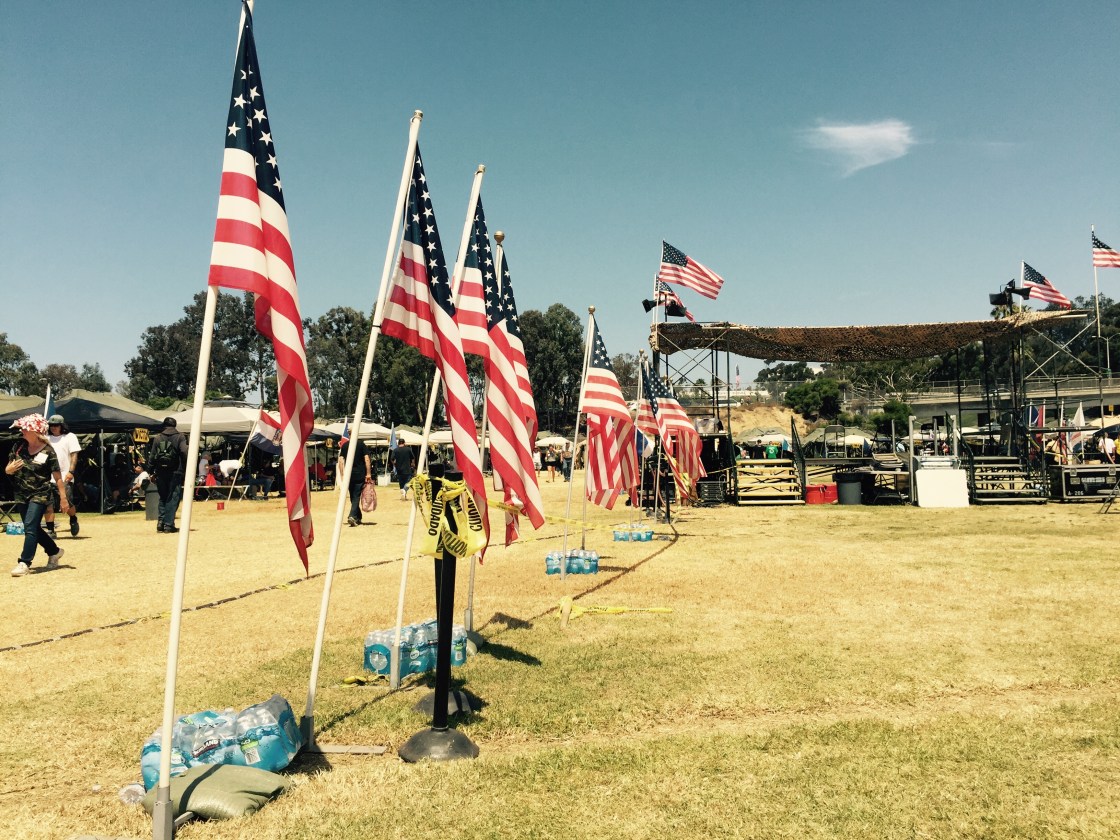
Today we’re at Stand Down, the annual three day event where volunteers and resource providers gather in one spot and invite the homeless veterans of San Diego to come to them and seek help-anything from medical care, to clothing to haircuts to legal assistance. It’s a massive intervention. And every year, since 1988, about a thousand homeless vets come here to get what they can. After her first day, she told me I needed to come. I needed to see it. As a vet. As a father. As a man. So I did.
![FullSizeRender[3]](https://chartwellwest.com/wp-content/uploads/2016/07/fullsizerender3.jpg?w=1120)
Now we sit outside the tent where the people she’s completed an”intake” for are finding out whether or not they can get off the streets and participate in the program at Veteran’s Village. At the table a woman checks their name. If they’ve been accepted into the program, she shakes their hand and says, “welcome home”. Tears and hugs follow. It’s the first good news any of them have heard in a long time. Years. Decades. Maybe a lifetime.
![FullSizeRender[4]](https://chartwellwest.com/wp-content/uploads/2016/07/fullsizerender4.jpg?w=1120)
She takes me to other places. She wants me to see all of it. The children’s tent, where there’s daycare for the kids while their parents seek services. The tent is full. It tugs at your heartstrings. If you look too closely it rips them clean out of your chest. A woman drops off her listless son, four maybe five. She walks unevenly away, too quickly, yet too slowly at the same time, coherent but a little off the way someone who’s body no longer understands it’s place any more.
“She’s tweeking” my wife says. “They all are.”
![FullSizeRender[1]](https://chartwellwest.com/wp-content/uploads/2016/07/fullsizerender1.jpg?w=980&h=1024)
We head over to where they hand out clothes and get haircuts. A man, gray beard, raggedy clothes, shows her pictures of his reenlistment-20 years ago maybe, clean cut in his dungaree uniform. I’ve seen that photo a hundred times. Hell, I could have been there. He babbles, trying to tell a story but mostly just repeats that he’s been driving cross country. And that he has daughters. And that he’s “service connected” as in service connected disabled. He wanders off to show the pictures to someone else and finds another audience in one of the volunteers. Out comes the photo book. And the story.
Over the PA system, a live testimonial of a former Air Force enlisted woman cuts loudly over the crowded murmur. Today she received two things-her chip for being sober one year. And the good news from the legal tent that they were able to overturn her dishonorable discharge and change it to honorable. She was now two albatrosses lighter-though still hopelessly behind in the race. More applause. More tears. The question comes back in the silence that follows. I have to ask my wife.
How did they get this way?
She says, matter of factly, almost surprised that I couldn’t tell. “Addiction. Almost all of them.”
We walk a little further out into the center of the field of tents, surrounded by them now. She continues, “And every single one, that I’ve talked to at least, every one, is self-medicating something. Anxiety, depression, ADD, PTSD, maybe a little of all of it.”
![FullSizeRender[2]](https://chartwellwest.com/wp-content/uploads/2016/07/fullsizerender2.jpg?w=1120)
I think about my boys. And me. And the generations of my family of addicts. I could see them there. After we’re gone maybe. It’s too tough to think about though. So I stop.
The week before, the two of us attended a talk given by former Congressman Patrick Kennedy-son of Senator Ted Kennedy. Congressman Kennedy, who retired from office in 2011, recently authored a book chronicling his own public journey with addiction titled, A Common Struggle. In 2008 he sponsored the Mental Health Parity and Addiction Equity Act (MHPAEA), groundbreaking legislation prohibiting less favorable treatment for benefits related to substance abuse disorders than to other disorders. In retirement, Congressmen Kennedy now serves as an advocate for mental health issues. Of particular focus on the day we saw him was the enforcement of requirements laid out by the very law he sponsored-something that has been sadly slow to catch on. The outcomes, in many ways, have directly contributed to the massive addiction epidemic that is arguably the most serious medical crisis facing America today. As I walked from tent to tent, I bathed in that reality.
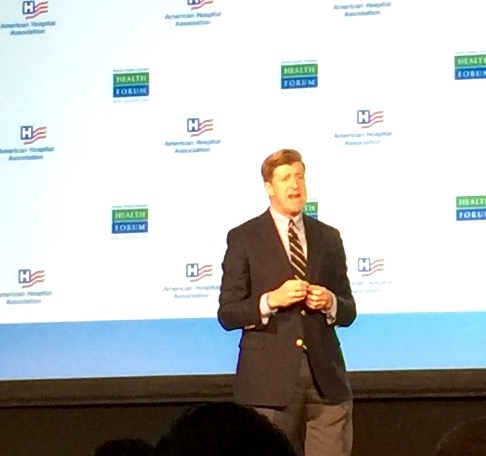
There was something that he told us, in the grand ball room at the majestic Manchester Grand Hyatt that overlooked San Diego harbor, that I couldn’t shake. Now, as I stood there watching these poor souls shuffle around, over the dust and dirt of the dying grass, it started to grind slowly into my brain. The Congressmen noticed that other members of Congress who had, behind closed doors, disclosed the impact addiction had on their lives, also voted against the bill he introduced. When he asked them why, they stated that where they came from, the heartland of America, things like addiction were considered a moral issue-not a medical issue. And that supporting a bill that found its motivation grounded in something to the contrary, would open them up to risk- politically.
As I watched these men and women who served us all at one time, in their broken state, those words grew louder in my head.
Moral. Not Medical.
Then I remembered my experience transitioning out of the service. I remember returning from Iraq and having about a year before I was completely out. I remember the stress and the horrible feeling of detachment. I remember that, for the first time since I was 18, I no longer had someone to reach out to that was responsible for my well-being as a function of their job. I remember, that for the first time, I alone was responsible for my family. I remember the crippling anxiety. And I remember, for a brief time, when that inner turmoil transitioned from the “moral” to the physical by way of crippling panic attacks.
Most of the time they came at night. I would wake up shortly after I fell asleep gasping for air-my heart racing. I wasn’t having bad dreams. I wasn’t even feeling stressed. I couldn’t explain it. Then, they started coming in broad daylight. I would feel fine, and then a rush of dread, racing heart, panic, frozen in fear. Twice they happened in job interviews. I hid it well, I thought. I didn’t get those jobs though. And I always got the jobs. I was an officer from Annapolis with an MBA and a shining war-time service record. And I’m a hell of an interview. But I was falling apart.
I had options though. And time. And the support of a loving wife and family. And the fellowship of a loving church. And I needed every bit of all of it. Eventually the father of my roommate from the Naval Academy made a connection for me. And I made the most of it and turned it into a job. I got counseling and learned some methods to control the attacks. And soon they went away and never came back. That was a long time ago. But not that long.
Looking out from the gated suburban neighborhood I live in, from my over sized track house or from my corporate office at the Silicon Valley tech firm I work at, the distance between where I am now to where these people are, seems immeasurably far. But the reality you’ll realize, once you’re willing to share some of the credit with fate, or luck or others or God, is that it’s not quite as far as it seems. At least it wasn’t at one point. And the difference had absolutely nothing to do with my morals. Or my character. It had to do with the amount of support I had. And luck. I had tons of both. Anything less, and all bets are off. I’d like to think that I wouldn’t have ended up there, at Stand Down, on the other side of those tables. But that’s a question I’ll never have to answer.
Because of Support. Not morals.
Here’s the deal. There’s a large strong loud American constituency that loves to fly the flag and talk a big game about supporting the troops. They’re gritty people who believe in rugged individualism and freedom and liberty. And they’re every bit a part of what makes America great. If you’re a part of that group, that’s wonderful. I am too. But I’ve got a message for you. There’s a very good chance that you support elected officials that either voted against Congressman Kennedy’s MHPAEA or oppose further action to ensure it’s enforcement. In all, about 200 members of congress did just that. You can check out who.
You’ll have to do a little work though. Maybe something more than flying a flag in front of your house. Or sharing tough guy memes on Facebook that support those who fight. Supporting the troops means supporting them when they can’t fight-when they need it most. Looking around Stand Down in San Diego, I see a whole lot of people left behind. So maybe this year, save the meme forward. Or maybe even forward this instead. And maybe this year, check out where your congressmen stands on the issue. And reach out and let him or her know that you support the troops with your vote. And your voice. Because they need it a whole hell of a lot more then we need representatives who still think that people choose to be addicted. And that the crisis of addiction gripping our country is simply, a crisis of morality.
This is a path no one would ever choose.

“A veteran is someone who, at one point in their life wrote a blank check made payable to The United States of America, for an amount up to and including their life.”
That’s an unattributed quote that gets thrown around a lot. It’s a thought that’s never quite squared with me though. I’m a veteran. And when I signed up, I didn’t write any blank checks. I signed up to do a job for a reason. I did it because it was a good and honorable profession. It paid for my college. And when that obligation was met I kept doing it because it paid me well and took care of my family. And then one day when I couldn’t do it any more, I stopped. Or at least I tried. But I couldn’t. Because I didn’t know how.
When I started, I never really thought that my life was at risk any more than anyone else that drove on a freeway to work, or flew a plane for a living or worked on a high-rise construction site. I’d like to think that I chose the path that I did out of patriotism. That I raised my hand because I loved my country and that I wanted to defend our way of life. It’s not that I don’t. Or that I wouldn’t. It’s just been a long time since anyone of us had to actually defend an American’s ability to live the American way in America. Really long. Centuries. So when that particular reverence is paid to vets, I struggle with it. Because when we’re really honest, most vets would tell you what I just did.
There’s something comforting to the notion that those that made the ultimate sacrifice had an expectation that their service may be their end. Somehow, it makes us feel better about it. They all knew what they were getting into. Or so goes the story. The truth is, that’s not how it works. We signed up for our own reasons and hoped for experiences that would help shape us. We wanted camaraderie and war stories. We wanted the glory of serving during battle and the recognition that came with it. None of us wanted to die. Almost none of us expected we would. But sometimes it happened. It’s a heavy price to pay. And one that’s been paid by too many of our nation’s young.
Every now and then, I take a run to the Cabrillo Monument, out at the end of Point Loma where I live in San Diego. It’s a beautiful run that takes you past a panoramic view of the harbor and the San Diego skyline. It also takes you through Fort Rosecrans cemetery, where thousands of veterans are buried in a long rolling plot of land that is straddled by the bustling of San Diego harbor on one side and the quiet enormity of the Pacific on the other.
There’s one particular marker that sticks out, near the ocean side entrance. SGT Alejandro Dominguez was killed June 25th 2008, ten weeks short of his 25th birthday. I didn’t know SGT Dominguez. We didn’t serve together. His gravestone, his obituary and an official press release with a two line blurb about his death are all I needed to know.
He woke up on his 18th birthday, September 11, 2001, to see the attack on the World Trade Center. The day he was old enough to go to war for his country, his country went to war. Shortly after, he enlisted and made multiple deployments to Iraq. On his last, while serving in Al Anbar, his vehicle hit a roadside bomb, killing him and SPC Joel Taylor and PFC James Yohn, two soldiers junior to him whose lives he no doubt felt accountable for.
There’s a narrative about SGT Dominguez that you could build that sounds like this. He was born on 9/11. In an act of patriotism he rushed out to defend his country and willingly sacrificed himself to defend our way of life. In the end he payed the ultimate sacrifice for our freedom. May he rest in peace.
Knowing what I know about the young men and women I served with, there’s probably truth to that. But I also know something else. It’s incomplete.
SGT Dominguez did his part. He raised his hand. And served his time. But he went back for more. Because like so many, he did write that blank check. Not to America. But to the life of a soldier at war.
In 2004, about the time that SGT Dominguez was heading out for his first deployment, I was coming home. I’d just completed back to back tours in Operation Enduring Freedom. I was done. I resigned my commission and transitioned out a few weeks after I returned to be with my wife and start a family. About six months later, Operation Red Wings went down. It was the mission that would eventually be made into the movie Lone Survivor. 19 Special Operations personnel were lost. Men I knew.
The day that it happened, the wife of a friend of mine called me. Her husband was deployed. It was heir first go at it as a married couple. She had watched the news and was worried. She asked me if I had any information about the operation or who had been involved and if her husband were ok. I couldn’t tell her anything. I didn’t know anything. I was out of the loop. I was away from the life, getting my information from the news, just like her. I hung up the phone and got sick. I may have been done with the life, but it wasn’t done with me. The guilt was overpowering. The urge to fight back was all consuming, but impossible all the same. I was lost.
About a year later, I was recalled back to active duty. I was happy to be back where I belonged, with my brothers and sisters in arms, fighting again.
I hadn’t realized that I too had written that blank check, or who I had written it to, until I was standing on the tarmac at the on ramp of a C17 heading to Iraq, leading a troop one last time. I felt whole again. More whole than I ever felt as a husband. More whole then I ever felt as a father. Perhaps like SGT Dominguez, watching over his two junior soldiers heading out the door one last time, leaving a wife and two young children behind, never to see them again.
The life is hard to stop living. And the fallen of my generation, more times than not, fell before they had a chance to try. And too many more of them fell after they left, failing to find the purpose or the drive they once felt at war.
The fallen are heroes. Maybe more than we realize. All of those men and women laying beneath those humble stones had plans for the days after they died. They all had hopes to get out alive, even if they didn’t know how. To start or finish a family. Write a book. Start a blog. But none of them did. They gave their life to a task that only they could do. Or a teammate only they could save. For many of them, the life of a warrior was all they knew any more. All they would do. All they could do.
This war has shaped my generation the way that only a war that travels with fighting men and women for 15 years can. And for those of you whose check was cashed, we remember you this weekend. Not because of the hundreds of millions of Americans sleeping soundly in their beds at night. Chances are, they’d still be sleeping soundly if you were still alive, perhaps even if you never went. Remember you for the brothers and sisters who fought this war with you. And the bond we have. And the debt you paid for us. You never got the chance to try to stop living the life. And for that, we will be forever in your debt.
 Chartwell West