
Losing

During three weeks in October of 2002, Army veteran John Allen Muhammad and seventeen-year old Jamaican immigrant Lee Boyd Malvo shot 13 random people in random parking lots in the Washington D.C. area from the trunk of their car.  Ten of them died.  For 23 days, the nation’s capital and the nation at large was in the grips of fear.  It would have lasted longer had Malvo not dropped a rifle magazine with his finger prints on it at the scene of one of the shootings.  He did though.  And they were caught, tried and convicted. In 2009, Muhammad was executed. Malvo is presently serving six consecutive life sentences in Red Onion State Prison in Virginia.

At the time, my parents lived in the D.C. area. Those events impacted their lives daily.  They talked about parking their cars differently in parking lots. They thought about using gas stations that had limited access. And in talking to them about it, something occurred to me. We were a year past 9/11.  And we were still recovering from those spectacularly horrific attacks. We were unified though, all focused on preventing the next big sucker punch. As a result we had sweeping authorities for surveillance and travel security in place already.  All were aimed at combating international terrorist organizations. I quietly wondered though, what if the real threat were different than the one we knew?  What if it wasn’t a massive plot that involved years of planning, flight school and an international network of support? What if it just took a gun? And some people willing to do it. Maybe even American citizens.  If that happened, we might be in trouble.

That’s a really hard problem to fix.

But it didn’t happen. And I forgot about it.  Until a handful of gunmen walked into a few places in Paris and killed over a hundred people with guns 13 years later. They tried to kill some with bombs.  But that’s hard to do. There’s a lot that can go wrong with a bomb and even when you don’t get caught, or blow yourself up, bombs are sloppy, inefficient weapons. It was the guns that did the trick. And then I remembered that sinking feeling from the past. Perhaps, they’d finally figured it out.  And then San Bernardino three months later.  And then Orlando.  Without question, we’ve entered a new phase of the threat.

The hard problem is here.

There’s a sobering truth to countering domestic terrorist activities in America.  And yes, someone born and raised in Queens shooting people in the name of their religion is the definition of domestic terrorism.  Even if the religion isn’t Christianity.  Because the important characteristic that separates domestic terrorism from other types are the liberties that the offenders are born with. Which results in the following troubling circumstance:  Currently, there is no legal preventative measures that would stop an American citizen, with no criminal record, who has not been observed to be committing a crime, from practicing his religion, purchasing a fire arm and walking into a nightclub and shooting people. And though we might like to think that there is, there isn’t.

It’s a hard problem. One that currently has no solution. And though the issue of the moment is Orlando and the fiery debates that it has brought about, it’s simply one of many hard issues that we Americans face in the 21st century world that currently have no solution.  Like a lack of funding for entitlements, a changing economy that has eroded the middle class quality of life and crippling urban societal decay.  These issues need a solution.  But right now we can’t get one. Because solutions require us to go a few steps past blame. And we just can’t right now.

That’s a really bad problem.  Not a hard one.  But a bad one.

Blame is the standard you are satisfied with when the outcome doesn’t matter to you. Blame is really not where you want to put your energy in circumstances where the current situation has no existing solution when one is needed.  Blame doesn’t stop the bleeding. Action can. Blame won’t. Even intentional appropriate inaction can. But we can’t do either right now.  Because as a nation, we’re walking hand and hand down the path that was the intent of our enemies 15 years ago when this war started.  It’s been a slow boil.  But it’s hit a fever pitch and the result isn’t good.

Let’s try this thought experiment.  What was the first thing that popped into your mind when you heard about the shooting in Orlando?  If you told me it wasn’t, “Was the shooter a Muslim?” then you are in the minority. There’s actually nothing wrong with that question, in as much as there can be something wrong with any group of words. But the reason for asking it is really the problem. Were you hoping for an outcome?  Were you hoping it was? So that you could be “right”.  Were you hoping it wasn’t?  So they could be wrong.  Honest answers to that question highlight a deep problem that we have.  It was a question we cared less about the answer to 14 years ago.  And it tells us something about where we are now relative to then.

Fourteen years ago, the prospective presidential nominee for our strong conservative conscience would not have gloated about its answer by the way.

Why not? Because we are a weaker nation today then we were in the days after the terrorist attacks of 9/11, when John Muhammad and Lee Malvo did basically the same thing that Omar Mateen did.  It’s not because of our military or the economy or even the government.  Though they’re weaker too, but only because they are a reflection of us. We’re weaker because we are a house horribly divided.

In 1858, Abraham Lincoln, in a speech given in the Illinois State capital upon his acceptance of the Republican nomination for his state’s upcoming Senate race, delivered the famous phrase, “A house divided against itself, cannot stand.”

Lincoln spoke of the scourge of slavery.  And he was right, though he lost the election. In doing so, he developed the national voice that would win him the presidency two years later. The nation would split over our perspectives on slavery and suffer through a gauntlet of death and economic catastrophe not since duplicated. But we saved the union.  And as painful as it was, it was possible because we were split over a tangible issue.  One that had a clear point and counterpoint, a solution and an outcome. Very little time was spent on who was to blame for the bondage.  Today, though, division is actually the point.  It’s independent of issue.  So the debate stops with blame.

Over the last twenty years, the boom in information and human connectivity has allowed people to exist, like they never have before, in the consciousness of other people.  We have a constant stream of perspectives that gets beamed, literally, into our hands, every day.  And what that’s resulted in is unprecedented exposure to information and opinion.  And one thing that we humans don’t like to do is sit through an opinion that is counter to ours without the opportunity to weigh in.  So we’ve chosen to put our consciousness in the spaces where we’re less likely to encounter those opinions. And we have limitless ways to pick and choose them.  From the sites we like on Facebook, to the cable news channels we watch to the Twitter feed we construct through our choices, we are shaping the info we receive and the opinions we are forced to tolerate.  Which means we’re dividing first, then exploring our issues second.  We are foundationally divided. And like Lincoln said, it’s not good.

So when an issue like an American born, Muslim man, legally purchasing a weapon and shooting 100 or so people in a gay night club after pledging allegiance to a nonsensically misaligned bunch of Islamic extremist groups comes up, we can’t handle it. Instead of a unifying debate about how to solve that type of issue, you have people shouting back and forth at each other the importance of their favorite liberty-specifically, which Constitutional Amendment is more important and which one is only conditionally so.

We actually have a group of people who are responsible for doing that on our behalf though.  It’s called our government.  If you’re looking for a startlingly clear example of the fruits of our poisoned tree of division, start there-our three floundering branches of government.

We have a congress that votes only with their own party at a historically unprecedented level.  Which means that nothing ever gets done because nothing ever gets agreed on. The result is a lack of ability to facilitate basic responsibilities like selecting Supreme Court justices.  Or passing a budget without threat of shut down. Then engine is bogged down. And it spreads to the other branches.

We have eight Supreme Court justices ruling on important issues right now. There’s supposed to be nine.  Because you can’t really have a vote with eight.  It’s like having a best of six games World Series.  It doesn’t work.  Just today, as I wrote this, they came to a four-four tie in ruling on the President’s executive orders on immigration.  And they had to defer their decision to a lesser court.  That’s not the intent of our founders or our people.

And lastly, but by no means least, we have one of the most disheartening presidential elections in the history of our country, where for the first time, we couldn’t muster two suitable candidates to run.  It’s bad.

Our government has actually stopped working.  And not the way that we used to just joke about because sometimes they did things that we disagreed with.  In a literal sense, it no longer facilitates even basic effective outcomes. And that’s where we are in trouble.  Because when we get a real live hard problem, like what to do about the rise of domestic, religiously motivated, firearms perpetrated terrorism, we have no hope. The energy pulls all the thinking into the extreme fringes of the debate leaving the majority of us voiceless and defenseless.  Again, this problem wasn’t there fourteen years ago, at least not the way it is now.

Which takes us to the truly sad outcome of our division. We’re losing this war.  Our enemy is a faceless amorphous body with no resources and no state. We can kill them off. We have, just about all of them.  And they come back in different forms. Because they have the one thing that we don’t-unity of purpose.  It’s horrible.  But simple.  And they all agree. They want to hurt the western way of life.  We, on the other hand, care more about our specific brands of outrage then anything else. Which is why fifteen years into this war, we are worse.  They are the same.  That’s the definition of losing.

The conflict that Lincoln led us through was resolved just as much through legal and legislative action as it was through blood on the battlefield.  We simply can’t do those types of things any more.  And it’s entirely our fault.  The people of America-all of us.

So what do we do?  Perhaps we should put our outrage in one spot.  Outrage that we, as Americans, do not have the ability to do the things we used to, as a civic entity.  Which should be in service to upholding and sustaining the American way of life.  Which means relative safety, prosperity and preservation of liberties-all of them, in as much as they can be preserved and still maintain the other two mandates-life and the pursuit of happiness.  Don’t be outraged at people. Don’t be outraged at opinions. Be outraged at a lack of solutions, not the solution.

If you think that eliminating guns are the answer to reducing domestic terrorism, and your congressmen wasn’t sitting on the floor of the House of Representatives this week, then pick up the phone and complain, and vote differently in November.  If you think that healthcare reform has gone horribly wrong and you’re not happy with the outcomes and your congressmen hasn’t been proactive at forwarding an acceptable alternative, then pick up the phone and complain.  And vote differently in November.  That’s what outcomes based civic responsibility looks like. It’s not pissing and moaning about how awful the humans involved in the process are.   That doesn’t do anything.  And doing is the point.

Democracy is a winning strategy when its participants are unified in their desired outcomes. It’s not, when they can’t be.  We don’t have to agree on politics, but we do have to agree that good, sustainable outcomes for Americans, even the ones not like us, are the goal.  It’s time to stop rooting for or against politicians and start rooting for outcomes. This problem is ours to solve. Because what we have right now, is what losing looks like.  But being behind isn’t the same as losing.  Staying that way is. Five months, until election day.  And we’re all on the clock.  You can it get wrong.  And we will lose.

The Scourge of Our Time

Have you normalized it yet?  Have you gotten used to it?  I have.

Not yesterday morning when I woke up to breaking news on my Twitter feed.  Or to messages of prayer and outrage on Facebook.  Or to another running live feed on CNN.  I normalized it long before that.  Someplace far away from here.  Sometime after some kid blew himself up at a funeral in a crowd of women and children before we could stop him.  Perhaps before a different group across town blew themselves up outside the city operations center and then  blew themselves up again when the first responders arrived.  Or maybe it was a few months later when our corpsmen, a mother away from her family on deployment, took a round to the head from a sniper while she was handing out medical supplies to locals in need. That’s about the time that I started to settle in on the idea of it all. That’s when I started to understand what it was that we’re in for.

Now, I don’t blame you if you’re not there yet. After all, this is all new to you.  And fresh in the headlines. Except that it’s really not.  The real live feeling of danger and even fear may be.  But the terrorist attacks, they’re kind of an old story by now.

It’s been 18 years since our embassies were blown up in Kenya and Tanzania. I’ve been to those sites. Talked to people who were there.  They remember it clearly.  We don’t.  It’s been 16 since the USS Cole had a hole the size of a minivan blown in the side of her.  I had a classmate on that boat. He wasn’t one of the 17 who died.  I saw him the other day.  It didn’t even come up.

The same amount of time has passed between 9/11 and today as had passed between the end of the Vietnam War and the election of George H.W. Bush.  We’ve been at this for a long time.   Perhaps we should feel frustrated that it’s not ending.  Or perhaps we might look at it a different way.

Radical Islamic terrorism is the scourge of our time.  Like global wars were the scourge of the first half 20th century and the fear of nuclear annihilation was the scourge of the second half.  It’s purposely sensational and inherently frightening to everyday Americans.  But it’s not going anywhere. I’m sorry to be the bearer of that bad news.  It’s not going away if you somehow make all guns illegal.  It’s not going away if you ban Muslims from coming into our country. It’s not going away if you go and destroy ISIS.  When I left Iraq six years ago, every bad guy that we’d been chasing for most of the previous ten years was dead or captured.  They’ve all been replaced.   And the ones we kill or capture now will be replaced.  We’re on about our fourth generation of extremists by now.   That’s how this thing works. It’s being fed by an endless well of destitution and instability.  Turning off that flow is a generation away, minimum.

And one other thing.  It’s not going away if you call it radical Islamic terrorism.  And it’s  not going away if you refuse to.  So ignore that noise.  That’s politics.  And the only thing politics can do here, is hurt. There are good Muslims and bad ones.  Just like there are good and bad people of every religion.  But the bad ones are using their religion for evil right now. This one is more complicated than our urges to generalize allow.  So put your energy elsewhere.

So should we care at all?  Of course.  Because it can actually get a lot worse than it is now.  And it might.  And if you made me guess, I’d say it will.  So we should care.  And make smart decisions and investments that we need to in order to keep our people safe.  If you are frustrated with law enforcement, then let’s put the political pressure there.  Not on hate and misguided blame games.  I’ll caution you though, this work is immensely difficult.  It’s not finding a needle in a hay stack.  It’s finding a needle in a stack of needles. And you miss sometimes. And looking at it in retrospect always makes it seem clear as day.  But it never is.   That’s how it works.  Like I said, it’s not going anywhere. So invest wisely and pay attention.

But that’s not all we should do.  There’s something else critically important that we have to remember that great societies before us have done under much, much worse circumstances.

Like our friends across the pond, the Brits.  Over a period of 267 days from the summer of 1940 to the Spring of 1941, London was bombed 71 times by the Luftwaffe.  32,000 civilians were killed. Another 87,000 injured.  That’s two and a half Orlando attacks a day, for most of a year. Not off in a far away land.  In their home town, where they worked.  Where their children went to school.  And their most potent defense against such unimaginable horror was simple.  Stay British.  They took precautions. They moved nonessential people to other parts of the country.  They ceased certain activities, but above all, they stayed calm, and carried on.  And there’s a lesson there for us.  It’s this.

Live your American life.  Nothing short circuits the grand plan of the Caliphate like us not giving a rip about them or what they do. That doesn’t mean we tempt fate and take no action.  We will do what we must.  Go to war, pour money into security and police and intelligence activities.  Do all of it in the name of safety.  If it keeps Americans safe, and if we still get to behave, at our core, like Americans, then I’m all for it.  But if you think that electing a “strong man” or trampling on personal liberties is going to turn off this switch, then I would challenge your thinking.

This problem has no one cause and no one solution.  That’s a lesson others aren’t heeding though.   Places like Poland are passing sweeping legislation that give broad and unchecked power to the government in the event of vaguely described terrorist activities, something that hasn’t happened in their country since 1939.  All in the name of fear and the illusion of safety.  It’s political.  And we know better.  We’re America.  Not Poland.  Land of the free is more than just a song.  But it carries a price.

We lost 50 people yesterday.  And for their friends and family, it probably doesn’t feel like a price worth paying.  It never is for those that pay it.  That’s the thing that will never normalize for me. I can normalize the activity.  The dark, empty sadness of the loss of human life though, I pray that never goes away for me.  But I’m past the outrage.  And horror and fear.  And on to another emotion.  A burning will to stay America-who we are.  Stay free and protect our liberties.  Just live life.  One foot in front of the other.  One breath at a time.  Amidst a horrible see of danger and destruction that’s been with us since we were us, in some form.  An unbroken line of human tragedy.  It’s part of the human condition.  My faith taught me that.  As well as to love and accept everyone, including my enemies.  Hard to do I know.  But it’s commanded.

I’ve been done with the fear game for a long time.   There’s darkness in this world.  There always has been.  Always will be.  But I’m over it.  And the sooner you are, the sooner you’ll be free from this fools game of panic and blame-free to move on to the next scourge.   Whatever that one is, I pray that it impacts as few of us as Radical Islamic terrorism has.   For now though, my thoughts and prayers go out to the families and friends of those impacted by this iteration of our nation’s struggle.  My energy goes there.  Sadness and love-the only thing I feel any more when I see this.  Because all the rest doesn’t matter.  Just the sadness of loss.  And the hope and healing that comes with love.

Like I said.  I’ve been at this a long time.


Ten Things I Learned Writing an Objective Political Blog

About 18 months ago I decided to be more intentional about my growing social-media commentary and start a blog about society, politics, foreign policy or anything else that mattered.   I’m a data and technology guy with a history degree and a vet with a handful of war-time deployments. And I have an autistic son. That pretty much hits most things. So I felt that I could put together some interesting perspectives on things that are effecting Americans today.  So about 60 articles and 100,000 or so words later, I’ve got a pretty steady following.  Last month over a thousand people a day visited my site and interacted with my content in 137 countries.  It’s not quite a social hysteria, but it’s enough to make a few observations.  So I thought I would share.

Here’s the top 10:

1. People like lists.

More than 3.  Less than 20. It guarantees them that no matter what they click on, it won’t be the dreaded wall of unbroken text that crushes the soul of anyone reading something on a smartphone while they’re supposed to be doing something else.  Without one, it’s almost impossible to keep your place while scanning your phone in a slow work meeting, a conversation with your spouse about their day or watching six year old soccer.

Or an otherwise unnecessary new paragraph.  Put a list out there, no matter how droll the topic, (see title above) then people will read it.

2. No one has time or interest for more than 750 words.

My wife, love of my life and grand supporter of my creative outlets has room for about 500 of mine.  Some have room for more.  But when you scroll to the bottom of the page on your phone in an effort to gauge the investment you’re about to make, 750 words or so is about where the less than “serious” folks drop off.  Unless of course you make it a list…

3. Most things that matter, can’t be effectively and responsibly discussed in much less than 1,500 words.

Which means we’ve got about 750 word gap between the attention span of the modern human and what is required to garner understanding on an issue.  Chapter 1 of The Book of Genesis  is about 750 words.  Which means the entire creation of the universe fits in the gap between our willingness to know something and the time in which we need to invest to understand it.

4. People share things that they have not read.

It’s a fascinating phenomenon.  A modern blogger, equipped with the basic tools and analytics of their craft can tell how often their posts have been shared or liked on Facebook, or re-Tweeted on Twitter.  And they can also tell how often their page has been visited.  Armed with those two points of data, bloggers, especially ones that deliver political messages and societal commentary, come to the regular conclusion that no one is reading the crap that they are sharing.

It’s called “slacktivism”-a term coined in the modern social media environment to describe attempting to appear to care about or support a cause by doing little more than reading and sharing posts about it.  You know, “raising awareness” with your thumb.   And I’m here to tell you that many don’t read any of it.  The smarter or more edgy the headline or blurb, the more people share it that never even opened it.  You know who you are.

5. Facebook is the greatest social achievement since the invention of television.

And it’s not close. 1.6 billion people used Facebook last month.  As memberships on the planet go, here’s the breakdown:

  1. Humans
  2. Christians
  3. Facebook
  4. Muslims
  5. Chinese

Nothing the planet has ever seen has the optional membership and daily engagement that Facebook has.  And that’s powerful.  But what’s more powerful, is what they’re doing with it.  Over the past 18 months, I’ve been able to get the content of my blog in front of 700,000 targeted people with interests in exactly what I was talking about, at the moment that I was talking about it.  As a result, my blog has been read by over a hundred thousand people from all over the world.

And I’ve been able to accomplish this with a marketing budget less than my cable bill.   Here’s the point, Facebook can distribute information in a way that no other entity on the planet can or ever has.

If you’re wondering why “Chewbacca Mom” was a big deal, consider this.  That video was viewed 50 million times in a day-130 million over the course of a week.  To put that in perspective, the Super Bowl attracted 112 million viewers this year.  The cost of 30 seconds worth of advertising during the Super Bowl is $4.5 Million.  It’s valued at that because you can’t get that many people to be a part of a focused audience without something extraordinary, like the largest sporting event on the planet.

Until now.  Now you can get it with a woman putting her phone on the dashboard of her car in the Kohl’s parking lot.  And hitting no more than three buttons on her phone. And with Facebook Live, it’s all internal content on Facebook’s domain.  No more kicking to YouTube. No more loss of traffic.

The world is a different place and most of it appears to be happening on one site. And it’s probably only a matter of time before regulation, at least in America, starts to invade the space.

6. There’s really only two types of people in the world. 

Those who see the world independent of perspective.  And those who see the world from their own perspective.  The second views the world and its inhabitants as a virtual series of concentric circles, increasing in importance as you approach the center where there is the greatest concentration of people like them. It’s not so much specifically about them. Everyone has their own personal bias and desire for self preservation.  But that group puts a premium on people like them.  Everyone else, not so much.

The other group has no such rings, just a common concern for their fellow man, sometimes no matter how silly or misguided their fellow man is.

It’s not a perfect classification.  It’s a spectrum with extremes.  But you can break down just about every societal issue, its points and counter points by that litmus test.  If I cared about everyone else the way I cared about me and mine, then I have one position.  If I don’t, then I have the other.  Simplistic I know.  But I would challenge you to counter it with an honest argument.  It’s not easy.

7. Still plenty of racism to go around.

There’s a surprising amount of people still comfortable with saying overtly racist things in public venues. If you don’t think it’s out there, peruse the comments section on this site’s Facebook page.  Enjoy! And then take a shower.

8. Cognitive dissonance is a real problem. 

And the information age is actually making it worse.  What’s cognitive dissonance?  It’s a theory developed by Leon Festinger in 1957 that  states that people have a powerful motive to maintain cognitive consistency. And that powerful motive can give rise to irrational and sometimes “maladaptive” behavior.

The example Festinger used was a study of a cult, in which the members of the cult had given up their homes and possessions because the world was going to be destroyed by a flood.  After the prescribed flood did not occur, those less committed members were able to disavow the cult’s beliefs and move on.  The more committed ones sought to explain that the flood was avoided by their faithfulness.  Translation, some can make their reality fit their mind set more than others.

That used to be really hard to do.  If you believed something, and it were proved wrong through circumstance or logical progression of events in the old days, then you either had to accept it, or be crazy.  Now, with the advent of the information age and the plurality of media realities one can create for one’s self, it’s a lot easier to shape your reality to whatever brand of reality you want.  And the cycle goes on.

9. No one cares about data.

I’ve built algorithms to rank presidential performance, run correlation studies on economic indicators and dissected the entirety of the Bureau of Labor Statistics survey tables to run trend analysis. My favorite comment, used more than once…”what a bunch of crap.”

If you agree with me, you don’t need my data. If you don’t, you don’t believe it. In the end, people consume things that they agree with or are about them.

10. Being a veteran lets me say things others can’t.

And I don’t know that it’s  a good thing. In fact, I’m pretty sure it’s not.  Because there’s a lot of less than impressive veterans out there saying less than impressive things. And people appear to put more stock into them than they ought to. There’s a difference between paying respect for service and pretending that someone has a level of credibility for having served that they actually don’t. For anyone who served at any time in history, they can probably look back at the folks they served with and think of quite a few they wouldn’t take political, societal or economic advice from. Or advice on other less dynamic things like how to make a cup of coffee, or where to buy a carton of milk. Or how to get through the day without hurting yourself…or others.  You get the point.

I couldn’t have said that by the way, if I weren’t a vet.


So there it is.  The 10 things I’ve learned. The world is full of bias, self preservation and short attention spans.  It probably always has been, because it’s full of people.  And we’re nothing if not predictable.  A person can change.  People, that’s another matter all together.  But now that I’ve shared these things, maybe you can move forward with a bit more measured conviction about the things you run into on your phone, or your computer, or you’re in-laws house.  And if you’re starting a blog of your own, and you have your sites set on mediocre part-time success remember.  People like lists.

Good Night…And Good Luck

On the evening of March 9th 1954, the American free press produced one of it’s finest hours. That night, from the now legendary Studio 41 in New York,  esteemed World War II correspondent and acclaimed radio/television journalist,  Edward R. Murrow dedicated the entirety of his evening news program, See It Now, on CBS, to addressing an infamous figure in American history. At the time, his infamy was not yet fully documented.  In a little under an hour, Murrow changed that.

Senator Joseph McCarthy and his ongoing investigations of American citizens who were suspected of being members of the Communist Party had a grip on the nation’s hopes and fears.  Over the previous four years, McCarthy had set off a national panic by persecuting members of government, the media, Hollywood, even the military.  McCarthy’s activities as the Chairmen of Senate Operations Committee assumed guilt and publicized hearings in which the burden for closure was laid at the feet of the accused to prove they were not communists.  McCarthy had taken advantage of the national anti-communist fervor to gain and wield personal power-accusing anyone that challenged of the same crime as those being challenged already-communism.

By 1954, McCarthy set his sites on Murrow, who responded with one of the most famous and important media broadcasts in our history.  He concluded the broadcast that was filled mostly with McCarthy’s own recorded words with his own.

“This is no time for men who oppose Senator McCarthy’s methods to keep silent, or for those who approve. We can deny our heritage and our history, but we cannot escape responsibility for the result. There is no way for a citizen of a republic to abdicate his responsibilities. As a nation we have come into our full inheritance at a tender age. We proclaim ourselves, as indeed we are, the defenders of freedom, wherever it continues to exist in the world, but we cannot defend freedom abroad by deserting it at home.

The actions of the junior Senator from Wisconsin have caused alarm and dismay amongst our allies abroad, and given considerable comfort to our enemies. And whose fault is that? Not really his. He didn’t create this situation of fear; he merely exploited it — and rather successfully. Cassius was right. “The fault, dear Brutus, is not in our stars, but in ourselves.”

Good night, and good luck.”

The broadcast hit its mark.  McCarthy’s televised response in which he accused Murrow himself of communist activities was too obvious for the American public, even in their inflamed and fearful state, to ignore.  By the end of the year, McCarthy was formally censured by the Senate and stripped of most of his power.  Three years later, his chronic drinking killed him- cirrhosis of the liver.

Murrow’s coverage of Senator McCarthy showed the power and importance of the de facto “fourth branch” of American government-the free press.  It was a clear and inarguable victory of the power the American people, armed with information and empowered by a government that actually still cared about public opinion.  The river that ran underneath the event, carrying it to it’s historically fantastic conclusion, was trust.  Specifically trust in Murrow.  And more broadly, a trust in the press.  How far we’ve come from then to now, is a problem that weighs heavily on our future and our ability to adjudicate the actions of our leaders, through the democratic process.  If democracy is our vehicle, the free press is our fuel.

Sixty years later, we’ve found the tenets of our branches of government in dire straights.  A congress so frozen by partisan motivation that we’ve ushered in two decades of executive directives as the sole way to accomplish anything-an incomplete Supreme Court, unable to provide decisive rulings-the Office of the President, likely to be turned over to flawed candidates.  And as much as we would like to vilify all of them, I’ll take Murrow’s lead.  “The fault, dear Brutus, is not in our stars, but in ourselves”

In a democracy, it is always the fault-and the prerogative- of the people. But the root of the problem is not in our judgement or our collectively failing conscience.  It lies somewhere else.  Somewhere exposed by the silent response to the following question.  Who could stand in front of a television camera today, and in less than an hour, deliver information in such a clear and trusted manner, that America as a whole, would uniformly join in a chorus of American will and effect immediate change?  Who could do that, and have it be anything other than noise?  The silence, is telling.  Here’s why.

We’ve got intentionally partisan entertainment organizations masquerading as journalistic entities-groups like Breitbart, Huffington Post, Fox News, MSNBC and countless others that look and feel like they are giving us information so that we may better form our opinions.  But they’re really just picking and choosing parts of reality to weave into the tapestry of a narrative that is their brand.  True journalism is dictated by truth and relevance. Not brand.

Let’s be clear though. It isn’t the journalists at the core of the issue. There are talented,  professional people everywhere, as many as there ever have been, laying it on the line to bring air and light to things that desperately need it.   Most of these stories in a vacuum, are meaningful, worthwhile pieces.  For the most part, in it’s molecular form, journalism is alive and healthy.  The problem lies not in it’s production, but instead, in it’s distribution-a lopsided delivery, designed to meet the brand and voice criteria of an outlet.  There are very few media outlets, where one can get both sides of a story, beyond a point-counterpoint of two talking heads yelling at each other on a panel.  No matter what point is made, someone will jump on the ratings lift generated by a counter point. Even when there is no responsible counter point.

The only one left to argue against Murrow in favor of McCarthy, was McCarthy.  And so he did.  And so he went.  Because he was that wrong.  And when someone is that wrong, silence is not unbiased.  It’s consent.

Which leads us to another troubling reality.  Those stalwarts of objectivity, those happy few bands of brothers who refuse to be outlets who overtly slide one way or another seem to have lost their nerve.  The major network news organizations, the lions of the free press, have confused objectivity, with passivity. One can still be objective and non-partisan, and slay a dragon that is in the wrong.  The dragon is slain, not because of a given agenda.  But because it is a dragon–that’s what we do with dragons.

Murrow was not partisan.  He was trusted and objective.  But he knew McCarthy was wrong.  Dangerously wrong. So he acted.  That’s not happening right now.  And the outcomes, are the normalization of outrageous behavior an the ineffective execution of societal norms.  There’s no counter argument, to serious people, that Donald Trump’s behavior, statements and track record should ever have be tolerated by the press.  The press not tolerating a candidate is different than him not getting elected mind you.  If the conservative base in our country wants to nominate him, fine.  But that doesn’t make his statements and actions appropriate.  And right now our serious press outlets, in an effort to remain objective, are tolerating things they should not.

This week, after being questioned by the press about the delay in payment to a veterans charity from a highly publicized charity event, Trump struck back with frightening rhetoric. And the press took it, allowing him to carry the narrative that there was an inherently dishonest press, one the American people could not trust.  The tone, all of this will change when I’m president, hung silently behind each word.  And the press, largely took it. And then took it when he called in to question the suitability of a federal judge and celebrated drug prosecutor because of his ethnicity-because he ruled against Trump. A few headlines.  No hard questions.  More silence.

But it did awake a lion from the past.  From the days when powerful men feared the truth brought upon them by men of conviction-organizations of conviction.  Dan Rather, 84 years old with 50 years of American accountability filed behind him since the days of Eisenhower, Vietnam, Kennedy the civil rights movement, the Cold War- answered.

I felt a shudder down my spine yesterday watching Donald Trump’s fusilade against the press. This is not a moment to be trifled with. It wasn’t his first tirade and it won’t be his last…

…I know what it is like to sit in those seats and feel the scorn and even wrath of politicians of all political persuasions. Attacking the press for unfair coverage has long been a bipartisan pursuit. Sometimes it works. I am happy to say that more often it doesn’t. But Trump’s brand of vituperation is particularly personal and vicious. It carries with it the drumbeats of threatening violence. It cannot be left unanswered.

This is not about politics or policy. It’s about protecting our most cherished principles. The relationship between the press and the powerful they cover is by its very definition confrontational. That is how the Founding Fathers envisioned it, with noble clauses of protection enshrined in our Constitution.

Good journalism–the kind that matters–requires reporters who won’t back up, back down, back away or turn around when faced with efforts to intimidate them. It also requires owners and other bosses with guts, who stand by and for their reporters when the heat is on.

I still believe the pen is mightier than the sword. And in these conflicted and troubled times, we should reward the bravery of the men and women not afraid to ask the hard questions of everyone in power. Our nation’s future depends on it.


The days of Woodward and Bernstein, of Murrow and Wallace and the voices of our past are far closer in time than they feel in our memories.  Our nation’s future depends upon them continuing the call.  The countless online presences may serve to dilute the dialogue.  But we have to be more vigilant. We must not continue to be satisfied with equal treatment for unequal actions.  And now more then ever, we must rely on that entity, whose creation separated us from all other ruled men before us. The Press, in its entirety, cannot be perceived to be dishonest.  It is not.  People are dishonest.  Information, when vetted and delivered with the motivation of truth and relevance is omnipotent.  Men with much to hide have but one recourse-discredit.  We owe it to our society to not bite that hook.  Too much is at stake.

Mr. Trump is correct.  The press in this country is a real problem.  For those with unclean hands, it always has been.  And I hope it always is.


The Blank Check

 “A veteran is someone who, at one point in their life wrote a blank check made payable to The United States of America, for an amount up to and including their life.”

That’s an unattributed quote that gets thrown around a lot. It’s a thought that’s never quite squared with me though. I’m a veteran. And when I signed up, I didn’t write any blank checks. I signed up to do a job for a reason. I did it because it was a good and honorable profession. It paid for my college. And when that obligation was met I kept doing it because it paid me well and took care of my family. And then one day when I couldn’t do it any more, I stopped. Or at least I tried. But I couldn’t. Because I didn’t know how.

When I started, I never really thought that my life was at risk any more than anyone else that drove on a freeway to work, or flew a plane for a living or worked on a high-rise construction site. I’d like to think that I chose the path that I did out of patriotism. That I raised my hand because I loved my country and that I wanted to defend our way of life.  It’s not that I don’t. Or that I wouldn’t. It’s just been a long time since anyone of us had to actually defend an American’s ability to live the American way in America. Really long. Centuries. So when that particular reverence is paid to vets, I struggle with it. Because when we’re really honest, most vets would tell you what I just did.

There’s something comforting to the notion that those that made the ultimate sacrifice had an expectation that their service may be their end. Somehow, it makes us feel better about it. They all knew what they were getting into. Or so goes the story. The truth is, that’s not how it works. We signed up for our own reasons and hoped for experiences that would help shape us. We wanted camaraderie and war stories. We wanted the glory of serving during battle and the recognition that came with it. None of us wanted to die.  Almost none of us expected we would. But sometimes it happened.  It’s a heavy price to pay. And one that’s been paid by too many of our nation’s young.

Every now and then, I take a run to the Cabrillo Monument, out at the end of Point Loma where I live in San Diego. It’s a beautiful run that takes you past a panoramic view of the harbor and the San Diego skyline. It also takes you through Fort Rosecrans cemetery, where thousands of veterans are buried in a long rolling plot of land that is straddled by the bustling of San Diego harbor on one side and the quiet enormity of the Pacific on the other.

There’s one particular marker that sticks out, near the ocean side entrance. SGT Alejandro Dominguez was killed June 25th 2008, ten weeks short of hisTombstone 25th birthday.  I didn’t know SGT Dominguez. We didn’t serve together.  His gravestone, his obituary and an official press release with a two line blurb about his death are all I needed to know.

He woke up on his 18th birthday, September 11, 2001, to see the attack on the World Trade Center. The day he was old enough to go to war for his country, his country went to war. Shortly after, he enlisted and made multiple deployments to Iraq. On his last, while serving in Al Anbar, his vehicle hit a roadside bomb, killing him and SPC Joel Taylor and PFC James Yohn, two soldiers junior to him whose lives he no doubt felt accountable for.

There’s a narrative about SGT Dominguez that  you could build that sounds like this.  He was born on 9/11.  In an act of patriotism he rushed out to defend his country and willingly sacrificed himself to defend our way of life. In the end he payed the ultimate sacrifice for our freedom. May he rest in peace.

Knowing what I know about the young men and women I served with, there’s probably truth to that. But I also know something else. It’s incomplete.

SGT Dominguez did his part. He raised his hand. And served his time. But he went back for more. Because like so many, he did write that blank check. Not to America. But to the life of a soldier at war.

In 2004, about the time that SGT Dominguez was heading out for his first deployment, I was coming home. I’d just completed back to back tours in Operation Enduring Freedom. I was done. I resigned my commission and transitioned out a few weeks after I returned to be with my wife and start a family. About six months later, Operation Red Wings went down. It was the mission that would eventually be made into the movie Lone Survivor. 19 Special Operations personnel were lost. Men I knew.

The day that it happened, the wife of a friend of mine called me. Her husband was deployed. It was heir first go at it as a married couple. She had watched the news and was worried. She asked me if I had any information about the operation or who had been involved and if her husband were ok. I couldn’t tell her anything. I didn’t know anything. I was out of the loop. I was away from the life, getting my information from the news, just like her. I hung up the phone and got sick. I may have been done with the life, but it wasn’t done with me. The guilt was overpowering. The urge to fight back was all consuming, but impossible all the same. I was lost.

About a year later, I was recalled back to active duty. I was happy to be back where I belonged, with my brothers and sisters in arms, fighting again.

I hadn’t realized that I too had written that blank check, or who I had written it to, until  I was standing on the tarmac at the on ramp of a C17 heading to Iraq, leading a troop one last time. I felt whole again. More whole than I ever felt as a husband. More whole then I ever felt as a father. Perhaps like SGT Dominguez, watching over his two junior soldiers heading out the door one last time, leaving a wife and two young children behind, never to see them again.

The life is hard to stop living.  And the fallen of my generation, more times than not, fell before they had a chance to try.  And too many more of them fell after they left, failing to find the purpose or the drive they once felt at war.

The fallen are heroes. Maybe more than we realize. All of those men and women laying beneath those humble stones had plans for the days after they died. They all had hopes to get out alive, even if they didn’t know how. To start or finish a family. Write a book. Start a blog. But none of them did. They gave their life to a task that only they could do. Or a teammate only they could save. For many of them, the life of a warrior was all they knew any more. All they would do. All they could do.

This war has shaped my generation the way that only a war that travels with fighting men and women for 15 years can. And for those of you whose check was cashed, we remember you this weekend. Not because of the hundreds of millions of Americans sleeping soundly in their beds at night. Chances are, they’d still be sleeping soundly if you were still alive, perhaps even if you never went. Remember you for the brothers and sisters who fought this war with you. And the bond we have. And the debt you paid for us. You never got the chance to try to stop living the life. And for that, we will be forever in your debt.

The Problem With Kids These Days

I was watching the last inning of my son’s little league game when the team mom from the opposing squad started laying out the end of season trophies on the picnic table next to the dug-out.  They were small and unassuming.  But they were trophies.  A celebration of an accomplishment-participation.  A man sitting next to snorted.  He was a few years younger then me. I’m 40-ish.

“Everybody gets a trophies.” he said shaking his head in disgust.  “That’s the problem with kids these days…they expect it.”

That triggered a memory for me and then a thought.  I grew up in the late 70’s and early 80’s.  I played little league, and football, and basketball, and hockey and just about every organized sport that you could play from the time I was 7 until I eventually stopped to focus on the sport I would play in college.  And I remembered something about those years.  I got trophies, or plaques or varsity letters for just about every one of them, every season, whether we won or not.  And then I thought to myself, I don’t think this is new.

I remembered something else.   A rant on Facebook from a grade-school friend of mine, complaining about the kids in his son’s middle school.

“All these little punks ever do is sit there and play video games.”

Which triggered another memory for me-sitting in front of the TV with my brother in our living room, playing Atari, and then Nintendo, and then Sega for hours on end.  Atari came out in 1977-Nintendo in 1985.  As best as I can remember, when I wasn’t playing sports and getting participation trophies, I was playing video games.  And so were all of my friends.  This wasn’t new.

There’s a peculiar game going on right now.  It’s not new either.  It’s one that’s likely been going on since old people lived long enough to be threatened by the generations that came after them. And I’m not that interested in playing it.

I’m not sure if anyone has taken a look at the fall-out of all these “participation trophy’s” or this overly sensitive coddling approach that we have to our young.  But there’s something frightening about what it’s doing to our kids.  It’s making them alarmingly capable of living successfully in the future. It’s making them better than us.

I’m going to force some objective thinking that I haven’t really seen on this topic- beyond the preachy gas-bag approach those of us who have earned the title of adult have taken.  I’ll take a swing by simply taking a look at a few things.  Let’s start with youth sports.  And for me, I don’t have to look far to see clear proof that these kids are light years ahead.

My particular Southern California suburb has a startling success at one of the broadest played youth sports in the world-Little League.  The handful of leagues in our town have collectively sent 3 teams to the semi-finals for the U.S. Championships in Williamsport in the last 5 years.  Twice, they won the U.S. Little League championship.  One of those teams won the world championships.  Statistically speaking, that should take a town over 500 years.  It took mine five.  So I’ve had the opportunity to observe what kids these days can do, and it’s crazy.  Every single one of them is better than anyone I ever played with.  They throw sliders and change-ups and kids that are 75lbs crack home runs with humbling regularity. It’s insane.  And they are crazy focused on getting better.  And winning.  And they all got trophies.  All the time. And it’s not just my town or just baseball.  Go watch an AAU basketball game and watch college coaches show up to watch 7th graders play.  They’re better than anything that came before them.  Coddling and all.

I’ve listened to a few professional athletes call out the “problem” with what kids these days.  I wonder exactly what era these old pros grew up in.  Most pro athletes in America graduated high school with in the last 10 years.  They seem to be recalling a time that was measurably different from now, playing stick ball on the streets waiting to get letters from their dad who was off fighting the Germans. It’s really a fascinating dynamic.

Here’s the point. You could give every one of those kids trophies before and after every game.  It’s not putting out the fire they have to compete if it’s burning.  Nothing will. That’s not how it works.  But it will keep them interested if perhaps they were sitting on the fence.  And interest is the point.  It makes for a better childhood. And better adults.

The same thing happens in the corporate world. I hear my generation of leaders complaining about how they just can’t relate to the younger generation. Perhaps because we’re not smart enough.   Kids these days entering into the workforce have been tested more, given more homework and taken more advanced placement courses than any generation in history.  We make two and a half times the college graduates, per capita, then we did in our grandparents generation.  We have double the women in the workforce, twice the high school graduation rate etc, etc..  My seven year old is fluent in Spanish and English and reading at grade level in both.  I barely speak English in the house…or Spanish.  And there’s three classes full of him at our school.  I could do almost nothing my kids can do academically at their age.  It’s not close.  And I went to the hardest college in the country to get in to.

Recently, I sat across from a junior marketing analyst in a meeting.  I’m the guy that runs the business he works in.  And he sliced me to pieces by demanding a data driven approach to my strategy that I didn’t have answers to.  He was 24.   Born in 1992.  And I’ve hired a room full of him in the last few years.  I’ve had more old guys fall off the end of the bench then young kids who just couldn’t play.  And most who actually have to get this right will tell you the same thing.

So, I’ve stated my case.  There’s nothing wrong with kids these days.  But there’s something predictably wrong about their parents.

Somewhere in our mammalian brains, we have a desire to hold on to dominance.  We need to remain relevant-the top of the heap.  The world is unkind to primates who have been knocked off their pedestal by the generation that comes after.  So we have to invent the narrative.   That kids these days are no good.  And that things when we were growing up were much harder.  And we learned through hard lessons the value of earning our place.  And that’s why we’re better.  That’s why we’re not likely be taken over by the next generation.  

We will though.  We always have.
Thinking that way for amusement is fairly harmless.  Until we start to believe that narrative and parent differently-holding back acknowledgment, praise and recognition.  Or practicing other “tough love” exercises.

If you take some time look into the science behind things related to this topic, you learn a very quick lesson.  Horrible, miserable existences in youth, yield horrible miserable existences in life. Not all the time.  But enough that if you care about your kids, you’ll avoid it. If you doubt that, I urge you to contact any family active in the foster program in America.

This coddling, this “everyone gets a trophy” mentality is actually not quite the devil that we think it is.  At a first glance,  we may view it as teaching entitlement.  But that’s not really how it works.  The human brain and how it develops has been studied for a long time.  And in doing so, we’ve learned a few things.  Mostly we’ve learned about the path the brain takes in development and what types of ways it tends to go awry.  

When we’re really young, we really only care about getting our needs met.  And when they are met, we develop trust and the ability to form normal relationships with the world.  When we don’t, we have problems.  For those that don’t develop that trust they see the world as one massive opportunity to burn through in order to get their needs met.  And in those rare times when those poor people find someone willing to meet them, they abuse them until they’ve assured themselves that they’ve gotten all they can from them. It’s not good to crap on kids.  It doesn’t make them stronger.  But it is good to reward them.

Rest easy.  It won’t make them entitled. That horrible sense of entitlement is just something that healthy young people have.  And they grow out of it.  And when they don’t have it at all, that entitlement to have their needs met, they’re broken.  Not all the time, but enough.   And it’s not caused by trophies.

So what does happen when we give people trophies?   Well, there’s a multi-billion dollar industry built on the answer to that question.  When we reward people, we make them do what it is that they just did to get that reward, a lot more.  Don’t believe it?  Well, that little red number on the top of your Facebook page, the one that pops up when someone reacts to something you’ve done, is powerful proof that we humans crave recognition.  

If you haven’t heard the term “gamification” then you haven’t been to business school recently.  Much of the consumer based internet environment is based on positive reinforcement for engagement-no matter how little it may seem. That’s what keeps us engaged.  And when it’s your job to make money for an organization, you are accountable only for coming up with things that work.  And we software folks are training you to engage with our products by giving you silly little acknowledgements.  Like a red number on the top left part of your page. A trophy.  For participation.  And you eat it up and come back for more.  And that’s really the trick with our kids.  Getting them to come back for more of the good things-like sports.

So here’s the problem with kids these days.  Nothing.  At least not anything new.  And the trophies?  They’re grounded in more positive psychology than most of us are willing to research. So give it a rest.  I’d rather ask the question, what’s wrong with adults these days?

We’re about to turn over a world, or at least a nation of insolvent governments, catastrophic environmental conditions, no sustainable plan for medical or retirement benefits and laughable presidential candidates.  What I’m about to hand over to my kids is a hell of a lot worse than what was handed to me 20 years ago.  So go ahead and crap on the next generation if you have to.  You may feel better about your place in the world and your own “self determined” accomplishments.  It’s all an illusion though, formed in the base of your primate mind, aimed at convincing yourself you’ll hold on just a bit longer.  So I’ll suggest something else.

Learn from what’s right with kids these days.  And share in their success.  They’re not perfect but don’t do that thing that failing people do-dismiss something for what’s wrong with it instead of embracing what’s right with it.  This is the generation we’re leaving the future of mankind to.  Spend a little more time building them up and a little less time tearing them down.   There’s wisdom in the success of our youth.  And so there’s wisdom in yielding to it.


Fierce Lives Matter

I am a graduate of the mighty class of 1999 from the United States Naval Academy. While I was there, I was less than a model midshipman. I was a lousy student. I struggled to follow the thousands of ridiculous rules and finished in the bottom of my class. I made a lot of friends though. And had a lot less fun than most college kids have at college. But it was worth it. Of that, I am sure.

Getting yourself into and out of trouble at a service academy is an art form. Some master it better than others. The night before the Army/Navy game in 1997, a bunch of kids from 19th Company, my company, decided to do something stupid. What isn’t important. I don’t even remember what it was to be honest. But we were all put on lock down for the weekend.

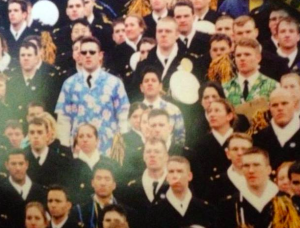
Screen Shot 2016-05-13 at 9.38.53 PMThe next day we all got on a bus and drove to Giants Stadium to go sit in the stands and cheer our team on, in uniform, as has been the tradition for a century. Afterward, while the rest of the school went on liberty and spent the night in New York, we got back on the bus and drove back to Maryland.


In protest, a few of us wore luau shirts under our uniform jackets so that the ridiculous pastel patterns would muddy up the pure black sea of midshipmen coats at the end of the stadium. After halftime, a giant banner unfurled from the deck above us with the words “Free 19” on it-an effort to gain our freedom.

My roommate and I were from New Jersey.  And Giants Stadium was our hometown. The lock down was going to cost us a whole lot of fun. This was our protest. Our cause: Beer and partying. And no one cared that a bunch of boys from Annapolis were disrespecting the uniform in service to missing out on partying. On the contrary, it started a tradition. Free 19 is a phrase that lives on to this day at Annapolis.

Last week 16 of the 17 African American women in the 2016 graduating class of the United States Military Academy at West Point posed for pictures in their uniforms. In one of the photos, they raised their right fists. Shortly after, the Army conducted an investigation into whether or not the women violated DOD regulations prohibiting political displays while in uniform-African Americans with raised right fists being a symbol of the “Black Lives Matter Movement”.

Within days, they were all cleared of any formal offense. No punitive actions were taken against them. There’s still a bit of a political debate going on. So I’d like to take a little time to share my point of view on it.

Rules prohibiting military personnel from displaying political support as official representatives of the military are important, maybe about as important as any rule the military has. Those rules affirm a critically important thing about our military and our society. That we have a force of arms, completely separate from the political process, entirely under the command of civilian elected officials and therefore formed entirely in service to the American people.

The military serves the people. And as a result, we enjoy a society where the American people have lived free of fear from the most destructive man-made force the world has ever seen. So those rules are important.

If there’s one thing that I can absolutely assure you, all sixteen of those cadets are aware of that now, if they weren’t a few weeks ago. The military has a good way of making you realize when you’ve wandered off the path. The Army was doing its job to ensure that critical rule was recognized in what I think was an important, teachable moment. Not because of the nature of the movement in question but because the rule matters that much.

That’s a very important distinction.

I’d like to respond to some of the more offended folks I’ve seen take this topic to task though. Because there’s some mad people out there. And their frustration is worth responding to.

If a lack of punishment here bothered you deeply, you probably didn’t go to a service academy-West Point, Annapolis or the Air Force Academy. If you did, you probably weren’t a woman that graduated from one of them. And if you were, you probably weren’t a woman of color.

This year, at West Point, 17 out of about a thousand graduates were African American women. Which means that for the four toughest years of their lives, and the lives of most people they will run into, one had to fill a room with 75 classmates before statistically, one could expect the 76th to look like them.  And that’s hard. Because we don’t tend to give people that aren’t like us the same leeway.  Even if it’s not on purpose. It’s just the way it is. Getting through West Point with less leeway is hard. Crazy hard.

I don’t know what it’s like to be a woman at a service academy but I know with certainty, they didn’t have it easier than I did. I was a male athlete at Annapolis and I made it through on the goodwill of others that these women unquestionably had less of. If you think that’s not true, go ask any woman who ever graduated from a service academy.  If you can find one.

In America, the racial inequality divide is staggering. We can debate the causes but when you’re black in America, the chance that you came from a poor family, a family with a single parent or an incarcerated parent or a low income neighborhood is so disturbingly slanted against you that graduating from a school like West Point is statistically so improbable, that it’s literally unbelievable. As in, if someone tells you they did it, you should be skeptical because it’s so rare.

Here’s a hard truth.  These women would never say this. So I will. You didn’t do what they just did. And you probably couldn’t. So take a breath.

I have no idea what the intent of those women were. I’m not naive enough to believe that all of them were just fired up at graduation. Some probably were.  Or maybe they were doing it to shout at the top of their lungs that that black lives do matter. And that they matter because this is what can be done with one.

One of the most valuable lessons I ever learned at Annapolis was learning the nuance of how not to conform amidst an overwhelming sea of conformity.  And learning it meant that I got it wrong a lot more than I got it right. And like those West Point cadets, I took some lumps for it along the way. But it was worth it. There’s some heavy decorations and more than a half dozen war time deployments on those idiots in the luau shirts above. Much of it was enabled by one indomitable notion. Don’t tell me I can’t. 

We were misfits and failures. And people told us in no uncertain terms we weren’t fit to lead.  But that streak of defiance, the very one that drove us to places others wouldn’t go, is an important one. The trajectory of humankind has pivoted on it. It always has.

It always will.

So, if you’re going to break that rule, and I want to be clear, it’s a good rule, that’s how you do it. Go be one of the 17 black women on the planet that graduated from West Point this year. And in a moment of pride and realization of all you’ve been through to get to that moment,  raise your right fist. Because the world told you and your brothers and sisters that you couldn’t accomplish what you just did.  And you said, don’t tell me I can’t. Because black lives do matter. Because they can be fierce lives. And fierce lives move us.

The separation of politics and the military will survive it. So for the vocally outraged, you can rest easy. Everything is going to be all right.

And for those proud women, I’ll add one more thing. Welcome to the family ladies. Now get to work. There’s plenty of opportunity to put boot to ass for God and country right over the next ridge line. And I would have been proud to serve with any one of you any day.

The Darkest Hour

On May 7, 1945, Nazi Germany surrendered. Seven days earlier, its leader, Adolf Hitler, along with much of his inner circle of cabinet members and friends, committed suicide in a bunker in Berlin. Hitler and his new bride Eva Braun both took cyanide pills. He tested them on his dog and her litter of pups just before to make sure it would work. He then shot himself in the head to spare himself any suffering.

The war was over.

The scale of death accomplished during the second world war is unparalleled in the history of mankind. In all, over 60 million people were killed directly or indirectly. Included in that was about 8% of the German speaking world. One out of every seven Russians on earth was killed. Europe, the continent that represented the pinnacle of human civilization, destroyed itself in the name of ethnocentric nationalism.

In its totality, World War II was a tragedy of unspeakable magnitude.

The worst of it, is beyond our darkest nightmares.

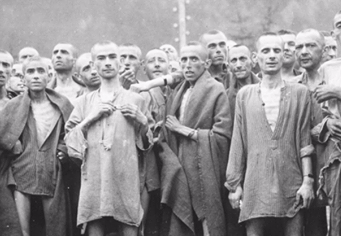
It started in the early 30’s. Camps began to spring up. First they were simply concentration camps—places where enemies of the state were “concentrated”.   Laws were passed to make it easier to pass laws to make it easier to imprison people. Most were political enemies but they also included gays, gypsies or other social “deviants”.  In all, Nazi Germany built 40,000 camps; concentration camps; death camps.

By the end of the decade, the German euthanasia plan began. The state began to kill infants and toddlers with special needs. Soon they advanced to special needs children and teenagers under 17. And then they went on to adults. By the end of 1939, they had killed over 200,000 handicapped German citizens. And it was getting hard to do.

The Nazi’s worked hard at it though. They innovated and perfected their craft. As they began to execute tens of thousands of Russian soldiers and civilians on the eastern front, German soldiers began to complain of “battle fatigue.”  It wasn’t easy shooting women and children. Necessity is the mother of invention. So they invented a new death. They began to use mobile gas vans to do the job.

And the death engine gained speed.

By 1942, the death camps sprung up at Belzec, Sobibor, and Treblinka. Jews from all over Europe arrived by train. At first they were greeted on the platform when they arrived with soothing music played by an orchestra of interned Jews. There were flowers and decorations to put them at ease. Later, when over 700,000 arrived from Hungary, there was less time for pleasantries and ceremony. But the outcome was the same.

The belongings the Jews of Europe brought were taken from them on the train platform, inventoried and sent back to Berlin. The Nazi doctors and guards separated the people on the platform. The elderly, the older women and the children as well as the sick and the weak were separated from the men and the young women. The men and young women were taken to work camps, usually about 250 or so out of every couple thousand. Twins and people with heterocrhomia, a rare genetic classification that yields two different colored eyes, were taken for medical experimentation.

The rest were taken somewhere else.

That group was walked to a facility about 100 meters away, clearly visible from the train. They were given towels and told to disrobe in order to be showered. Like cattle, they were pushed into the facility. Guards told them to put their hands up over their head because more people could fit into the shower that way. Once the entire train load was in, the doors were shut and a guard dropped cylinders of gas through an opening in the roof. Within 10-15 minutes, they were all dead. Guards in gas masks removed the bodies and took them to mass graves or crematoriums. The goal was to have the facility ready in time for the arrival of the next train.

This was repeated several times a day.

At it’s height in 1943, the Nazi death machine murdered 6,000 people a day in death camps. Most were Europe’s Jews. All told, six million European Jews were murdered.   Two thirds of the entire Jewish population of Europe was gone. 98% of Jews in Germany were gone—most murdered. Though Nazi Germany lost the war, the Third Reich succeeded in its goal of eliminating the Jewish population in the Rhineland. The “Final Solution” was mostly realized. Whole communities and cultures were wiped from the face of the planet. It was a genocide not duplicated in its scale and speed in the long history of a species with a propensity to do horrible things to themselves.

It probably won’t happen again. Not because we don’t have it in us. Simply because it’s extraordinarily difficult to do, from a logistical perspective.

Only about 10% of Germany’s 60 million or so people were card carrying members of the Nazi party. Which means that about 90% were not. Less than 1% of the German army were members of the Schutzstaffel Death’s Head Units, the units responsible for operations at the death camps.

Over the last 70 years we’ve spent a lot time trying to understand how the horrors of the Holocaust happened. How man, on such a horrifyingly existential scale could do that to their fellow man. We’ve looked at the psychology behind group thought and authoritarian tendencies. We’ve looked at the psychology of fascism and racism. But even the most comprehensive studies do little more than piece together parts of the “how” behind it.  No one ever really gets to the why.

And we never will. Because there is no sufficient reason for that outcome.

We know two things—factual irrefutable things about the Holocaust though. The first is this. It actually doesn’t take the majority of a people, or even a plurality, to move a society to a point where they are capable of mass genocide. The second is this. The first fact is only true if the others remain silent. And the first step of that silence is accepting, without challenge, the dangerous notion that other human beings are something less than that.

That they’re not like you.

That they’re not human.

The issues we struggle with in the world today aren’t the Holocaust. But then again, neither was the Holocaust, until it was. The German struggle was one of economics and employment and war debt, cultural racism and a loss of standing in the world community. The same ones we have today. And the forces of blame, anger and fear are useful tools when it comes to political power.

The die for 1930’s Germany was cast in an environment not dissimilar to ours.

Our die isn’t cast yet. And it won’t be. But only if the compassionate majority refuses to yield the floor. As long as we live, we should remember, what authority without compassion looks like. If for no other reason to take stock of how close we are to the edge.

Perhaps we’re not close. But a society is always moving. And destination is simply a function of direction and time. Right now, the direction is a questionable one. But time is on our side. But it usually is though.

Until it isn’t.

Waiting until then to speak up is usually too late.

Humans of the World

A few years ago, while I was eating a peanut butter and jelly sandwich in the wardroom of a ship  7,000 miles from my home in California, a man named Mohamed Atta flew American Airlines Flight 11 into the North Tower of the World Trade Center.  I don’t know why the sandwich part matters.  It’s just a part of the memory I can’t shake. Seventeen minutes later, after I had finished that peanut butter and jelly sandwich and walked up to the bridge of the ship to take over the watch, a man named Marwan al-Shehhi flew American Airlines Flight 175 into the South tower.

I was 24 years old, on my first deployment in the Navy, and we were supposed to leave the Arabian Gulf the next day to head home.  And now I was pretty sure that was never going to happen.   That was the thought that ran through my head as the reports of the towers collapsing and the Pentagon crash and a few incorrect reports about Camp David and the White House came over the intercom from our combat information center deep in the bowels of the ship.And then I heard it-over the marine band radio-Channel 16- the same station that drunk fisherman radio for help when they’ve run out of gas outside the harbor.  I heard cheering.  And laughing. And celebratory music.  The news had gotten back to this side of the world. Over 3,000 Americans were dying, at that very moment-innocent men, women, and children.  And they were cheering.  And laughing.The flame was lit.  I hated every person from that part of the world and every person that shared their religion.  As the days and months dragged on, away from home, and my family and the girl I met before I deployed that I would marry six months later, my anger grew.  I didn’t know a single one of them.  But I hated all of them.

Fast forward a few years, I found myself working again far away from home, the specifics aren’t material.  It’s not a secret, it’s just not that interesting.  The interesting thing happened one morning as the sun rose over the harbor I was working.  I heard the low, throaty growl of the call to prayer for the mosque on the hill that overlooked the village nearby.  It made me uneasy.

My local counterpart, a native of a village a few miles up the road, noticed.  He looked at me and asked in his delicate accent “What does that sound like to you?”

“Trouble” I answered back.   He was Muslim.  I didn’t know it.

“To me it sounds like beauty.  You are a Christian correct?”  I nodded.  He asked, “Do you know what the difference between Christians and Muslim is?” I didn’t answer but he continued.  “We Muslims see our God in everything. You see it in the teachings of a prophet.  I like the idea of God everywhere. That is why I’m a Muslim.”

It was the first of many conversations we would have. Over the seven months or so I was there, we worked side by side. We weren’t friends.  And I disagreed heartily with his assessment of my faith relative to his own.  But we had a relationship.  We depended on each other.  We were part of a shared interest with a shared desire.  Over time, I would meet more people there, more Muslims and have more relationships.

In Iraq a few years later,  I found myself working with Muslim men and women again. They were fighting to save what was left of their country, their culture, their families, and their future from the scourge of radical Islam.  And  again, relationships grew and my responsibility towards these people that I’d fought with grew.  My hatred was gone-replaced by that thing that you feel towards people when you can see their faces and hear their stories and share their burdens.  It’s a human connection.  And though I once bathed in my hatred for a people, I came to the realization that it is hard to hate a person-for most of us.

Over and over again in my life-and I’ve had a weird one-I’ve found that I feel one way about a group of people until I meet one, not just in passing.  But meet one and share part of my life with them.  Depend on them.  Have them depend on me. Live together.

Here’s another uncomfortable topic that cuts right to the heart of my point.  In 2010, it was illegal to be gay in the military.  The year I transitioned out and moved into the Silicon Valley tech world, that changed.  I actually attended a leadership meeting at my unit a few weeks before processing out where we went over the “roll out plan” for acceptance.  From the back of the room, “This isn’t a how to meeting is it?” sailed over us in a southern twang.  Laughter erupted.  “That why you showed up early?” From the other side.  More laughter.

People were making homophobic jokes in the leadership meeting to discuss the policy change that would accept the gay community into the Navy.  I don’t remember if I laughed.  But I also don’t remember being offended.  Because I had spent my entire adult life in an organization where it was illegal to be gay.  And I didn’t know a single gay person.

Having worked in the tech world in California now for a while, things have changed quite a bit.  I have gay coworkers and employees and friends.  And if I heard that sophomoric crap now, it would sadden me.  Not because I now have some manufactured sense of moral high ground because of the shift of public opinion.  But because I know the pain that some of my friends and coworkers once endured in the shadows of society-forced away from any hope of family or faith.  And I never thought about it once, until I knew people on that journey-really knew them.

The list goes on and on.  I was confused and frankly a little freaked out by the idea of  transgender people-I didn’t know any so an idea was all I had-until a few years ago one of my team members publicly came out and showed up to work as another gender.  And then I spent time with her and learned about the horrific life she’d put behind her and how this moment was the most courageous of her life.  And we welcomed her.  And it was amazing.

I’ll pile on some more here.  My go to word for someone doing something stupid was to call them a retard.  Now I have a non-verbal nine year old autistic son and live the life of a special needs parent every day.  I’ll never say it again because of the pain that comes with it. Not because I’m over sensitive and the world has gone mad with too much compassion.  I just don’t like to say anything that hurts that much-that one does.

I used to have all kinds of preconceived notions about addicts and people who were unemployed or on welfare but I know better now.  There is wisdom in knowing people.  And wisdom in choosing not to share your judgement when you don’t.  When you’re inside the blast zone that is the pain of human tragedy or disability or trauma or even just failure, the world looks different.  Different in a way that just makes you feel like you want to help-not hurt.

So if you live in the same place you’ve always lived and spend time with the same people you’ve always spent time with, I think that’s great.  I wish I were that grounded. I’m not patronizing.  I genuinely feel that way.  Roaming the world is exhausting and I’m glad I don’t do it much any more.  But I’ve got a favor to ask.  It’s pretty easy.  If you have a strongly formed opinion about a group of people-a religion, a sexual preference, an ethnicity, a socioeconomic demographic-and you’ve never cared for one of them, or had them care for you-never shared a burden with them or worked toward an outcome together, take a moment of pause before you share your opinion about them.  I know there’s plenty of words I would like to have back because I didn’t.

So if you just can’t let people you don’t know just be people you won’t know-maybe you can seek some of them out.  Or read a book about them. Or “Like” Humans of New York on Facebook.  Because I don’t know anything about Brandon Stanton-only that his words make you know people.  And if you take anything from these 1,400 or so words of mine, it’s that knowing and connecting with people and sharing life with them is why we’re here.  Judging from afar is not. My faith is clear about that.

So be careful.  Because people don’t know that you don’t know what you’re talking about. And there’s pain in your words. Frankly they mean far less to you than they do to others.   Because you speak of people. A faceless mass you don’t know. But  when the rest of us hear it, we see a person and a life-more like our own than different-and it’s hard for us to hate.  It’s the most amazing symptom of the human condition-to know someone and to care.  Doing more of it is the only hope we have of a world that looks better today then it did yesterday.

City By the Sea

My people are an old Atlantic City people. We go back to the grand days of the boardwalk empire. My great-grandfather was a boat captain in the inlet basin. He drove the famed Miss America speedboats. My grandmother was a show girl in the Ice Capades. She performed on Steel Pier long before it burnt down and fell into the sea. My father worked over 30 years on the Atlantic City Beach Patrol. I put in 6 myself. It’s in my blood.

Gambling came to the city the year I was born. My mother, a schoolteacher, worked as a blackjack dealer in the summers and in the evenings. She wasn’t from there. She married into Atlantic City. And it wove itself into her. She died there.

I have aunts and uncles and brothers who all work in the casino industry today. And though I left to join the navy when I was 18, and spent most of my adult life in California, Atlantic City has stayed with me. It’s the kind of town that leaves a mark-for good or for bad.

Like I said. It’s in my blood.

Something’s gone horribly wrong with America’s Playground though. To be honest, something’s always been wrong. She’s never really been on the up and up. Even when she tried. And now it looks like it’s caught up to her in a way it never had before.

This past week, the municipal government of Atlantic City received permission to shift paying their employees-cops, firefighters, teachers, etc-to a monthly basis instead of bi-weekly. Had she not, the city would have been out of money by the end of the month. This new payment schedule buys them until May. Which means that unless something changes, the first and arguably grandest destination resort of 20th Century America will be unable to pay her employees, her debt obligations or any of her other financial commitments. In which case, under normal circumstances, she would declare bankruptcy.

Except she can’t.

Because there’s something else going on in New Jersey. Something that, fifty years from now, history and political science majors will be dissecting in case studies. If we’re lucky.  If we’re not, they’ll be teaching it to our grade school and high school students learning about it the way they learn about things like Tammany Hall or the Teapot Dome scandal.  It will be one of those otherwise obscure events we teach to generations for how teachably perfect it illustrates a massive societal problem of the time, and how it served as a warning-a canary in the coal mine if you will-that ushered in change. It’s a troubling compilations of civic catastrophe.

If you’re not paying attention to it, let me help.

If you are paying attention to what’s going on in New Jersey, you’ll see what appears to be a long series of governing through press conferences. You’ll see the mayor of Atlantic City, Don Guardian with his odd bow-tie, defiantly standing at city hall trading barbs with the imposing Governor Chris Christie, fresh off of his unsuccessful presidential bid having somehow been out bullied by Donald Trump before eventually endorsing him in a tragic race to the bottom that is the political despair of the Republican Party. The mayor and the governor are at an impasse.

But over what?

Hold on tight because this gets complicated. And you may begin to think I’m joking as I explain. Sadly, I’m not.

The municipal government of Atlantic City wants to receive state assistance that is on par with other municipalities. If they do, they will be able to pay the bills. If they don’t they will likely have to declare bankruptcy. But they can’t. Because bankruptcy would have to be approved by the governor. And he won’t. Because the governor believes that Atlantic City spends too much money on their government workforce and is incapable of self government. And he’s right. So he wants state takeover of the city as a condition of increased funding. Except he can’t do that because only the state legislature can pass that type of legislation and they won’t. Because a state take-over would void all public union contracts previously negotiated by the city of Atlantic City and open up state collective bargaining agreements that would no doubt be more austere.  And if there’s one thing you don’t do as a state legislator in New Jersey, it’s take on public unions. Which brings us back to three groups pulling on the same rope in three different directions. All while the meter is running in Atlantic City who is out of money. It’s a mess that’s hard to follow but that’s about 150 words that sums it up.

So who is right?

No one.

What I just said is a massive oversimplification of the issues. But that actually doesn’t matter because the level of detail required to form an opinion on their differences and take a side isn’t required. Because no one’s right. Which is good for me because if I actually had to take sides, family barbecues would be uncomfortable. It’s a remarkably small town and I’ve got family on both sides of this issue all the way to the top. Me glossing over the details isn’t for lack of information or understanding. It’s because it doesn’t matter.  Because what they actually can’t agree on, won’t be what is taught in history classes fifty years from now.  How they’ve gotten to this stand off and what it says about early 21st Century America, will be.

If you took the time to listen to what Governor Christie said in his press conference earlier this week, you would have heard him run through a litany of items showing a gross mismanagement of tax payer money by the Atlantic City government officials.  He called out the fact that police and fire department employees, allowed to retire in their 40’s are able to cash in unused sick pay and vacation time to walk away with $300K “boat checks” on retirement. And that health care plans divested by the state decades ago but still in use in Atlantic City were costing the government $4M more a year than they need to. And that there are over 100 municipal employees that make over $100K a year. And that the utilities managed by the city are inefficient and have needed to be reformed or privatized for decades. All of these things are clear and inarguable mismanagement for a city of 39,000 people. That’s right. There are only 39,000 people in Atlantic City. Hold that thought.  We’ll get back to it.  The list goes on and on to make the point:

Horrible greedy government workers are manipulating the system for personal gain while their city goes broke.

That’s the message.

Here’s the thing with those claims. They’re reasonably accurate. For the most part, these are indefensible positions for the municipal government to have. And they are in need of reform. And they probably don’t deserve to receive state assistance unless they fix them.  But here’s one other thing to consider.

None of it matters.

Not a bit of it.  Because the budget gap for Atlantic City is about $100M. Annually. You could fire every one of those high paid employees and save $10M. Great. Now you’re down to $90M. In fact, you could fire every police officer and fireman in the city-don’t worry this is hypothetical- and still only be about 2/3 of the way to solving your problem. And one other thing. It’s 2016. $100K isn’t really that much money in NJ where you’re going to pay 4% property tax on your highly valued home. So when it comes down to it, this massive over spending is wrong and it needs to be fixed. Because of principle and future impacts. But fixing it isn’t solving the problem. At least not on a material level. Let’s ask a better question.

How did a city with 39,000 people open up a budget deficit of $100M?

Here’s where this story actually starts to matter. Because on a microeconomic scale, it’s an extreme but accurate portrayal of what is happening in 21st century urban America.  The city has a massive infrastructure that is designed to support it’s singular industry, casino gaming. Over 30 million people a year visit the city. Another 40,000 are employed by the casinos. None of them live in Atlantic City. Because the city of Atlantic City has 39,000 people. 75% of those people own no property. Which means that the city’s lone source of income, property taxes, is funded almost entirely by the lone industry in the city-casinos. 80% of city revenue comes from the property taxes paid by the casinos.  Which is great. Until the economy takes a turn for the worse, and a neighboring state opens a few casinos and then the industry tanks.

In 2015, four of Atlantic City’s 11 casinos closed.  And the fifth, the Borgata, the largest tax payer in the city was awarded a $150M tax ruling that makes it so they don’t have to pay taxes to the city for years or until the debt is paid off. Which means that Atlantic City lost about half of its tax revenue, almost overnight.

That’s how 39,000 people get behind a $100M eight ball.

In Atlantic City it’s the casinos. In Detroit it was the auto industry. In Baltimore, it was the steel industry. Name the town and the outcomes are the same. High paying, working class jobs have left urban America because they’ve moved overseas, been automated or moved to the suburbs.  And those that do work in the cities live outside of it. That’s always been the case in Atlantic City. So those left behind, the urban poor, live in a city that quickly runs out of money during an economic downturn and the basic services, schools, police and safety and general infrastructure-see Flint, MI-break down. And the urban gap widens.

In the four decades that Atlantic City has had gambling, the revenue generated by that gambling is in the tens of billions of dollars. The property values have increased over 600%. But the people of Atlantic City haven’t benefited much. They have double the unemployment rate of the rest of the state. Their median income is a third of the rest of the state. Their crime rate is six times the rest of the state. 30% live under the poverty level. Beyond the gaming and tourist attractions-the ones still open are actually amazing-the city of Atlantic City is an urban wasteland. And in about a month, they’re about to stop paying their teachers…and their cops…and their firefighters. It’s a cycle of despair we don’t have a way out of.  And it’s bad for all of us, not just them.

Enter the State of New Jersey. The bow-tied mayor has a point. This is why municipalities organize into counties and why counties organize into states and states organize into a union. They do it to minimize risk. The state clearly benefited by the fact that South Jersey’s economy boomed in the last decade. And the city gets 0% of the gaming revenue, unlike the 2% being proposed for the cities hosting the development of proposed North Jersey Casinos-which will kill Atlantic City by the way. But in the mean time,  now that Atlantic City is suffering, it’s time to help them weather the storm. Right?

Here’s the second part of the discussion that actually matters. The governor can’t help.  Because the state is broke too. Not the same way that Atlantic City is broke. The state can pay its current bills. It just can’t pay it’s future ones. Here’s why.

When you look at New Jersey’s government spending on a macro level, it looks pretty unremarkable. New Jersey has the 8th largest budget in America for the 8th largest economy in America generated by the 11th largest population. New Jersey spends just over $11K per citizen, which is 12th highest in the country. As bad as taxes feel in New Jersey, the state collects about $10K in taxes per citizen which is the 17th most in the country.  Which means that the state runs about about a thousand dollars per citizen in the red each year. Which sounds bad but it’s actually better then neighboring Pennsylvania, New York, Connecticut and Massachusetts. Only 10 states run at a surplus. The others close the gap with planned federal funding or other assistance programs. So what’s wrong with New Jersey?

Well, the big one is this. For the last 20 years, the state government has decided not to fund it’s pension program.

If you listen to the governor talk about the issue, you’ll hear him speak  of a massive out of control pension program that has suffered mismanagement resulting from public unions having their way with the government contracts. Which there’s certainly truth to. But when you actually look at the numbers, it’s about on par with other states expenditures. New Jersey spends about $1,100 per citizen on pensions, the 8th most in the country, entirely aligned with the size of its economy-less than New York, about the same as Pennsylvania. There’s one difference though. New Jersey hasn’t fully funded its pension fund for the last 20 years. In fact, from 2001 to 2004, they didn’t fund it at all. And now, New Jersey has a $37B pension gap for a state with $100B budget.  Which means they can pay pensions to those currently retired, but unless something changes, those retiring in the future will have nothing.

Now, the details of how the Governor has handled the pension problem are a source of great frustration and anger for state and local employees in New Jersey. They claim that he’s  been a bully, called people names and gone back on his word. And they’re right. He has. Partly because of who he is. But mostly because he’s trying to jam reform down the throats of New Jersey citizens to close a gap that even draconian reform won’t solve.  Because the damage is done. The ship has already hit the ice berg. And the only thing that’s going to help New Jersey is massive increases in revenue-yes that means taxes. Or a complete scrapping of their pension system. Which means that people who have paid into a pension system that legally have the right to expect a return on it when they retire, will not get one. Which is wrong. And no one can tell anyone that it’s right. And telling them they are greedy and that the pension system is bloated is political crap designed to lubricate the populous for change. Just like calling out how many employees in Atlantic City make over $100 a year.  It’s the same thing.

You can ignore it all.

Because it’s detached from the real tragedy here. Which is this. Unfortunately, all the expectations that the citizens of New Jersey had for their retirement, assumed one thing.  That the public representatives that they elected to office, the legislature, the governors, all of them, would do their civic duty and responsibly manage the states finances. For 20 years they did not. So all bets are off.

Democracy has consequences.  Electing the wrong people has consequences.

So what does this have to do with Atlantic City?  It’s not a long leap. The governor can’t let them declare bankruptcy because places like Camden and Patterson and a list of other urban areas in New Jersey that are in similar boats would quickly follow suit. And if the governor capitulates and simply hands Atlantic City the funding, he has the same risk. So he’s using Atlantic City as an opportunity to drive reform because in the end, the state can’t pay its own bills and it can’t run the risk of paying municipal bills for the failing urban areas. So here’s the message. We can help. But it’s going to be painful for you. And any of you other places thinking about going this route, take notice.

In the end, both sides have valid arguments. And the men standing at the podiums trading political jabs aren’t the ones that put their respective organizations in this mess. And what will probably happen is some level of anti-climactic agreement that involves some state take over and assistance and both Atlantic City and New Jersey will live to fight another day, having successfully kicked the can down the road, the way American politics in 2016 does.

So why will they be teaching this in civics classes 50 years from now?  Because in one small package- 4.1 miles of build-able land to be exact-the Atlantic City crisis illustrates two of the most troubling issues about American society today. The first is urban decay that has resulted from the de-insdustrialization of America. The crumbling infrastructure and failing socioeconomic climates in our cities is a massive problem driving racial inequality and driving citizens in the most powerful country in the world down to a quality of life that is massively at odds with our national wealth. The second is that we have a cataclysmic entitlements problem in our country. At the state level, we are under funding our pensions by a trillion dollars collectively. That’s 20% underfunded. And if you think that’s bad, social security at a federal level is 32% underfunded, that’s a shade under 26 trillion dollars. Right now about 40% of our federal budget goes to social security and medical costs.

And it’s not enough.  Not by a long shot.

So, while we select the next leader of the free world, candidates from both sides are waving the shiny objects of traditional values, immigration and wars on women. But probably the only two things that really matter is that our economy can no longer support our urban inhabitants and we’re going to go broke because we can’t fund our entitlements without massive cuts in other areas or higher taxes. Those are hard problems. Give a listen for solutions in our national political debate. You won’t hear them. And as we plod forward on our path as we do, eventually we’ll fall over when the issue becomes so big that we have no choice. What Atlantic City is telling us is when we do fall, we’re left with men standing at podiums shouting bad options at each other. Because all the good ones went away when the tide of irresponsible governing receded.

I’m saying prayers for my friends and family back home that they make it through this difficult time as whole as they can. In the end, it’s the people that suffer. But it’s also the people who elect. So we’ve got a choice here.  Learn the lesson Atlantic City and New Jersey are teaching us. Or face the consequences.

I’ll mourn the canary. Those are my people. Everyone else, worry about the coal mine.

Democracy has it’s consequences.